Brian Boitano Biography: The Quiet Champion Who Owned His Own Joke
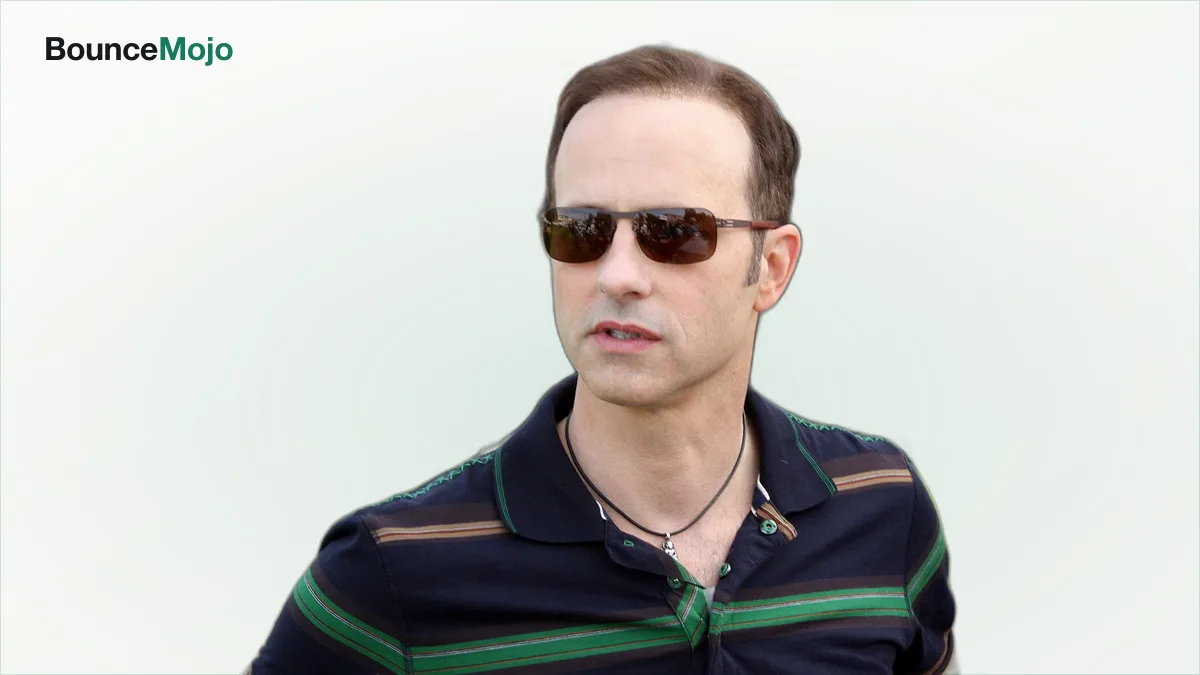
Everybody remembers the cartoon song. Almost nobody remembers the medal it was mocking.
Here’s what most people miss: the most famous figure skater in America spent years being famous for a joke, and he found a way to win that too.
The Myth vs. The Reality
The myth is a punchline. To a whole generation, “Brian Boitano” is a name from a South Park song, a goofy refrain about what a superhero-athlete “would do.” Funny. Catchy. Slightly absurd.
That version of him exists. It’s just backwards.
Here’s the truth: before he was a joke, Boitano was one of the greatest men’s figure skaters who ever lived. A 1988 Olympic gold medalist. A two-time World champion. The inventor of a jump variation that still bears his name. The cartoon didn’t diminish a nobody. It parodied a titan.
Think about it: the world laughed at a name it associated with excellence. And instead of resenting it, Boitano did something almost no athlete manages. He bought the joke and turned it into a business.
Now, that kind of composure doesn’t appear overnight. It gets built quietly, over years, by a kid who trained in the same rink with the same coach and never chased shortcuts. Which raises the question. What kind of upbringing produces a champion that unshakeable?
The World That Made Brian Boitano
To understand Boitano, you have to understand American figure skating in the 1980s.
He was born on October 22, 1963, and raised near Sunnyvale, California, in the heart of what would become Silicon Valley. This was the amateur era, before big prize money, before skaters could openly cash in while competing. Olympic figure skating in that decade was a Cold War theater, a sport where American and Soviet-bloc athletes fought for medals that carried national pride far beyond the ice.
The men’s field was fiercely artistic and technically brutal. To win, you needed jumps, spins, and the nerve to land them under the hottest lights in sport. There was no room for error and no money to soften a loss.
Here’s the deal: in that world, a skater’s whole future rode on a few minutes every four years. Amateurs couldn’t profit while competing, so the medal was the currency. Win it, and a professional career opened up. Miss it, and years of work evaporated.
But the real environment that shaped Boitano wasn’t the arena. It was a single rink, a single coach, and a level of consistency almost unheard of in his sport. That’s where the story really starts.
The Crucible: Early Life and the Climb
The environment that shaped him
Boitano didn’t come from a skating dynasty. He came from an ordinary Bay Area family and a set of group lessons.
As a boy he started skating at a local rink and soon began working with a coach named Linda Leaver. What happened next is the part most people overlook. Leaver became his only coach, and later his manager, for his entire career. In a sport where skaters routinely switch coaches chasing an edge, Boitano built everything on one relationship and never broke it.
You might be wondering: how much did that stability matter? Enormously. It gave him a decade of uninterrupted development, a single voice in his ear, and a trust that let him take risks other skaters couldn’t. His technical foundation was rock-solid because it was built brick by brick with the same hands guiding it.
By his teens, Boitano was a rising force in U.S. skating. He won the U.S. national title multiple times through the mid-1980s and developed a reputation for jaw-dropping jumps. He even invented his own signature move, the “Tano triple,” a triple jump performed with one arm stretched dramatically overhead, a flourish that raised the difficulty and the artistry at once.
The catalyst
Then came the rivalry that would define him.
His name was Brian Orser, a Canadian skater every bit Boitano’s equal. Through the 1980s the two traded World titles and pushed each other to new heights. By the time the 1988 Calgary Olympics arrived, the media had a story ready-made: two men named Brian, two flags, one gold medal.
They called it the “Battle of the Brians.” And it was as close as advertised.
Boitano skated the free program of his life, a nearly flawless, technically loaded performance capped by his triples and unwavering nerve. Orser was brilliant too. But when the judges’ marks came in, Boitano won by the narrowest of margins, a 5-4 split.
Here’s the kicker: that single skate, on home-continent ice against his greatest rival, became the launchpad for everything that followed. Because in the amateur world, gold didn’t pay. It qualified you to get paid.
The Key Players
No champion rises alone, and Boitano’s supporting cast shaped his whole arc.
Start with Linda Leaver, the coach who never left. She was mentor, strategist, and business partner rolled into one, the single most important professional relationship of his life. Their loyalty to each other is the quiet backbone of his success.
Then there’s Brian Orser, the rival turned historical twin. Orser wasn’t a villain. He was the perfect foil, the equal who forced Boitano to be great. Their 1988 duel elevated both men, and their names remain linked forever.
There were peers, too. Champions like Scott Hamilton and Katarina Witt shared the professional touring circuit with Boitano after their amateur days ended, and that world of ice shows became the economic engine of his post-Olympic life.
But the person who mattered most in the long run may have been Boitano himself, and a truth he carried privately for decades. Because his greatest personal turning point had nothing to do with a jump.
The Turning Point
The pinnacle
The competitive pinnacle was Calgary 1988. The gold medal. The Battle of the Brians. The moment his name entered the history books.
After that, Boitano turned professional and headlined touring ice shows and television specials for years. He won professional titles, produced award-winning skating broadcasts, and stayed a marquee draw long after most of his rivals faded. He even briefly regained his amateur eligibility for a run at the 1994 Olympics, a rare and gutsy move.
In pure sport terms, the career was complete. But the more meaningful turning point came decades later, and it was personal, not athletic.
The price
For most of his life, Boitano kept a secret.
He was gay, and he did not talk about it publicly. In an era when an openly gay male figure skater faced real professional risk, silence felt safer. That silence had a price: years of guarding a fundamental part of who he was, in one of the most visible sports on earth.
The moment of reckoning came in December 2013. Boitano was named to the U.S. delegation to the 2014 Sochi Winter Olympics, a Games held in Russia under a harsh new anti-gay law. The politics were impossible to ignore. Alongside fellow delegates like Billie Jean King, Boitano chose that moment to come out publicly.
Here’s the truth: he later said he had never planned to come out, but being named to that delegation, in that country, at that moment, made staying quiet feel wrong. He stepped forward. And a champion who had spent his career letting his skating speak finally spoke for himself.
That decision reframed his whole legacy. But it also opened a window onto the man’s more complicated, human side.
The Unvarnished Truth
Boitano is not a figure built for scandal, and pretending he is would be dishonest. His life has been remarkably clean of controversy. But that doesn’t mean it was simple.
The truth is he spent decades performing a version of himself that left something essential offstage. Being a closeted gay man in professional sports through the 1980s, 1990s, and 2000s meant constant, quiet self-editing. That’s a real weight, even if it never made headlines.
There’s also the strange psychology of being famous for a joke. The South Park song made his name a national reference point in the late 1990s, and for a proud Olympic champion, being reduced to a comedic refrain could have been humiliating. Some athletes would have sued. Others would have sulked.
Here’s what’s easy to miss: Boitano’s greatest strength was his refusal to take the bait. He turned the joke into What Would Brian Boitano Make?, a Food Network cooking show and cookbook, converting mockery into money and goodwill. The flaw others might have seen, being laughed at, he treated as an asset.
Still, his career wasn’t free of criticism. And most of it was about the sport itself.
Controversies and Criticisms
Boitano’s controversies are mild by celebrity standards, which is itself notable in a sport full of drama.
The loudest debate was never really about him. The 1988 judging split, 5-4 over Brian Orser, remains one of the closest and most discussed results in Olympic figure skating history. Some Canadian fans have argued for decades that Orser was robbed. For Boitano, being on the winning side of a razor-thin verdict means his greatest triumph will always carry a footnote of “what if.”
Then there’s the amateurism question of his era. Boitano navigated the strange, shifting rules that governed when skaters could earn money and still compete, including his eligibility gymnastics before the 1994 Olympics. Critics of the sport’s governance used skaters like him to argue the whole amateur system was outdated. He was less a villain here than a symbol of a broken framework.
And some purists have quibbled that his post-competition life, the TV specials, the cooking show, the celebrity, drifted too far from serious skating. To which the obvious reply is: that’s the point. He built a life, not just a highlight.
So what does a champion like this actually teach the rest of us? Quite a lot.
What We Can Learn From Brian Boitano
Navigating hard times
Boitano’s life is a study in patience and composure under pressure.
He carried a private truth for decades and chose his own moment to share it, on his own terms, when it mattered most. The lesson isn’t about the timing. It’s about ownership. He didn’t let the world dictate his story. He waited, and then he told it himself.
In other words: some battles are won by refusing to react, and some truths are strongest when you choose the ground you tell them on.
The success blueprint
The blueprint here is about longevity, not just peak performance.
Boitano won one Olympic gold and turned it into a thirty-year career. He did it by staying loyal to one coach, by owning his brand instead of just renting his name, and by embracing the parts of his fame that others would have fought. When a cartoon mocked him, he made a cooking show. When his sport’s spotlight faded, he became a producer and host.
Want the fuller financial picture behind that reinvention? The full net worth breakdown shows exactly how one Olympic night grew into an $8 million fortune. And to see where he ranks among the sport’s biggest earners, the richest Olympians list puts it in context.
The deeper takeaway is about identity. Boitano proved you can be defined by a single great moment and still keep growing for decades after it. The medal opened the door. What he built on the other side is the real career.
Which brings us to the final reckoning on the man.
Final Verdict
Brian Boitano is going to be remembered two ways, and both are true.
Casual fans will file him under the cartoon song, the funny name, the guy from South Park. A smaller, sharper group will remember the reality: one of the finest men’s figure skaters in history, a 1988 Olympic champion who beat his greatest rival by a whisker, invented a jump that carries his name, and then built a durable, dignified life out of the fame that gold created.
Here’s the bottom line: the joke was never the story. The story is a Sunnyvale kid who trained with one coach, delivered the skate of his life when it counted, kept a hard secret with grace, and finally told his own truth on his own terms.
He owned his medal. He owned his joke. And in the end, he owned his story too. That’s the version worth remembering.
Shop Brian Boitano on Amazon
Books, audiobooks, merch and more, handpicked for fans.
As an Amazon Associate we earn from qualifying purchases.
Frequently Asked Questions
Where did Brian Boitano grow up?+
Boitano grew up near Sunnyvale, California, in the Bay Area, and trained from a young age under a single coach, Linda Leaver, who stayed with him his entire career.
What was the 'Battle of the Brians'?+
It was the men's figure skating showdown at the 1988 Calgary Winter Olympics between American Brian Boitano and Canadian Brian Orser. Boitano won gold by a narrow 5-4 judges' split after a nearly flawless free skate.
Why is Brian Boitano connected to South Park?+
The 1999 song 'What Would Brian Boitano Do?' from the South Park movie turned his name into a national punchline. Boitano later embraced it, launching a Food Network cooking show called What Would Brian Boitano Make?
When did Brian Boitano come out as gay?+
Boitano came out publicly in December 2013, shortly after being named to the U.S. delegation to the 2014 Sochi Winter Olympics, a Games held under Russia's anti-gay laws.
What is Brian Boitano's greatest achievement?+
Winning the 1988 Olympic gold medal in men's figure skating, capped by his signature move, the 'Tano triple,' a triple jump performed with one arm raised over his head.
Want the money side of the story?
Read Brian Boitano's Full Net Worth Breakdown →Shop Brian Boitano on Amazon
Books, audiobooks, merch and more, handpicked for fans.
As an Amazon Associate we earn from qualifying purchases.