Bret Hart Biography: The Hitman, the Dungeon and the Betrayal
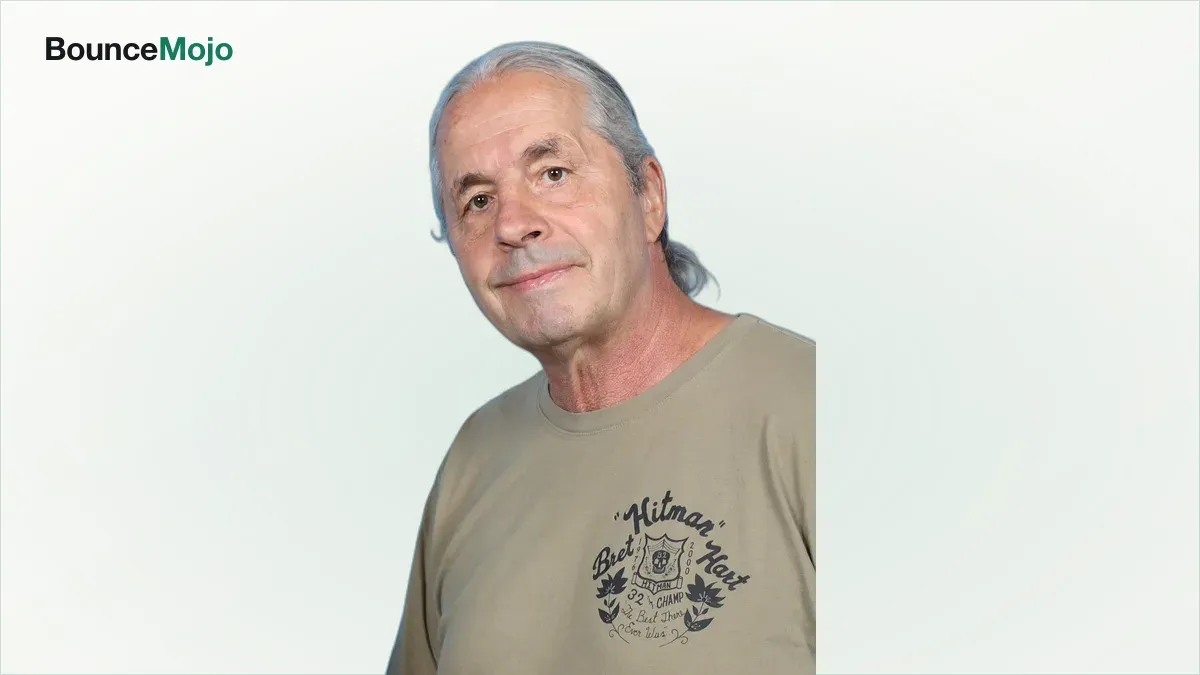
Most people know Bret Hart as “the best there is, the best there was, the best there ever will be,” or as the man who got screwed in Montreal. Both capture only a sliver of him.
Here’s what most people miss: the most technically perfect wrestler of his generation was forged in a literal basement of pain, and the betrayal that defined his career was only the second-worst thing that would happen to his family.
The Myth vs. The Reality
The myth is heroic and clean. Bret Hart: the “excellence of execution,” the pink-and-black hero who never took a shortcut, the honest man wronged by a corrupt boss. The pure babyface in a business full of liars.
The reality is far more layered and far more human.
Here’s the deal: Hart was a genuinely great wrestler and, by many accounts, a principled one. But he was also proud, stubborn, and flawed, a man who has admitted to serious personal failings, including infidelity that damaged his first marriage. The saintly image fans projected onto him was never the whole story, and Hart himself has been the first to say so.
And that honesty is what makes him compelling. Hart didn’t build a comfortable myth. When he told his story, he told all of it, the good, the ugly, and the tragic, with a rawness almost no wrestler has matched.
You might be wondering: how does a man become both the best in the world at something and the victim of its most famous betrayal? To understand that, you have to understand the family and the world he came from.
The World That Made Bret Hart
Hart didn’t choose wrestling. He was born into it, at the center of one of the sport’s most legendary dynasties.
He came into the world in 1957 in Calgary, Alberta, the eighth of twelve children of Stu and Helen Hart. Stu was a former amateur wrestler turned promoter who ran Stampede Wrestling, a respected regional promotion, and who trained wrestlers in the basement of the family home, a room known throughout the business as the Dungeon.
Now: growing up a Hart meant growing up inside the business. The house was full of wrestlers, and the Dungeon was a place of genuine dread. Stu Hart broke in trainees with vicious submission holds, and Bret has described his father inflicting excruciating pain, leaving broken blood vessels in a young Bret’s eyes, all as a matter of routine.
This was Bret’s normal. Wrestling wasn’t a career choice. It was the water he swam in, the family trade, the thing his identity was built around before he was old enough to question it.
But being born into greatness comes with its own weight, and the Hart family’s blessings would prove inseparable from its curses.
The Crucible: Early Life and the Climb
The Environment That Shaped Him
The Hart household was chaotic, crowded, and defined by wrestling. Twelve children, a steady stream of trainees, and a father whose love was real but expressed through toughness rather than warmth.
Bret grew up watching his father break men in the Dungeon and absorbing the craft by osmosis. He started in the family promotion, Stampede Wrestling, first as a referee in 1976 and then as an in-ring competitor in 1978. He learned wrestling not as entertainment but as a demanding physical discipline, which shaped his famously precise, believable style.
Here’s the truth: that upbringing gave Hart both his greatest strength and a lifelong sense of obligation. He was bred to be a wrestler, and he became a brilliant one. But he also carried the pressure of the family name and the expectations that came with being a Hart.
That craft eventually carried him from Calgary to the biggest stage in the business.
The Catalyst
Hart joined the WWF in the 1980s, first finding fame as one half of the tag team The Hart Foundation before breaking out as a singles star.
His technical mastery set him apart in an era of larger-than-life cartoon characters. As the WWF moved past the muscle-and-mania 1980s into a more athletic 1990s, Hart became the perfect standard-bearer, a wrestler whose matches felt like real contests. He won his first WWF Championship in 1992 and cemented himself as the company’s steady, dependable ace.
It gets better, and stranger. The reliable family man who did everything the right way would become the center of the single most shocking act of corporate betrayal in wrestling history. And it would come from the man he trusted most in the business.
The Key Players
No Hart story is a solo story. Bret’s life is crowded with family, rivals, and one boss whose decision changed everything.
Stu Hart. Bret’s father was the patriarch, the trainer, and the source of both his skill and his complicated sense of duty. The Dungeon Stu ran shaped every wrestler the family produced, Bret most of all.
Owen Hart. Bret’s younger brother was his frequent opponent, occasional partner, and one of the most gifted athletes the family ever produced. Their relationship, competitive and loving, was central to Bret’s life, which is what made Owen’s fate so devastating.
Shawn Michaels. Hart’s greatest rival, and the other man in the ring during the Montreal Screwjob. Their real-life animosity fueled some of the era’s best matches and its most bitter feud, one that took decades to cool.
Vince McMahon. The WWF chairman was Hart’s boss and, ultimately, the architect of the Screwjob. McMahon’s decision to double-cross Hart in Montreal turned a business dispute into a personal betrayal that defined both men.
Think about it: every one of these relationships carried both love and conflict, family loyalty, professional rivalry, and shattered trust. All of that tension detonated on one night in Montreal.
The Turning Point
The Pinnacle
Hart’s career peak was a run as one of the most respected champions in the world.
He won five WWF Championships, headlined pay-per-views, and was recognized globally as “the best there is, the best there was, and the best there ever will be.” He had genuine main-event drawing power and the in-ring credibility to back it up. By the mid-1990s, he was a bona fide international star, and in 1997 he signed a lucrative WCW contract reportedly worth around $3 million a year, one of the richest deals of the era. As his own net worth story explains, that contract and his championship earnings built the core of his fortune.
The Price
Here’s the kicker: his greatest professional moment and his deepest wound happened on the same night.
In November 1997, as Hart was preparing to leave for WCW, Vince McMahon secretly arranged for Hart to lose the championship in his home country of Canada without his knowledge or consent. The referee called for the bell on a submission Hart never gave. The Montreal Screwjob was born, and Hart’s trust in the business was shattered.
The betrayal cost him more than a title. It poisoned his relationship with McMahon and WWE for years, colored his departure, and became the thing he is most remembered for, ahead of all five championships. And the worst was still to come. Which brings us to the human cost the cameras never fully captured.
The Unvarnished Truth
Hart’s life after Montreal was marked by genuine tragedy, and he has been strikingly honest about his own flaws through all of it.
In 1999, his beloved brother Owen died after a stunt malfunctioned during his ring entrance at a WWF pay-per-view. The loss devastated the Hart family and deepened Bret’s bitterness toward the company. Then, in 2002, Hart suffered a serious stroke, reportedly connected to a bicycle accident, that threatened his life and mobility. He fought back to a remarkable recovery, but the ordeal was harrowing.
Now: through all of it, Hart has refused to sanitize himself. In his memoir, he openly documents his own infidelity and the damage it did to his first marriage to Julie. He does not cast himself as a flawless victim. He shows a proud, complicated man who made real mistakes.
That candor is rare. Most stars protect their image. Hart, in writing his life down, chose truth over comfort.
The most honest thing you can say about Bret Hart is this: he survived betrayal, grief, and a stroke that could have ended him, and he told the whole story without flinching, including the parts that made him look bad.
Controversies and Criticisms
Hart’s career and life carried real friction beyond the Screwjob.
Bitterness toward WWE. For years after Montreal and Owen’s death, Hart was openly hostile toward Vince McMahon and WWE. Some saw his anger as justified; others felt he held onto it too long. He eventually reconciled, returning for a Hall of Fame induction and appearances, but the wounds ran deep.
The Michaels feud. Hart’s real-life animosity with Shawn Michaels lasted decades and spilled into public view. Both men have since made peace, but their bitterness was genuine and, at times, ugly.
Personal failings. Hart has been candid about infidelity during his first marriage and the pain it caused his family. He put these admissions in his own book rather than hiding them, which is admirable, but they complicate the heroic image fans held.
None of this diminishes his standing. If anything, his willingness to own his mistakes, alongside the genuine tragedies he endured, makes him a more human and more respected figure.
What We Can Learn From Bret Hart
Navigating Hard Times
The first lesson is about resilience. Hart endured a betrayal that would have broken most people, the loss of his brother, and a stroke that nearly killed him, all within a few years. He came through it and rebuilt his life and his peace.
But here’s the truth his story makes plain: survival isn’t the same as being unscarred. Hart carried his wounds openly, and his recovery was about learning to live with pain rather than pretending it away. That honesty is its own kind of strength.
The Success Blueprint
If you want the replicable part, it’s this: Hart won by mastering his craft to a level no one could question. In a business built on flash, he became indispensable through pure skill and reliability. When he wanted out, his mastery gave him leverage, including a reported $3 million WCW deal.
That’s transferable. The lesson is that genuine excellence, the kind that can’t be faked, is the most durable career asset there is. Hart’s technical brilliance kept him a top-paid champion for years, a financial reality laid out in his net worth breakdown and his standing among the richest wrestlers.
Becoming Better
The deepest lesson is about honesty. Hart’s memoir, drawn from decades of private journals, is beloved precisely because he told the truth about himself, his mistakes, and his grief.
In other words, the courage to tell your whole story, flaws included, can be more powerful than any carefully managed image, a truth that runs straight through to the ending of his story.
Final Verdict
Bret Hart is one of the greatest wrestlers who ever lived, and “greatest” here means the craft, the honesty, and the endurance all at once. He set a standard for in-ring excellence that shaped generations, and he survived losses that would have destroyed most people.
And here’s the twist that reframes everything: the man remembered most for a night he lost is, in truth, one of the biggest winners the business ever produced, in skill, in respect, and in the durability of his legacy. Bret Hart didn’t need a fair ending in Montreal to prove who he was. His whole career, and his fortune, had already proven it. The full mechanics of how that fortune came together live in his net worth story, and it’s a fitting close for the Hitman: the most honest man in a dishonest business, who outlasted the betrayal that was supposed to define him.
If you want the real story, read Hart’s own memoir, Hitman: My Real Life in the Cartoon World of Wrestling (2007). Drawn from decades of private journals, it’s widely considered the finest autobiography wrestling has ever produced, unflinching about the Dungeon, the Screwjob, Owen’s death, and his own failings. Read it if you love wrestling, and read it more carefully if you’ve ever wondered what it costs to be the best there is, was, and ever will be.
Shop Bret Hart on Amazon
Books, audiobooks, merch and more, handpicked for fans.
As an Amazon Associate we earn from qualifying purchases.
Frequently Asked Questions
What is Bret Hart's real name?+
Bret Hart's real name is Bret Sergeant Hart. He was born on July 2, 1957, in Calgary, Alberta, the eighth of twelve children of wrestling promoter Stu Hart.
What was the Hart family Dungeon?+
The Dungeon was the notorious training room in the basement of Stu Hart's Calgary home, where he broke in future wrestlers with brutal submission holds. Bret grew up watching and enduring it.
What was the Montreal Screwjob?+
In 1997, as Bret Hart was leaving WWF for WCW, Vince McMahon secretly ordered the referee to declare Hart the loser via a submission that never happened. The betrayal became the most infamous moment in wrestling history.
How did Owen Hart die?+
Bret's younger brother Owen Hart died in 1999 after a stunt malfunctioned during his entrance at a WWF pay-per-view, a tragedy that devastated the Hart family and deepened Bret's estrangement from the company.
Did Bret Hart have a stroke?+
Yes. In 2002, Bret Hart suffered a serious stroke, reportedly linked to a bicycle accident, which threatened his life and mobility. He fought back to a strong recovery and later reconciled with WWE.
Want the money side of the story?
Read Bret Hart's Full Net Worth Breakdown →Shop Bret Hart on Amazon
Books, audiobooks, merch and more, handpicked for fans.
As an Amazon Associate we earn from qualifying purchases.