Brad Richards Biography: The Small-Town Kid Who Won When It Mattered
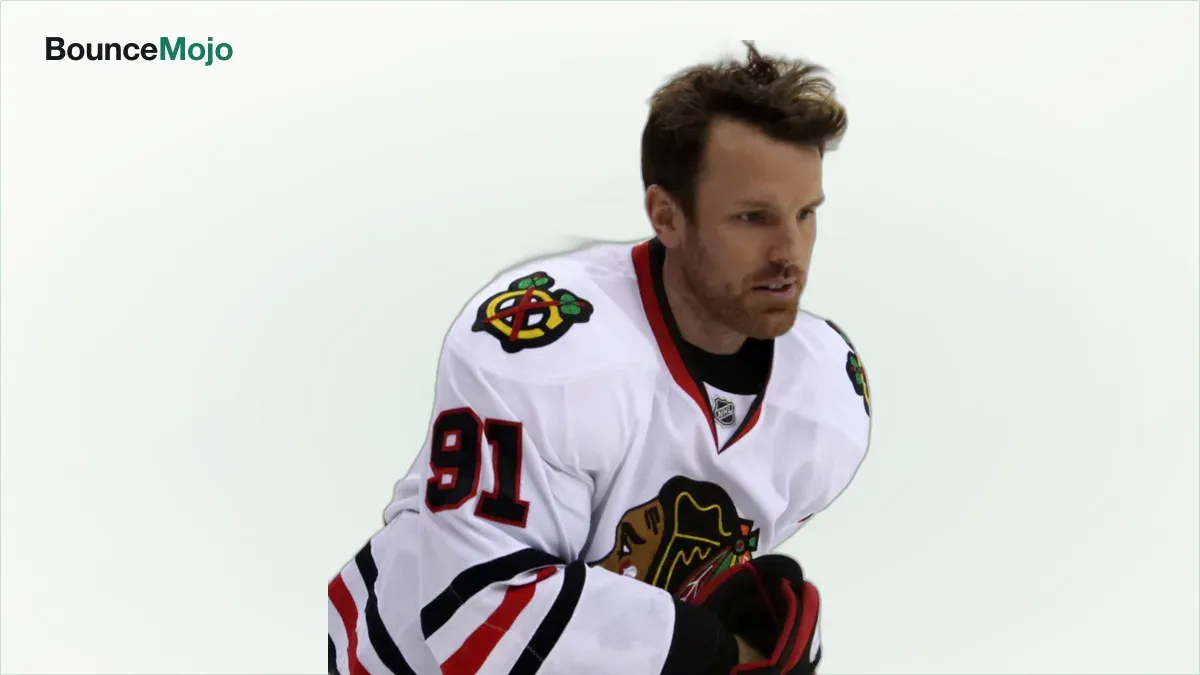
Ask hockey people about Brad Richards and one word comes up first: clutch. Conn Smythe, two Cups, seven game-winning goals in a single playoff run.
Here’s what most people miss: that big-game superstar came from a fishing village on Prince Edward Island so small it barely registers on a map.
The Myth vs. The Reality
The myth is glamorous. Brad Richards is the ice-cold big-game center, the guy who scores when the lights are brightest and lifts trophies.
The reality is grittier.
Here’s the truth: Richards came from Murray Harbour, Prince Edward Island, a fishing village of a few hundred people. There were no shortcuts, no big-city hockey academies, no obvious path to stardom. He had to be good enough to be found.
Now think about the odds. Kids from towns that small almost never reach the NHL, let alone win a Conn Smythe.
That gap, between the polished champion and the small-town kid who had to earn every inch, is where his real story lives. And it starts on the Maritime ice.
The World That Made Brad Richards
Brad Richards was born on May 2, 1980, in Murray Harbour, a small fishing community on Prince Edward Island. It’s the kind of place where hockey is played on frozen ponds and in tiny rinks, far from the scouts and spotlights of major hockey markets.
This was Maritime Canada, where the game is passion more than industry. Kids grow up loving hockey without any guarantee it leads anywhere. Making it out means being exceptional and being noticed.
Richards was both. His skill and hockey sense stood out early, enough to earn a place in major junior hockey with the Rimouski Oceanic of the QMJHL, a big step for a boy from a village most people had never heard of.
But here’s the kicker: leaving home was only the first hurdle, and the biggest tests were still ahead.
The Crucible: Early Life and the Climb
The environment that shaped him
Richards grew up steeped in the tight-knit, hard-working culture of a Maritime fishing town. That environment bred humility and grit, qualities that would define him as a player.
With Rimouski, he blossomed into an elite junior, winning a Memorial Cup and being named Canadian junior Player of the Year. Tampa Bay saw the talent and drafted him, opening the door to the NHL.
The tools were obvious. What no one knew yet was whether he could deliver when everything was on the line.
The catalyst
The catalyst was the 2004 playoffs.
Richards had already established himself as a skilled young center, but that spring he became something more. He set an NHL record with seven game-winning goals in a single postseason and carried the Tampa Bay Lightning to the first Stanley Cup in franchise history. He won the Conn Smythe Trophy as playoff MVP.
Here’s the deal: in a matter of weeks, Richards went from good young player to certified big-game star.
Want to know what that reputation was worth? It set up the richest years of his career, and one of the toughest chapters too.
The Key Players
You cannot tell the Richards story without a few names.
Vincent Lecavalier is the first. Drafted first overall by the same Lightning, Lecavalier was Richards’ co-star during that 2004 championship run. Together, two young Maritimers and Quebecers formed the core of a title team, and their partnership defined Tampa Bay’s rise.
Martin St. Louis is the second. The undersized, relentless winger was another engine of that Cup team, and Richards fed him countless chances as a playmaking center. Their chemistry helped power one of the most exciting offenses in the league.
The Tampa Bay Lightning organization mattered enormously too. It was the franchise that drafted Richards, developed him, and gave him the stage on which he became a champion. That 2004 team, built around young talent, delivered the defining triumph of his career and turned a small-town kid into a household name in the hockey world. The bonds forged in that championship run followed Richards throughout his life, and the pride of winning a Cup with the team that believed in him first never faded.
Here’s the truth: everything Richards built in Tampa was about to be tested by the harshest side of the business.
The Turning Point: Triumph and Its Hidden Cost
The pinnacle
Start with the money moment, because it defined his earning power.
After his Cup and Conn Smythe, Richards was one of the most coveted players in hockey. He landed a lucrative deal in Dallas, then in 2011 signed a massive nine-year, $60 million contract with the New York Rangers, one of the biggest free-agent deals of its era. He’d gone from a village of a few hundred to a marquee star in the biggest media market in North America.
He wasn’t done winning either. After his Rangers chapter ended, Richards joined the Chicago Blackhawks and won a second Stanley Cup in 2015, adding another ring to his resume in the twilight of his career.
That second Cup deserves a moment. By 2015, Richards was no longer the offensive centerpiece he’d once been. He was a veteran role player, brought in for his experience and his knack for winning. He accepted a smaller role on a loaded Chicago team and contributed to a championship anyway. For a player who had just been cast off by the Rangers, winning it all the very next season was the perfect answer, proof that his value went far beyond any single contract’s numbers.
The price
Now the cost, which arrived in a single brutal decision.
In 2014, the Rangers used a compliance buyout on the final seven years of his contract. It was a very public reminder that even huge deals can end early, and that the business of hockey has no sentiment. For a player who had given so much, being bought out stung.
There was pressure, too, in always being the guy expected to produce in big moments. That reputation brought riches, but it also meant relentless scrutiny when the goals didn’t come.
You might be wondering how a player responds to being cast off by a team that once made him its centerpiece. The answer reveals his character.
The Unvarnished Truth
Let’s not pretend the path was smooth.
The Rangers buyout was a low point. Richards had signed as a savior and left as a cautionary tale about the risks of long-term megadeals. That kind of public setback can rattle a player’s confidence and legacy.
There were also the years when the scoring dipped and critics questioned whether his best days were behind him. The expectations that came with his contracts were enormous, and he didn’t always meet them.
And there was the grind itself. Sixteen NHL seasons as a physical, minutes-heavy center wore on his body, and the pressure of being a marquee name added mental weight most fans never see.
Here’s the truth: Richards’ greatest asset, his big-game reputation, was also a burden. When you’re paid to be clutch, every quiet night gets magnified.
Even so, he answered the buyout the best way possible, by winning another Cup.
Controversies and Criticisms
For a player this respected, Richards’ controversies are mild.
The main one is the Rangers contract, which became a symbol of the dangers of long-term deals. Critics argued the money was excessive, and the buyout seemed to prove them right. But that debate is really about NHL contract structure, not Richards’ character or effort.
Some also point to the up-and-down scoring of his later years, fair given his salary, though he still contributed to a Cup winner in Chicago as a role player.
Beyond that, the knocks are minimal. Richards was known as a professional, a leader, and a genuinely good teammate throughout his career.
Here’s the thing though: none of it dents the legacy. Because two Cups and a Conn Smythe answered every real question.
Quote and Career Analysis
Richards’ career is best read through three defining facts.
First, seven game-winning goals in 2004. That single postseason record captures his essence: the more the game mattered, the better he played.
Second, the nine-year, $60 million contract. Whatever its ending, that deal proved how highly the sport valued a proven winner in his prime.
Third, the 2015 Cup in Chicago. Winning a title as a veteran role player, right after being bought out, showed a competitor who refused to let a setback define him. It also underlined a truth about Richards: he was, above all, a winner. From a Memorial Cup in junior to two Stanley Cups a decade apart, championships followed him at every level of the sport. That habit of winning is exactly what made him so valuable, and so well paid, throughout his career.
Put those three together and you get the real Richards: a big-game performer, a survivor of the business, and a champion twice over.
Now here’s what his story teaches anyone chasing the top.
What We Can Learn From Brad Richards
Navigating hard times
When a team casts you aside, you can sulk or you can respond.
Richards responded. Bought out by the Rangers, he signed a modest deal in Chicago and won a Stanley Cup the very next season. The lesson isn’t to ignore the sting of rejection. It’s that a public setback can become the setup for a comeback if you keep competing.
The success blueprint
Now the part that built the fortune and the legend.
Richards timed his biggest paydays to his peak value, cashed in after his championship run, and stayed valuable long enough to earn more than $100 million in salary. He protected that wealth with a grounded lifestyle rooted in his small-town values. That approach is why he ranks among the richest hockey players in the world. The full money breakdown lives in our Brad Richards net worth analysis, and you can see where he sits among the richest athletes overall.
Becoming better
The deepest lesson is about performing under pressure and staying humble through it. Richards never forgot Murray Harbour, and that grounding helped him handle both the riches and the rejection with the same steady character.
So what’s the final word on hockey’s ultimate small-town big-game star?
Final Verdict
Brad Richards is the rare champion whose story is as much about where he came from as what he won.
On the ice, he’s a Conn Smythe winner, a two-time Stanley Cup champion, and one of the great clutch performers of his generation. Off it, he’s a grounded Prince Edward Island kid who never lost the values of the tiny town that raised him.
Here’s the bottom line: the clutch reputation was never the whole story. Behind it was a boy from a fishing village who had to be exceptional just to be noticed, a star who carried a franchise to its first title, and a competitor who answered a brutal buyout with another championship.
Anyone who remembers only the trophies has missed the grit underneath. Richards’ real story is resilience, and it’s better than any highlight reel.
His journey also carries a lesson that reaches well beyond hockey. Where you start does not decide where you finish. A boy from a village of a few hundred, in a corner of Canada scouts rarely visit, became one of the most decorated big-game players of his generation. He did it by being exceptional when it counted most, and by refusing to let a very public setback write his ending. That combination, talent plus resilience, is what turns a small-town dreamer into a two-time champion, and it’s why Richards’ story still resonates with anyone who’s ever been counted out.
Shop Brad Richards on Amazon
Books, audiobooks, merch and more, handpicked for fans.
As an Amazon Associate we earn from qualifying purchases.
Frequently Asked Questions
Where did Brad Richards grow up?+
Brad Richards was born on May 2, 1980, in Murray Harbour, Prince Edward Island, a tiny fishing village, before starring in junior hockey and the NHL.
What made Brad Richards famous?+
His 2004 playoff run, when he won the Conn Smythe Trophy as MVP and set a record with seven game-winning goals while leading Tampa Bay to the Stanley Cup.
How many Stanley Cups did Brad Richards win?+
He won two Stanley Cups, in 2004 with the Tampa Bay Lightning and in 2015 with the Chicago Blackhawks.
Did Brad Richards get bought out by the Rangers?+
Yes. The Rangers used a compliance buyout on his nine-year contract in 2014, but Richards rebounded and won a Cup in Chicago the very next season.
What does Brad Richards do now?+
After retiring in 2016, Richards moved into NHL front-office and consulting roles, staying close to the game he mastered.
Want the money side of the story?
Read Brad Richards's Full Net Worth Breakdown →Shop Brad Richards on Amazon
Books, audiobooks, merch and more, handpicked for fans.
As an Amazon Associate we earn from qualifying purchases.