Brad Keselowski Biography: The Racer Who Became a Businessman
Everybody remembers the championship. Almost nobody remembers the family that raced on fumes to get him there.
Here’s what most people miss: Brad Keselowski didn’t come from money or a factory ride. He came from a Michigan short-track family that was often broke, and that scarcity shaped the businessman he became.
The Myth vs. The Reality
The myth is tidy. Brad Keselowski, NASCAR champion, plucked by Roger Penske, delivered a title, went on to own a team. A clean climb to the top.
That version is real. It also skips the part that explains everything.
Here’s the truth: Keselowski grew up in a racing family that was frequently strapped for cash, running its own operation on a budget that couldn’t compete with the big-money teams. He learned early that racing is a business first, and that a driver without money or a great ride can be brilliant and still go nowhere. The champion was forged by scarcity, not privilege.
Think about it. We love a story of talent simply being discovered because it’s romantic. If Penske just found him, then the system works and greatness rises. But that’s not the whole picture. Keselowski had to claw, hustle and think his way up because nobody was handing his family anything.
Now, that hunger came from somewhere specific: a Michigan shop, a racing father, and years of doing more with less. Which raises the question: what does growing up broke in racing teach a kid?
The World That Made Brad Keselowski
To understand Keselowski, you have to understand the family garage he grew up in.
He was born on February 12, 1984, in Rochester Hills, Michigan, into a household where racing wasn’t a hobby, it was the family trade. His father, Bob, and uncle Ron were racers, and the Keselowskis ran their own team. But this was grassroots stock-car racing, where money is always tight and every part is precious.
The era mattered too. Keselowski came up when the gap between well-funded teams and everyone else was widening, and a family operation like his was constantly at a disadvantage. That environment taught him something the rich kids never learned: how the whole business actually works, from the balance sheet to the wrench.
Here’s the deal: young Brad grew up in the shop, absorbing not just how to drive but how to fund, build and run a race team on almost nothing. The scarcity that limited his family became his education.
But learning the business and getting a shot at the top are different things. And that gap is where the real story starts.
The Crucible: Early Life and the Climb
The environment that shaped him
Two things defined young Brad Keselowski: racing in his blood and money always running out.
He raced from a young age within the family operation, learning the craft on short tracks. But the budget was a constant enemy. The Keselowskis fought to keep their team afloat, and Brad saw firsthand how a lack of funding could cap even real talent. It’s a brutal lesson for a kid: you can be fast and still lose to a fatter checkbook.
That reality gave Keselowski a businessman’s mind before he ever had a businessman’s money. He understood sponsorship, cost and the economics of the sport in a way pampered prospects never had to.
You might be wondering: how does a kid from a broke family reach the Cup Series? The answer is relentless hustle and a willingness to take any opportunity, plus enough raw speed to force people to notice.
By his mid-twenties, he’d done enough in the lower series to catch the eye of the sport’s power brokers. The kid from the family shop was about to get his shot.
The catalyst
The catalyst had a name: Roger Penske.
After Keselowski turned heads in the second-tier series, Penske, one of motorsport’s most respected owners, signed him and eventually put him in a Cup ride. It was the break a family operation could never provide, elite equipment, engineering and resources.
Here’s the kicker: Penske didn’t just give Keselowski a car. He gave him the platform to prove that his hard-earned skill deserved the top level. Freed from the budget constraints that had always held his family back, Keselowski flourished.
The kid raised on scarcity was suddenly in the best equipment in the sport. And he was about to make the most of it.
The Key Players
No climb this steep is a solo act, and Keselowski was shaped by the people around him.
Start with Bob Keselowski, his father, the racer and team owner who taught Brad the sport from the inside and modeled the grit it took to survive on a budget. The family shop was Brad’s first classroom.
Then there’s Roger Penske, the owner who bet on him and gave him the ride that changed everything. Penske’s belief turned a grassroots hustler into a champion.
And there’s Jack Roush, the veteran owner who would later become Keselowski’s partner when Brad moved into an ownership role at RFK Racing, connecting the driver’s future to the business he’d always understood.
There was also the broader Fenway Sports Group, whose partnership in RFK Racing gave Keselowski’s ownership ambitions serious financial backing.
Now: combine a self-made hunger with the right backers, and a broke kid from Michigan can end up owning a team. Keselowski was about to do exactly that.
The Turning Point
The pinnacle
The pinnacle came in 2012.
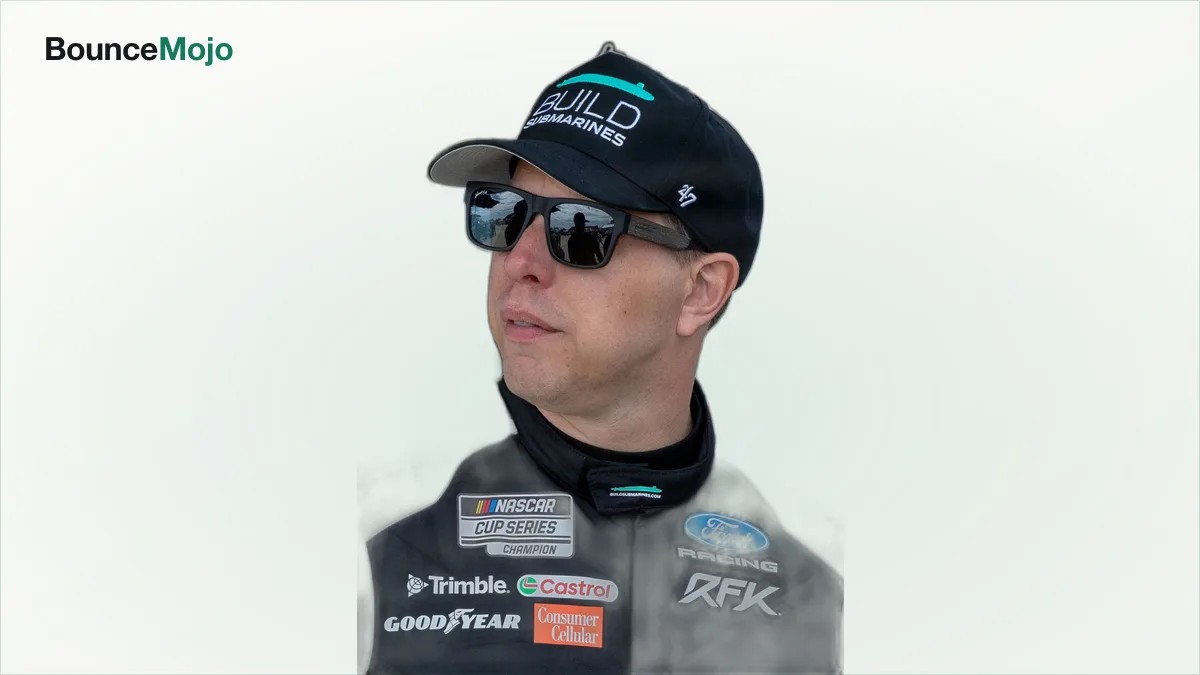
Driving the No. 2 for Team Penske, Keselowski put together a championship season and won the 2012 NASCAR Cup Series title. For a driver who’d grown up watching his family scrape by, it was total vindication, proof that talent forged in scarcity could beat the sport’s biggest budgets.
But Keselowski’s most distinctive move came later, off the track. In 2022, he stepped into an ownership role at RFK Racing, the kind of position most drivers never reach. The businessman the family shop had raised finally became an owner.
Here’s the truth: the championship made him a star, but the ownership made him something rarer, a driver who controls a piece of the business itself.
The price
Because the road there ran through years of financial struggle and pressure.
Keselowski spent his early career fighting the budget disadvantages that come with a family operation, watching better-funded rivals get chances he had to earn twice over. Even after reaching the top, the transition into ownership carried real risk, betting his own capital and reputation on running a team in a brutally expensive sport.
He’d learned the hard way that racing rewards money as much as speed. Turning himself into an owner meant taking on exactly that pressure, personally. That was the price of his ambition.
The Unvarnished Truth
Keselowski’s story isn’t a simple rags-to-riches fairy tale, and it shouldn’t be told as one.
His early career was defined by financial limits that talent alone couldn’t overcome, a reminder that in racing, resources often decide who gets a chance. His success depended not just on skill but on catching the right owner’s attention at the right time.
There’s also the risk in his business path. Owning a race team and founding a manufacturing company are genuinely difficult ventures, and neither guarantees success. Keselowski has staked his post-driving future on bets that could go either way.
Here’s what’s easy to miss: the scarcity that limited him also made him. The businessman’s mind that lets him run a team and build a company came directly from growing up broke in racing. The disadvantage became the education.
None of that dims the championship. But it explains why his story is really about turning hustle into ownership.
Controversies and Criticisms
Keselowski’s career has had its friction, and it’s worth being honest about it.
Early on, he built a reputation as an aggressive, sometimes abrasive driver, which sparked feuds and made him a polarizing figure in the garage. His outspokenness, including candid views on the sport’s economics and technology, has occasionally put him at odds with the establishment.
There’s also a fairer debate about opportunity. Keselowski’s rise depended heavily on Penske’s backing, and critics note that plenty of equally talented drivers from underfunded families never get that break. His story is as much about a lucky, well-earned door opening as it is about pure merit.
So what does a career like this teach the rest of us? A great deal about thinking beyond the seat.
What We Can Learn From Brad Keselowski
Navigating hard times
Keselowski’s real lesson is about understanding your industry, not just your craft.
Growing up broke in racing, he learned the business side out of necessity, and that knowledge became his edge. When his driving prime began to pass, he wasn’t stranded, because he’d always understood how the money and the ownership worked.
In other words: knowing how to drive was never enough. Knowing how the whole business operated is what set up his future.
The success blueprint
The blueprint here is about moving from employee to owner.
Keselowski spent years as a hired driver, then deliberately positioned himself to own a stake in RFK Racing and to build his own company. He stopped waiting for someone else’s ride and started building assets of his own.
Want the fuller picture of how that translated into wealth? The full net worth breakdown shows how his championship and business ventures became a roughly $40 million fortune. And to see how he ranks among the sport’s biggest earners, the richest race car drivers list puts it in context.
The deeper takeaway is about leverage. Keselowski proved that a salary has a ceiling, but ownership and business-building do not, and that the people who last in any sport are the ones who own a piece of it.
Which brings us to the final reckoning on the man.
Final Verdict
Brad Keselowski is going to be remembered for the wrong thing if you only count the trophy.
Most fans will file him under “2012 champion” and stop there. A smarter group will remember the harder truth: a kid from a broke Michigan racing family who learned the business before the glory, earned a top ride through relentless hustle, won a title, and then did what almost no driver does, became an owner and a company founder.
Here’s the bottom line: the championship made him a star. The business mind made him wealthy and durable. Keselowski is living proof that in racing, understanding the money matters as much as mastering the machine.
He is a NASCAR champion. He is also a rare driver who turned scarcity into an entrepreneur’s education. And in the long run, that businessman’s story is the version worth remembering.
Shop Brad Keselowski on Amazon
Books, audiobooks, merch and more, handpicked for fans.
As an Amazon Associate we earn from qualifying purchases.
Frequently Asked Questions
Where did Brad Keselowski grow up?+
Keselowski was born on February 12, 1984, in Rochester Hills, Michigan, into a working-class racing family that ran its own short-track team, often on a shoestring budget.
Is Brad Keselowski from a racing family?+
Yes. His father Bob Keselowski and uncle Ron were both racers, and the family ran its own operation. Brad grew up in the shop, learning the sport from the ground up.
How did Brad Keselowski break into NASCAR?+
Keselowski earned attention in the lower series and was signed by Roger Penske, who gave him his Cup Series opportunity, launching his championship career.
When did Brad Keselowski win the NASCAR championship?+
Keselowski won the 2012 NASCAR Cup Series championship driving the No. 2 for Team Penske.
What businesses does Brad Keselowski own?+
Keselowski is a co-owner of RFK Racing and the founder of Keselowski Advanced Manufacturing, a metal 3D-printing company, reflecting his interest in business and engineering.
Want the money side of the story?
Read Brad Keselowski's Full Net Worth Breakdown →Shop Brad Keselowski on Amazon
Books, audiobooks, merch and more, handpicked for fans.
As an Amazon Associate we earn from qualifying purchases.