Booker T Biography: From a Prison Cell to Six-Time World Champion
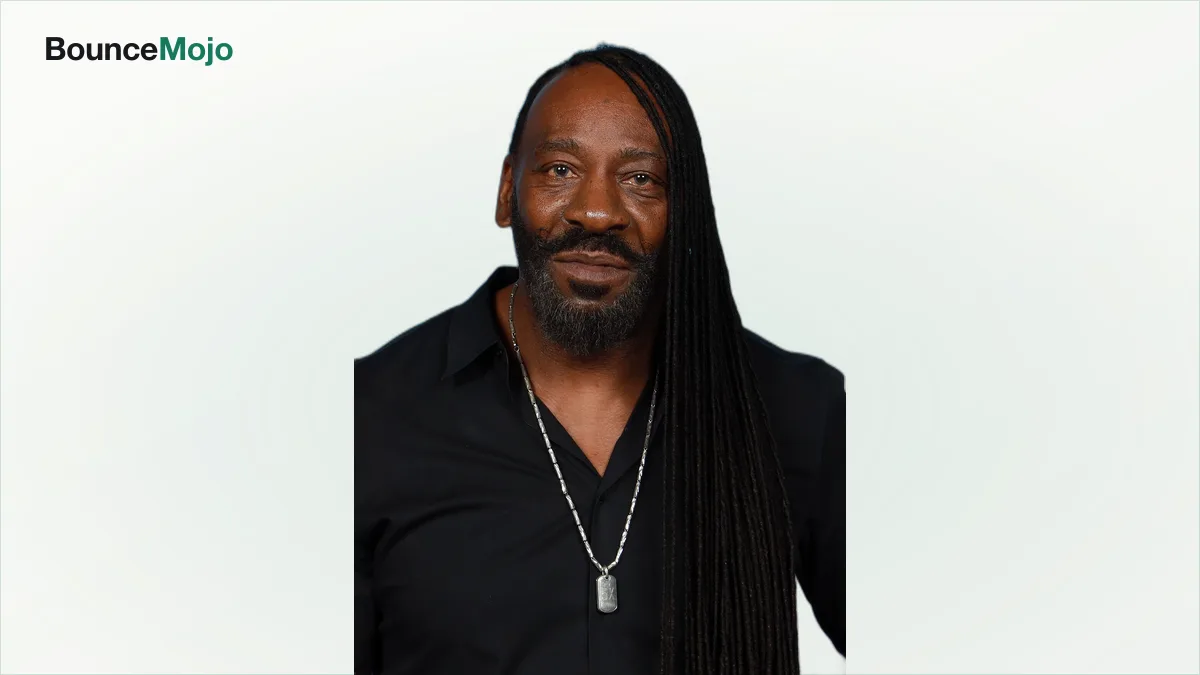
Most people know Booker T as the charismatic six-time champion with the spinaroonie and the “now watch this” catchphrase. That highlight reel hides a story that starts in a prison cell.
Here’s what most people miss: the man who became the most decorated wrestler in WCW history spent 19 months locked up for armed robbery before he ever set foot in a ring.
The Myth vs. The Reality
The myth is a highlight reel. Booker T: the flashy, athletic champion, the Harlem Heat star, the guy doing the spinaroonie to a roaring crowd. A natural showman who made it look easy.
The reality is a redemption story that almost didn’t happen.
Here’s the deal: before Booker was a champion, he was an inmate. He grew up in deep poverty, lost both parents young, drifted toward crime, and served real prison time for armed robbery. The confident performer fans saw was built on a foundation of loss and second chances that most people never knew about.
That gap between the smiling champion and the young man in a cell is the whole story. Booker didn’t stumble into success. He climbed out of a hole most people never escape.
You might be wondering: how does a convicted felon become a Hall of Fame athlete and a business owner? It starts with a childhood in Houston that took almost everything from him.
The World That Made Booker T
Booker came up in a working-class Black Houston that offered few clear paths out.
He grew up in South Park, a neighborhood where opportunity was thin and trouble was easy to find. This was a world without safety nets, where a kid who lost his parents could slip through the cracks fast. For young men like Booker in the 1980s, the options were limited, and the margin for error was razor thin.
Now: wrestling wasn’t yet the glamorous, big-money industry it would later become for him. It was a distant dream, something on TV, not a realistic career for a kid from South Park with a criminal record. The path from where he started to where he ended up simply did not exist for most people.
That’s what makes his climb so remarkable. But before the climb, there was the fall, and it started with a childhood defined by loss.
The Crucible: Early Life and the Climb
The Environment That Shaped Him
Booker Huffman was the youngest of eight children, and grief found him early.
His father died when Booker was less than a year old. His mother died when he was just 13. Here’s the truth: by his early teens, Booker was effectively without parents, relocated and shuffled among family, living for a time with an older sister and then his brother. That kind of loss, that young, leaves a mark. It left Booker searching for stability in a world that hadn’t given him much.
He found some joy in break dancing, spending his free time battling other kids in parks around Houston, an early sign of the athleticism and showmanship that would later define him. But joy didn’t pay the bills.
The Catalyst
After high school, Booker worked a series of jobs, including one at a Wendy’s restaurant. Frustration with a difficult manager, combined with the pull of easy money, led him and some friends to rob the place. They hit it repeatedly.
The consequence was severe. Booker was sentenced for armed robbery and served roughly 19 months before parole. That prison term was the inciting incident of his entire life, the rock bottom that forced a choice. He could stay on that path, or he could find another one.
The other path came in the form of his own brother.
The Key Players
Booker’s redemption ran through the people who believed in him when he had little reason to be believed in.
Lash “Stevie Ray” Huffman, his older brother, was the catalyst. After Booker got out, Lash pointed him toward a local wrestling school in Houston. The two trained together and formed Harlem Heat, becoming one of the most successful tag teams in WCW history. Without his brother, there’s no wrestling career at all.
His trainers and the WCW system gave a young ex-con a legitimate shot, a rare thing. And later, Sharmell, his wife and former on-screen manager, became a steadying force in his personal life.
Here’s the kicker: Booker earned his place among a golden generation of champions. He shared the ring and the era with stars like Hulk Hogan in WCW and later crossed paths with the likes of Kurt Angle in the WWE title picture. The kid from South Park stood alongside the biggest names in the business.
That rise set up his greatest triumphs, and a cost he willingly paid.
The Turning Point
The Pinnacle
Booker’s peak was extraordinary for a man who started where he did.
He became the most decorated wrestler in WCW history, holding 21 titles in that company, including a record number of Television Championships and, with Stevie Ray, a record number of tag-team reigns. He broke out as a singles star, won multiple world championships, and carried that success into WWE, where he became a world champion again. Six world titles in total. Two WWE Hall of Fame inductions. From a prison cell to the top of the industry.
The Price
But the climb demanded relentless work and reinvention.
Booker had to prove himself over and over, first as a tag wrestler, then as a singles star, then in a new company with a new audience. The grind of decades on the road, the constant need to stay relevant, and the pressure of carrying his redemption story publicly all took their toll. Success didn’t erase the past. It required him to keep outrunning it.
That drive to never go backward shaped the flaws and strengths beneath the champion.
The Unvarnished Truth
Booker has been remarkably open about his past, and that honesty is his defining trait.
Rather than hide his prison sentence, he has shared it, turning his lowest moment into a message about second chances. That takes real courage. Plenty of public figures bury their mistakes. Booker built part of his identity around owning his.
In other words, the confident showman is also a genuinely reflective man who understands exactly how close he came to a very different life. His candor about crime, poverty and redemption humanizes him in a way few wrestlers manage. He isn’t pretending to be flawless. He’s proof that a flawed start doesn’t have to be the whole story.
His A&E documentary and various interviews have gone deep on this. Booker has talked about the specific fear of prison, the loss of his mother while he was still a boy, and the way wrestling gave a directionless young man a purpose he’d never had. He has described the discipline of training as the first structure his adult life ever offered him. That framing is important, because it reframes wrestling not as entertainment but as salvation. For Booker, the ring wasn’t a stage, it was a lifeline. He also credits his faith and his family, especially his brother and later his wife, for keeping him grounded once success arrived. Plenty of performers get famous and lose themselves. Booker did the opposite: fame gave him the stability his childhood never had, and he guarded it carefully. That gratitude, worn openly, is a defining part of who he became.
That honesty extends to the fair criticisms of his long career.
Controversies and Criticisms
Booker’s career, by wrestling standards, has been relatively clean, but not without bumps.
He has had occasional on-air gaffes and awkward moments as a commentator, the kind of thing that comes with decades of live broadcasting. Some critics have debated his in-ring booking or his fit in various commentary teams. And as with any long career, there were creative disagreements and ups and downs across companies.
Here’s the truth: none of it amounts to scandal. Booker’s story is overwhelmingly one of redemption and stability. The worst you can say is that a broadcaster sometimes stumbled on live TV. Against a backdrop of prison-to-Hall-of-Fame, those are footnotes. His character, in the years that mattered most, has been steady.
The way he frames his own journey reveals the mindset that made it possible.
Quote Analysis and Literary Breakdown
Booker’s words carry the plainspoken wisdom of a man who earned everything twice.
When he talks about his prison time, the message is consistent: your past doesn’t have to define your future. That isn’t a slogan for Booker. It’s a lived reality, and it lands harder coming from someone who actually walked that road.
His trademark energy on the mic, the catchphrases, the spinaroonie, reflects genuine joy at where he ended up. A man who once had almost nothing found something worth celebrating, and it shows in his performances.
And his emphasis on ownership, building Reality of Wrestling rather than just collecting a paycheck, reveals the deepest lesson of his life: never again be at the mercy of someone else’s decisions. Control your own destiny. He learned that the hard way.
What We Can Learn From Booker T
Navigating Hard Times
The lesson in Booker’s early life is that rock bottom can become a foundation. Prison could have ended him. Instead, it became the turning point that forced him toward a better path. Hard times don’t have to be the final word.
The Success Blueprint
Here’s the blueprint: build something you own. Booker took his championship earnings and invested in Reality of Wrestling, a business he controls outright, so he’d never again depend entirely on someone else’s company. Compare that ownership instinct to peers like Chris Jericho and Big Show, who each built durable careers beyond the ring, and you see the pattern across our richest wrestlers ranking: the ones who last create assets, not just earnings.
Becoming Better
The deepest lesson from Booker is about honesty and redemption. He didn’t hide his worst chapter. He owned it, learned from it, and used it to help others believe in second chances. That kind of accountability is rarer, and more powerful, than any title reign.
And he pays it forward. Through Reality of Wrestling, Booker trains young people, many from backgrounds like his own, giving them the kind of structure and opportunity that once saved him. That’s the mark of a man who understood exactly what he was given and chose to hand it down. The break-dancer from South Park who once robbed a fast-food restaurant now spends his days building futures for the next generation of performers. If there’s a cleaner definition of redemption, it’s hard to find one.
Final Verdict
Booker T is one of wrestling’s great redemption stories, and one of its smartest businessmen.
He climbed from a Houston prison cell to become the most decorated wrestler in WCW history, a two-time Hall of Famer, and the owner of his own thriving wrestling company. His journey proves that where you start doesn’t determine where you finish, and that owning your mistakes can become the foundation of everything that follows. Few careers in any sport carry that much weight behind the entrance music.
For the money side of that remarkable arc, read Booker T’s full net worth breakdown and how a six-time champion turned second chances into lasting wealth. The kid from South Park didn’t just make it out. He built something no one can take from him.
Shop Booker T on Amazon
Books, audiobooks, merch and more, handpicked for fans.
As an Amazon Associate we earn from qualifying purchases.
Frequently Asked Questions
Where did Booker T grow up?+
Booker T grew up in Houston's South Park neighborhood after his family moved from Louisiana. He was the youngest of eight children and lost both parents before he was a teenager.
Why did Booker T go to prison?+
As a young man, Booker and some friends robbed a Wendy's restaurant where he had worked, hitting the location multiple times. He was sentenced for armed robbery and served roughly 19 months.
Who is Stevie Ray to Booker T?+
Stevie Ray, real name Lash Huffman, is Booker T's older brother and tag-team partner. Together they formed Harlem Heat, one of the most successful tag teams in WCW history.
How many world titles did Booker T win?+
Booker T is a six-time world champion and the most decorated wrestler in WCW history, with 21 total titles in that company alone.
Is Booker T in the WWE Hall of Fame?+
Yes. Booker T was inducted into the WWE Hall of Fame twice, once as a singles star and once as part of Harlem Heat with his brother.
Want the money side of the story?
Read Booker T's Full Net Worth Breakdown →Shop Booker T on Amazon
Books, audiobooks, merch and more, handpicked for fans.
As an Amazon Associate we earn from qualifying purchases.