Big Show Biography: The Gentle Giant Who Outlasted Everyone
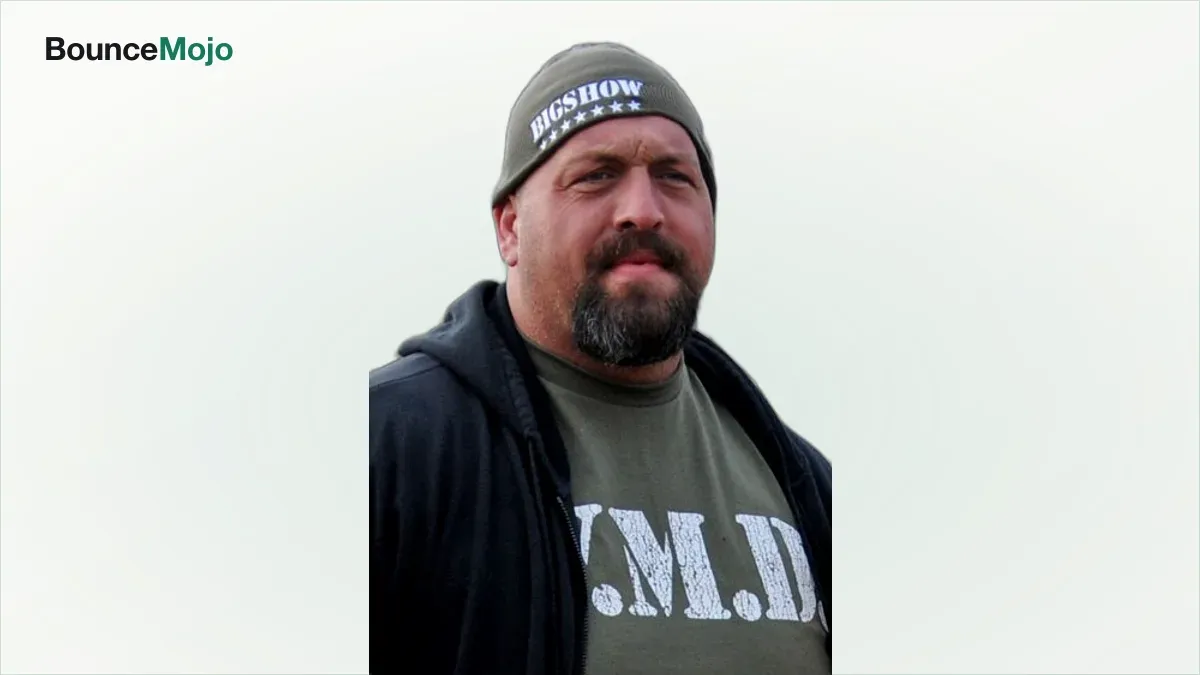
Most people know Big Show as the seven-foot mountain who chokeslammed half the WWE roster. That image misses almost everything that matters about him.
Here’s what most people miss: the same condition that made him a giant killed the man he was most often compared to, and Wight had to make a choice about his own body that Andre the Giant never did.
The Myth vs. The Reality
The myth is a cartoon. Big Show: enormous, slow, a monster to be slain, a special attraction wheeled out to make other stars look brave. Fans loved the spectacle and rarely looked past it.
The reality is far more interesting.
Here’s the deal: Wight was one of the most agile and durable big men the business ever produced. A seven-footer who could move, sell, tell a story, and take a beating for 25 years without his body giving out the way giants’ bodies almost always do. That last part is the whole ballgame. The wrestling graveyard is full of oversized attractions who burned bright and broke down fast. Wight did the opposite.
You might be wondering: how does a man built like that last three decades when the most famous giant before him died at 46? The answer starts with a decision Wight made about his own biology, and a childhood spent being the biggest person in every room.
The World That Made Big Show
Wight was born in 1972 into a wrestling business that had a specific and cruel role waiting for a man his size.
For most of the 20th century, the giant was a carnival draw. Andre the Giant defined the archetype: an unbeatable colossus, protected, mythologized, and ultimately consumed by the very condition that made him famous. Acromegaly gave Andre his size and his box-office appeal, then wore his heart and joints down until he died young. The template said a giant’s career would be short, spectacular, and physically doomed.
Now: Wight arrived into that expectation. When WCW signed him in 1995, they leaned straight into the myth, billing him as Andre’s son and calling him “The Giant.” The whole pitch was that history was repeating itself.
But history didn’t repeat. Wight rewrote it. And to understand how, you have to go back to a kid in South Carolina who was already the size of a grown man before he could drive.
The Crucible: Early Life and the Climb
The Environment That Shaped Him
Paul Donald Wight II grew up in Aiken, South Carolina, and he was never small.
Acromegaly meant his growth ran wild. By 12 he was reportedly around 6 foot 2, over 200 pounds, with a grown man’s frame. Imagine being a child in a body that made adults do a double take. That kind of size shapes a person. It made him an obvious athlete, a standout on the basketball court and football field at Wyman King Academy, and it drew constant attention he never asked for.
Here’s the truth: being a giant is not a gift you simply cash in. It comes with medical risk, social isolation, and a body that keeps changing on you. By the time Wight was playing college basketball at Wichita State, he stood 7 foot 1.
The Catalyst
The turn came through a mix of basketball connections and sheer physical presence. People saw a seven-footer who could actually move, and wrestling came calling. WCW signed him in 1995.
But before he ever committed fully to the ring, Wight made the decision that defines his whole story: he had surgery on his pituitary gland to halt the acromegaly. Andre had refused that path. Wight took it. That single choice likely added decades to his life and his career.
His debut was audacious. At Halloween Havoc in 1995, “The Giant” challenged Hulk Hogan for the WCW World Heavyweight Championship and won the title in his first major match. Almost no one debuts on top like that. He did.
That fast start raised a question, though: who guides a raw giant so he doesn’t burn out like every giant before him?
The Key Players
Wight’s career was shaped by the men around him, some mentors, some rivals, some cautionary tales.
Andre the Giant was the ghost in every room. Wight was compared to him from day one, and Andre’s early death was the fate everyone quietly expected Wight to share. Wight turned that comparison into motivation and a warning.
Hulk Hogan was his first great foil. Debuting against Hogan gave Wight instant credibility and a crash course in main-event storytelling from the biggest star the business had produced.
Here’s the kicker: the most important relationship was with WWE and Vince McMahon. When Wight jumped to WWE in 1999, McMahon didn’t just book him, he invested in him as a long-term fixture. That mutual bet, a company willing to guarantee a giant real money year after year, is what made Wight financially secure in a business notorious for chewing performers up and spitting them out broke.
Which brings us to the triumph, and the quiet cost hidden inside it.
The Turning Point
The Pinnacle
Wight’s peak wasn’t one match. It was the fact that he stayed at the top for more than 20 years.
He held world championships in both WCW and WWE. He main-evented pay-per-views against nearly every major star of two generations, from Hogan to The Rock to John Cena. He crossed into Hollywood with The Waterboy, Jingle All the Way and eventually his own Netflix sitcom, The Big Show Show, in 2020. And when full-time wrestling got harder, he reinvented himself again as an AEW commentator. Few performers get one act. Wight got several.
The Price
But every giant pays a toll, and Wight’s was constant physical management.
Carrying a seven-foot, 400-plus-pound frame through 25 years of bumps is brutal on knees, hips and back. He wrestled through injuries, managed his weight publicly, and lived with the ongoing reality of a body built by a disorder. The price of being the giant was never being able to simply be normal-sized, never blending in, always managing the machine.
That physical reality opens a harder subject: the flaws and struggles behind the friendly giant image.
The Unvarnished Truth
Wight has been refreshingly honest about the hard parts of being him.
He has spoken openly about the loneliness and awkwardness of childhood, about how a body that big invites stares, doubts, and constant comparison. He has talked about the mental grind of maintaining a wrestling schedule at his size, and about the fluctuations in weight and conditioning that shadowed his career.
In other words, the “gentle giant” was a real, complicated person under the gimmick. Not a monster. Not a cartoon. A man who spent his life negotiating with a body most people can’t imagine living in.
Which is exactly why the criticisms he has faced deserve a fair hearing.
Controversies and Criticisms
Wight’s career drew its share of critique, most of it about the ring rather than the man.
Some fans and pundits argued he was booked inconsistently, a monster one month and a comedy act the next, which they felt undercut his credibility. Others pointed to stretches where his conditioning slipped, a fair critique for any athlete. And the endless Andre comparisons cut both ways, elevating him while also boxing him into a legacy that wasn’t his to carry.
There’s also the question of unrealized potential. Some observers felt that a performer as physically gifted as Wight, a true seven-footer who could genuinely move, should have been protected as an unstoppable force rather than turned into a punchline. When you make the giant lose too often or play him for laughs, the argument goes, you spend down the very aura that made him special. Wight himself has spoken with good humor about this, never bitter, always the professional. He took whatever role the story required, monster or comic foil, and made it work. That flexibility is arguably why he lasted so long, but it’s fair to wonder what an even more disciplined booking approach might have built.
Here’s the truth: none of these are scandals. Wight’s career is remarkably clean by wrestling standards, no career-ending disgraces, no financial ruin, no tragic spiral. The worst you can say is that a giant was sometimes booked like a prop. That is a small complaint against a very long, very stable career.
And the way he talks about that career reveals the mindset that made it work.
Quote Analysis and Literary Breakdown
Wight’s own words explain his survival better than any stat line.
On his size, he has framed it not as a blessing but as a job to manage, a body he had to maintain rather than simply enjoy. That framing, treating his greatest asset as a responsibility, is the mindset of a professional, not a phenomenon.
On the surgery that halted his acromegaly, the subtext is stark: he chose life and longevity over the myth of the untouchable giant. Andre embraced the fate. Wight refused it. In interviews he has spoken about wanting to be there for his family, a very human motive behind a very consequential medical decision.
And on his AEW pivot, his message is essentially pragmatic: know when to change roles so the paychecks and the health both last. That is the philosophy of a survivor.
What We Can Learn From Big Show
Navigating Hard Times
The lesson in Wight’s early life is that your biggest disadvantage can become your only real edge, but only if you manage it instead of letting it manage you. He turned a medical condition into a career and made the hard choice to treat it. Face the thing head on.
The Success Blueprint
Here’s the blueprint: build for durability, not for one big year. Wight prized guaranteed contracts, diversified into acting before he needed to, and reinvented his role the moment the ring became a risk. Those are portable lessons for anyone whose earning power depends on a body or a single skill. Compare his steady climb to peers like Booker T and Chris Jericho, who also refused to bet everything on wrestling alone, and the pattern is clear. The wrestlers who last are the ones who plan for the day the crowd stops roaring, a truth you can trace across our richest wrestlers ranking.
Becoming Better
The deeper takeaway is humility about your own body and honesty about your limits. Wight never pretended he was invincible. He managed the machine, took the surgery, changed roles, and outlasted nearly everyone who was supposed to burn brighter and die younger.
Final Verdict
Big Show is the rarest thing in his corner of the business: a giant with a happy ending.
He took the exact template that killed Andre the Giant and rewrote it through one brave medical decision and a career built on durability over spectacle. He earned a fortune, kept it, crossed into Hollywood, and reinvented himself into his fifties. For the money side of that story, read Big Show’s full net worth breakdown and how his guaranteed-money approach stacked up.
The friendly giant turned out to be the smart one all along. That is the real legacy, and it is a better one than the myth ever offered.
Shop Big Show on Amazon
Books, audiobooks, merch and more, handpicked for fans.
As an Amazon Associate we earn from qualifying purchases.
Frequently Asked Questions
Where did Big Show grow up?+
Paul Wight was born in Aiken, South Carolina, on February 8, 1972, and grew up towering over classmates because of acromegaly, a condition that accelerated his growth.
Does Big Show have the same condition as Andre the Giant?+
Yes. Wight was born with acromegaly, the same pituitary disorder Andre the Giant had. Unlike Andre, Wight underwent surgery to halt the condition's progression, which likely extended his life and career.
How did Big Show start in wrestling?+
He was discovered through basketball connections and signed with WCW in 1995, debuting as 'The Giant' and billed, with no biological basis, as the son of Andre the Giant.
Why did Big Show leave WWE for AEW?+
After more than two decades in WWE, Wight signed with All Elite Wrestling in 2021 under his real name, moving into a commentary role that let him keep earning without the full-time physical toll.
What is Big Show's real name?+
His real name is Paul Donald Wight II. He has wrestled as The Giant, The Big Show, and simply Paul Wight across a career spanning three decades.
Want the money side of the story?
Read Big Show's Full Net Worth Breakdown →Shop Big Show on Amazon
Books, audiobooks, merch and more, handpicked for fans.
As an Amazon Associate we earn from qualifying purchases.