Arjen Robben Biography: The Flying Dutchman Who Beat His Own Body
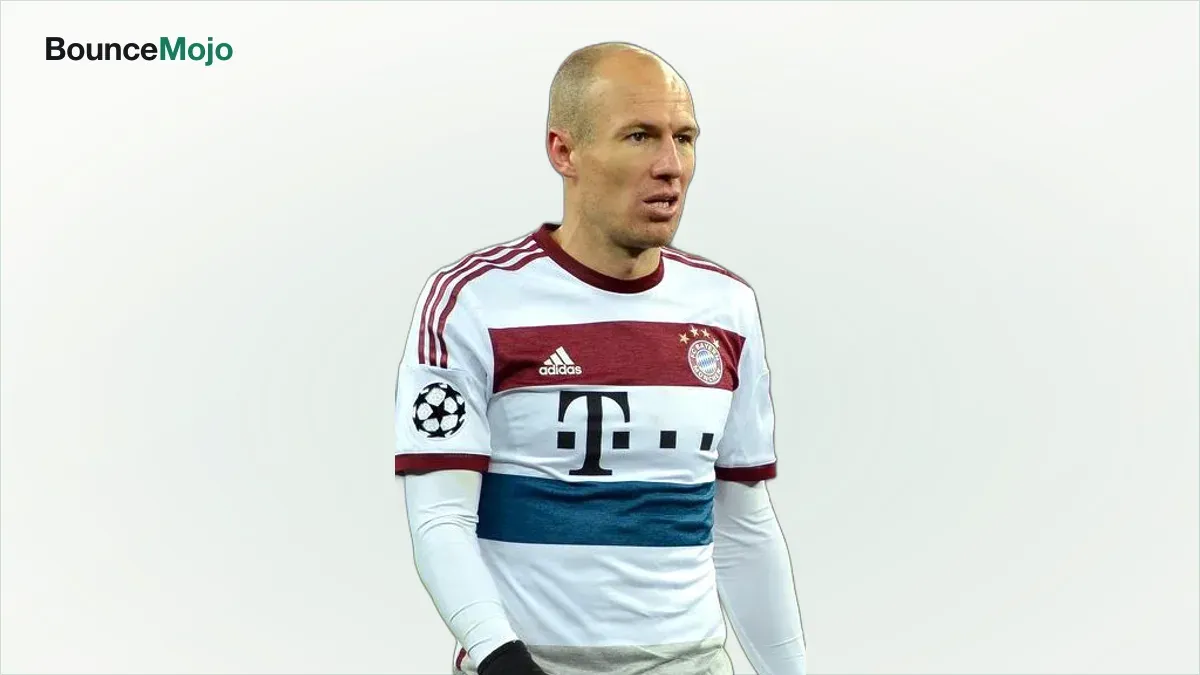
Most people remember Arjen Robben for one move: the cut inside, the curl, the far corner. Defenders knew exactly what he would do and still could not stop him.
Here’s what most people miss: the same body that produced that magic betrayed him again and again, and he kept coming back anyway.
The Myth vs. The Reality
The myth is pure speed and swagger. Arjen Robben: the Flying Dutchman, the winger who terrorized full-backs, the man who scored in finals and won everything in Munich.
The reality carries far more pain.
Here’s the deal: Robben spent his entire career at war with his own body. The blistering pace that made him special also tore his muscles apart. He missed the equivalent of four full seasons to injury at Bayern Munich alone. Every burst of brilliance came with the risk of another spell in the treatment room.
And the “predictable” tag misses the point. Everyone knew Robben cut inside onto his left foot. Defenders were told to force him wide. He did it anyway, over and over, in the biggest games of his life, because pure technique beat pure knowledge.
You might be wondering: how does a kid from a quiet Dutch town become one of the most feared attackers in Europe? To understand that, you have to go back to Bedum.
The World That Made Arjen Robben
Robben was born in 1984 in Bedum, a small town near the city of Groningen in the northeast of the Netherlands.
This was flat, rural, working-class Holland, far from the glamour of Amsterdam or the big European capitals. Football was everywhere, though, and Dutch coaching culture was among the best in the world. Robben grew up soaked in the technical, attacking philosophy that made his country a football powerhouse despite its small size.
Now: his father Hans was the key figure. A former amateur defender for the local club, Hans instilled a deep love of the game and drilled his son in the Coerver Method, a training approach obsessed with ball mastery and one-on-one skills. That foundation built the dribbler the world would later fear.
This was also an era when Dutch clubs exported talent to the biggest leagues in Europe. A gifted teenager in Groningen could dream realistically of Chelsea, Real Madrid, or Bayern. Robben would go on to play for all three.
But before any of that, a shy, quick kid had to prove he was more than a local prospect.
The Crucible: Early Life and the Climb
The Environment That Shaped Him
Robben’s talent was obvious early. FC Groningen signed him and pushed him into their first team for the 1999-2000 season, when he was just a teenager.
He was named the club’s player of the year by 2000-01, a stunning rise for someone so young. But even then, the pattern that would haunt his career was visible. Robben was electric when fit and fragile when pushed. His slight frame and explosive style put constant strain on his muscles.
Here’s the truth: that early success came fast, and it raised the stakes just as fast. By 2002 he had moved to PSV Eindhoven, and by 2004, at 20, he was a Chelsea player under Jose Mourinho. He had gone from small-town prospect to Premier League star in a handful of years.
The Catalyst
The move that defined everything came in 2009. After spells at Chelsea and Real Madrid, where he won trophies but was often injured and, at Madrid, pushed out by the arrival of new stars, Robben joined Bayern Munich.
At the time, some saw it as a step down from Madrid. It was the making of him.
It gets better: in Munich, Robben found a home. He formed a devastating partnership with Franck Ribery, the pair nicknamed “Robbery,” and became the club’s biggest match-winner. That’s where his legend, and most of his fortune, took shape.
The Key Players
No one reaches Robben’s heights alone, and his story runs through a handful of crucial people.
Hans Robben. His father, coach, and agent. Hans shaped his technique as a boy and handled his contracts as a man, keeping Robben’s business in the family and his head grounded.
Franck Ribery. His wing partner at Bayern. Together, “Robbery” formed one of the most feared attacking duos in football history, each making the other more dangerous.
Jose Mourinho. The coach who brought a young Robben to Chelsea and gave him his first taste of elite English football and silverware.
Jupp Heynckes and Pep Guardiola. The Bayern managers who built teams around Robben’s threat, delivering the treble in 2013 and years of dominance.
Think about it: a father who built the player, a partner who freed him, and coaches who trusted his genius. That combination reached its peak on one night at Wembley.
The Turning Point
The Pinnacle
Robben’s mountaintop came on May 25, 2013.
In the Champions League final against Borussia Dortmund at Wembley, with the score level deep into the second half, Robben struck the winning goal in the final minute. It sealed Bayern’s treble and erased years of near-misses, including the agony of losing the 2012 final at home on penalties. He had been the villain of one final and became the hero of another.
The trophies piled up around it too, eight Bundesliga titles, cup after cup, a fortune traced in his own net worth breakdown. For a player so often written off as fragile, the haul was staggering.
The Price
Here’s the kicker: the glory came wrapped in constant physical pain.
Robben’s career was a stop-start ordeal. Hamstrings, groins, and eventually his Achilles broke down again and again. At Bayern alone he missed roughly 176 games, close to four full seasons. He would return to form, thrill everyone, then vanish back into the treatment room. The genius the world saw was rationed by a body that could not keep up with it.
The pinnacle brought immortality and wealth. It also demanded a career-long grind just to stay on the pitch. Which brings us to the vulnerabilities behind the flying runs.
The Unvarnished Truth
Robben’s story isn’t about scandal. It’s about frustration, fragility, and a stubbornness that was both his strength and his flaw.
He was famously demanding, of referees, of teammates, and of himself. He wanted the ball, wanted the shot, and sometimes drew criticism for greed in front of goal. He also earned a reputation for going down easily in the box, a charge that followed him for years.
Now: none of that erases his greatness. It humanizes it. Robben played on the edge of his physical limits every week, knowing another injury was always one sprint away. The intensity that made him difficult is the same intensity that made him unstoppable.
The honest read is that Robben’s body was his greatest obstacle and his stubborn will was his greatest weapon. He could have coasted, protected himself, played it safe. He never did. He kept attacking, kept cutting inside, kept risking the muscle tear, because that was the only way he knew how to play.
Controversies and Criticisms
Robben’s career is remarkably clean off the pitch, but a few debates followed him.
The diving accusations. Critics accused Robben of exaggerating contact to win fouls and penalties, especially in England. He always disputed it, but the label stuck through his career.
The Real Madrid exit. Robben’s departure from Madrid in 2009 was read by some as a failure, a talented player pushed out. History proved the move right, but at the time it stung.
The predictability debate. Pundits endlessly noted that everyone knew his signature move. The criticism, that a top player should be less readable, was real, even if he beat it every time.
The injury frustration. Robben himself once admitted despair at his recurring problems, saying “nothing’s working out.” Some questioned whether his body could ever be trusted for a full season. It rarely could, and he won anyway.
What We Can Learn From Arjen Robben
Navigating Hard Times
The first lesson is about resilience: setbacks don’t have to define your ceiling. Robben lost years to injury, yet he still built one of the most decorated careers of his generation. He refused to let a fragile body shrink his ambition.
But here’s the truth his story makes plain: you can succeed on your own terms even when circumstances fight you the whole way. Robben never had a clean, uninterrupted run. He won everything anyway, in bursts, between breakdowns, on sheer will.
The Success Blueprint
If you want the replicable part, it’s this: master one weapon so completely that knowing it doesn’t matter. Robben’s cut-inside was telegraphed for a decade. Defenders still could not stop it, because his execution was flawless. That single move helped build the fortune that ranks him among the names on our richest soccer players list.
That’s transferable. The lesson is that world-class execution of one thing beats being unpredictable at many. Robben proved that mastery outweighs mystery.
Becoming Better
The deepest lesson is about coming home. After retiring in 2019, Robben returned to his boyhood club, FC Groningen, in 2020, purely out of love for the game and the town that made him. It wasn’t about money. His net worth, detailed in his net worth breakdown, was already secure.
In other words, success means little if you lose the joy that started it. Robben chased that joy back to Bedum. The goal isn’t only to win. It’s to remember why you fell in love with the game in the first place.
Final Verdict
Arjen Robben is one of the greatest wingers of the modern era, and one of the most misunderstood. The world saw speed, swagger, and a signature move. Beneath it was a player fighting his own body every single week.
And here’s the twist that reframes everything: the fragility everyone pitied was the price of the very style that made him special. The explosive pace that tore his muscles is the same pace that terrified defenders and won finals. He could not have one without the other, and he chose greatness over caution every time.
Robben’s fortune, laid out in his net worth breakdown, rewards a decorated career and careful choices. But his story rewards something rarer: a player who beat his own body long enough to become a legend, then went home to Groningen to remember why he ever started.
Shop Arjen Robben on Amazon
Books, audiobooks, merch and more, handpicked for fans.
As an Amazon Associate we earn from qualifying purchases.
Frequently Asked Questions
Where did Arjen Robben grow up?+
Robben grew up in Bedum, a small town near Groningen in the northeast of the Netherlands. His father, a former amateur defender, coached his early love of the game and later became his agent.
What was Arjen Robben's signature move?+
Robben was famous for cutting inside from the right wing onto his left foot to shoot or curl the ball into the far corner. Defenders knew it was coming and still could not stop it.
Why was Arjen Robben's career defined by injuries?+
Robben suffered repeated muscle and tendon problems throughout his career. At Bayern Munich alone he missed roughly 176 games, close to four full seasons, yet still won everything.
What was Arjen Robben's biggest goal?+
His most famous goal was the winner in the 2013 Champions League final against Borussia Dortmund at Wembley, sealing Bayern's treble in the final minute.
When did Arjen Robben retire?+
Robben retired in 2019, then made an emotional comeback at boyhood club FC Groningen in 2020 before retiring for good in 2021, partly due to persistent Achilles pain.
Want the money side of the story?
Read Arjen Robben's Full Net Worth Breakdown →Shop Arjen Robben on Amazon
Books, audiobooks, merch and more, handpicked for fans.
As an Amazon Associate we earn from qualifying purchases.