Angelique Kerber Biography: The Late Bloomer Who Toppled a Legend
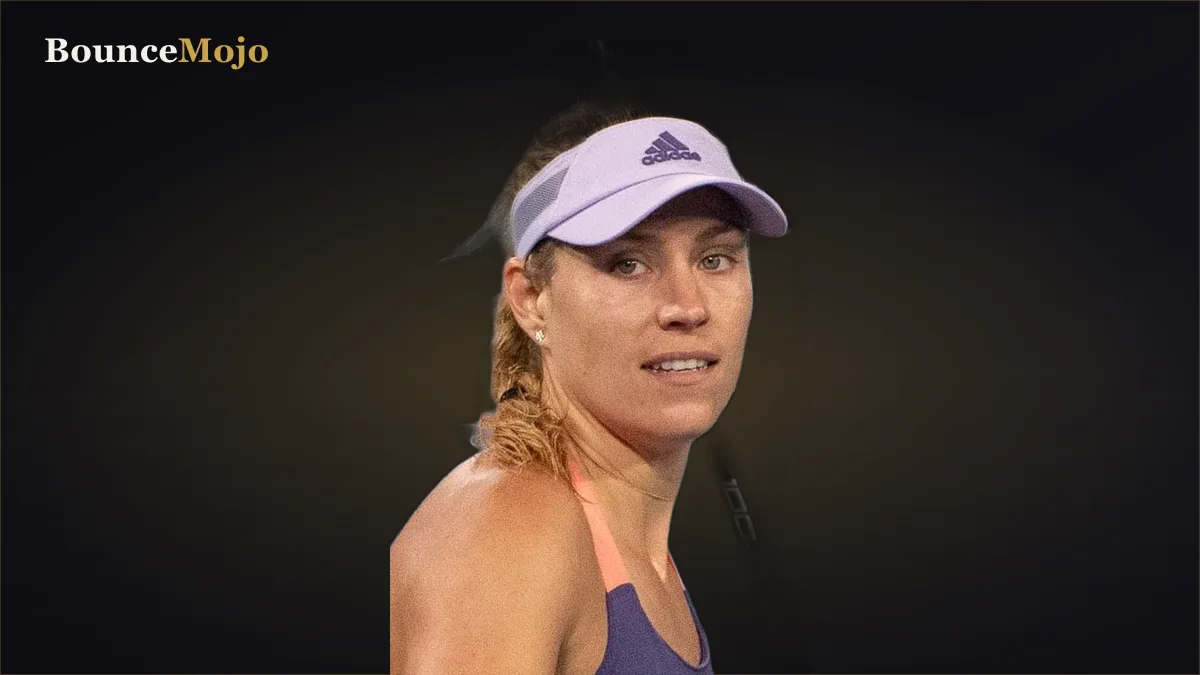
Most people know Angelique Kerber as the woman who beat Serena Williams twice on the biggest stages. What they miss is how close she came to never breaking through at all.
Here’s what most people overlook: Kerber was almost a career journeywoman, a good-not-great pro for years, until one impossible season changed her life at an age when many players fade.
The Myth vs. The Reality
The myth is that Kerber was destined for greatness, a natural champion in the mold of Germany’s tennis royalty. The three Slams and the No. 1 ranking make it look preordained.
Here’s the truth: Kerber was a late bloomer who spent years as a solid top-20 or top-10 player without a major. For a long time she looked like someone who would have a good career and no great one. She even considered walking away in her early 20s.
Now: what saved her was not raw talent alone. It was persistence, a defensive game she perfected, and a refusal to quit when the big wins would not come. The champion the world celebrated in 2016 was built on years of quiet frustration.
But where does that kind of stubborn resilience come from? From a working family with roots in two countries.
The World That Made Angelique Kerber
Kerber grew up in a Germany that carried a heavy tennis legacy. Steffi Graf and Boris Becker had made the country a tennis superpower in the 1980s and 90s, and every German player who followed lived in that shadow.
Here’s the deal: after Graf and Becker retired, Germany waited years for a new champion. That pressure fell on players like Kerber, who was expected to restore German glory. It was a burden and an opportunity.
Kerber also carried a dual identity. Her family was of Polish descent, and she maintained close ties to Poland, even training there at times. She belonged to two nations, and both claimed her.
You might be wondering: how does a player carry a whole country’s expectations and still break through? For Kerber, the answer took far longer than anyone hoped.
The Crucible: Early Life and the Climb
The Environment That Shaped Her
Angelique Kerber was born on January 18, 1988, in Bremen, Germany, to a family of Polish heritage. She started tennis young and turned pro as a teenager, but success came slowly.
Here’s the truth: for years Kerber was stuck. She was talented enough to beat good players but rarely the great ones, and Grand Slam runs ended early. By 2011 she was frustrated and questioning her future in the sport.
Then came a shift. A strong US Open run in 2011, reaching the semifinals, reignited her belief. She climbed into the top 10 and became a fixture there, a reliable presence but still without a major.
The Catalyst
The real catalyst was a change in mindset and belief as she entered her late 20s. Rather than fading, Kerber got hungrier. She refined her defensive, counterpunching style into a weapon that could frustrate even the biggest hitters.
What’s the bottom line? Years of near-misses did not break her. They prepared her for a single season when everything would finally align.
And when it did, she would face the greatest player of her era with a title on the line.
The Key Players
Several figures shaped Kerber’s long road.
Her longtime coach Torben Beltz was central to her career, guiding her through the lean years and her 2016 breakthrough. Their partnership, on and off through the years, was the backbone of her rise.
The looming figure over her whole career was Steffi Graf, the German icon Kerber was constantly compared to. Matching even a fraction of Graf’s legacy was the standard she was measured against.
Here’s the kicker: her greatest rival became her greatest springboard. Serena Williams, the dominant force of the era, was the opponent Kerber had to beat to make history. Two of her three Slam titles came directly at Serena’s expense.
Those matchups set up the defining season of her life, and the triumph that came with a hidden cost.
The Turning Point
The Pinnacle
2016 was Kerber’s masterpiece. She won the Australian Open, stunning Serena Williams in the final for her first major. She reached the Wimbledon final, won an Olympic silver medal, then captured the US Open and rose to world No. 1, the first German woman to top the rankings since Steffi Graf.
Then in 2018 she completed the story, beating Serena again to win Wimbledon, the title that had always meant the most. Three Slams, a No. 1 ranking, and a place in German tennis history.
The Price
But the pinnacle brought pressure. After 2016, Kerber struggled with the weight of being No. 1 and a Grand Slam champion. Expectations soared, and she endured slumps and criticism when she could not repeat that magic.
Here’s the truth: reaching the top made every subsequent loss feel like a failure. The very success that made her rich also made her a target, and she had to learn to live with that scrutiny.
Yet the hardest chapter of her personal story was one she chose herself.
The Unvarnished Truth
Kerber has been candid about her early doubts. She admitted she nearly quit tennis in her early 20s, worn down by the gap between her potential and her results. That honesty makes her breakthrough all the more remarkable.
It gets more human. After 2016, she faced the classic problem of the late bloomer who peaks: how do you follow a career-defining year? Kerber’s form dipped, and she spoke openly about the difficulty of staying motivated at the very top.
Then, in 2023, she made a life-changing choice, stepping away from the tour to become a mother. Returning to elite tennis as a parent added a new layer of challenge, one many athletes never attempt. Her willingness to embrace that transition showed a different kind of strength.
Controversies and Criticisms
Kerber’s career was relatively free of scandal. The main criticism was competitive: that outside of 2016 and 2018, she was inconsistent, and that she never fully capitalized on her peak. Fans debated whether she underachieved given her ability.
Now: the comparison to Steffi Graf was both a gift and a burden. Some critics felt Kerber could never truly escape Graf’s shadow, and every slump renewed questions about whether she was a worthy heir. That pressure was largely unfair, but it followed her.
Through it all, Kerber’s reputation stayed clean and respected. Her controversies were about performance, not character, and her three majors put her firmly among the German greats regardless of the comparisons.
What We Can Learn From Angelique Kerber
Navigating Hard Times
Kerber’s life teaches persistence. She nearly quit, endured years of near-misses, and faced constant comparison to a legend, yet she kept going until her moment finally arrived.
Here’s the lesson: your breakthrough may come later than you hope, and that is fine. Kerber peaked in her late 20s, an age when many players decline, proving that patience and belief can pay off big.
The Success Blueprint
Her path is a study in turning weakness into strength. Kerber built her game around defense and counterpunching, a style that let her frustrate bigger hitters, including Serena Williams.
That patient, resilient model echoes the careers of fellow late-blooming grinders like Simona Halep and Chris Evert. Kerber turned that on-court patience into lasting wealth, as her net worth story shows.
Final Verdict
Angelique Kerber restored German tennis glory when the country had waited nearly two decades for a champion. She beat the greatest player of her era twice on the biggest stages and reached the very top.
The verdict is clear: her real greatness was persistence. She was almost a career journeywoman, and instead she became a three-time Grand Slam champion by refusing to give up when the wins would not come.
Kerber’s story is proof that the late bloomer can beat the prodigy. Sometimes the champion is simply the one who waited longest, and fought hardest, for a single perfect season.
Shop Angelique Kerber on Amazon
Books, audiobooks, merch and more, handpicked for fans.
As an Amazon Associate we earn from qualifying purchases.
Frequently Asked Questions
Where is Angelique Kerber from?+
Kerber was born in Bremen, Germany, to a family of Polish descent, and she holds close ties to both Germany and Poland throughout her life and career.
When did Angelique Kerber win her Grand Slam titles?+
Kerber won the 2016 Australian Open, the 2016 US Open, and 2018 Wimbledon, all as an established but late-blooming star.
Did Angelique Kerber reach world No. 1?+
Yes. In 2016 Kerber became world No. 1, the first German woman to top the rankings since Steffi Graf.
How did Angelique Kerber beat Serena Williams?+
Kerber beat Serena Williams in the 2016 Australian Open final and the 2018 Wimbledon final, using relentless defense and counterpunching to upset the favorite.
Is Angelique Kerber a mother?+
Yes. Kerber stepped away from the tour to have her first child in 2023, later returning to competition as a mother.
Want the money side of the story?
Read Angelique Kerber's Full Net Worth Breakdown →Shop Angelique Kerber on Amazon
Books, audiobooks, merch and more, handpicked for fans.
As an Amazon Associate we earn from qualifying purchases.