Amanda Nunes Biography: The Lioness Who Beat Every Legend
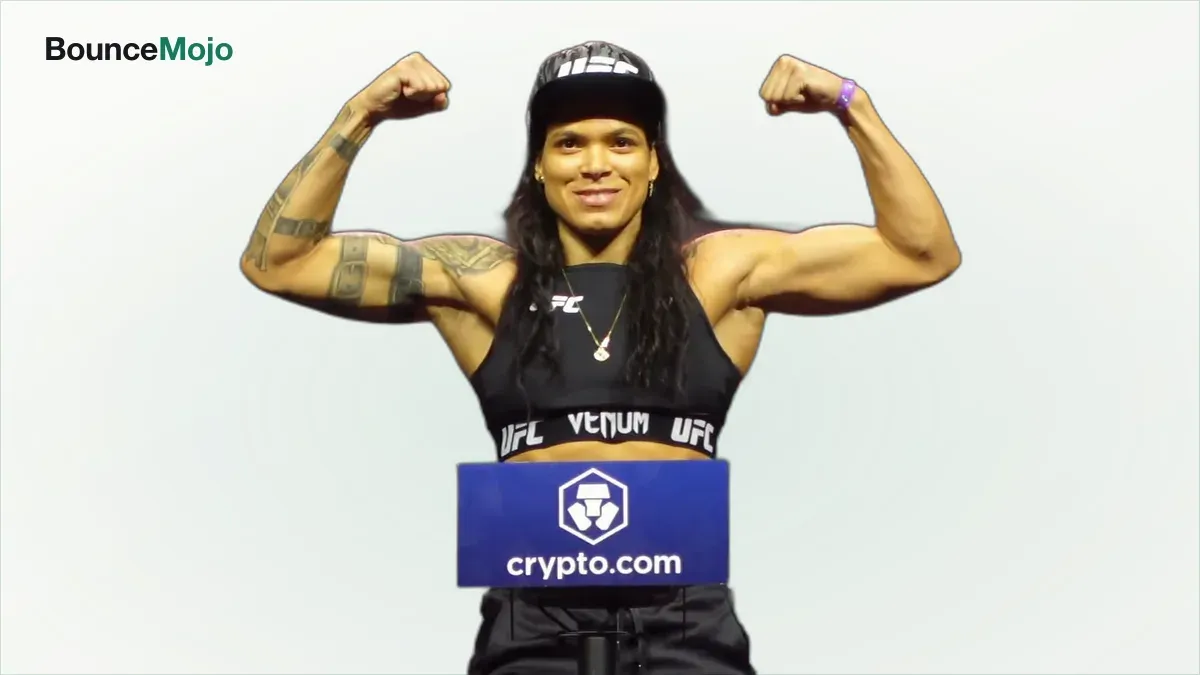
Most people know Amanda Nunes as the woman who knocked out Ronda Rousey. That’s true, and it’s still just one chapter.
Here’s what most people miss: the fighter who beat every legend women’s MMA produced came from a small Brazilian town with almost nothing, and built the greatest résumé the sport has ever seen while barely raising her voice.
The Myth vs. The Reality
The myth is a single image. Amanda Nunes: the woman who steamrolled Ronda Rousey in under a minute and ended an era.
The reality is a much longer climb.
Here’s the deal: Amanda wasn’t an overnight destroyer who arrived fully formed. She was a fighter who lost, learned, and rebuilt. Early in her career she had setbacks, moments where her ferocity outran her composure, where a bad round could unravel her. The dominant killer the world remembers is the finished product, not the whole journey.
And the “Lioness” nickname captures only half of her. Yes, she fought like a predator. But she was also a disciplined, cerebral competitor who fixed her flaws, controlled her emotions, and out-thought opponents as often as she overpowered them.
You might be wondering: how does a girl from small-town Brazil end up beating every legend in her sport? To understand that, you have to understand the world she came from.
The World That Made Amanda Nunes
Amanda was born in 1988 in Pojuca, a small town in Bahia, Brazil.
She came up in a working-class world where opportunities were limited and combat sports were part of the culture. This wasn’t a family that stumbled into fighting, it was woven into their lives. Her mother and sisters trained and competed, so for Amanda, martial arts weren’t a strange choice. They were the family trade.
Now: Brazil is one of the great cradles of fighting talent, the home of jiu-jitsu and a nation obsessed with combat sports. For a tough, athletic girl from Bahia, that environment offered a rare path, a way to turn grit and skill into something bigger than her hometown could offer.
That mix, a fighting family in a fighting nation, is the backdrop for everything Amanda became. She didn’t have to discover her calling. She was practically born into it, and she chased it all the way to America.
There’s a further layer worth noting. Amanda came up as women’s MMA itself was being born as a serious professional sport. For most of history, there simply was no clear path for a woman to make a living as a fighter. Amanda arrived right as that door was cracking open, which meant she was both a competitor and a pioneer, helping prove that women’s fights could headline cards and sell tickets. She wasn’t just chasing a title. She was helping build the very stage she would eventually dominate.
But before the double titles, there was a young woman grinding through hard early years.
The Crucible: Early Life and the Climb
The Environment That Shaped Her
Amanda grew up around strength and struggle in equal measure.
Money was tight in Pojuca, but toughness ran deep in the family. Surrounded by women who trained and fought, Amanda absorbed the idea that a woman could be powerful, aggressive, and unafraid. She started in martial arts young, drawn to the discipline and the outlet it offered.
Here’s the truth: that upbringing gave Amanda something priceless, a total lack of doubt about whether she belonged in a fight. While the sport was still fighting for respect for women, Amanda had grown up watching women fight. The question of whether she deserved a place never even occurred to her.
She turned pro and eventually made her way to the United States and the UFC, where the real test began.
The Catalyst
The catalyst was failure, and how she answered it.
Amanda’s early UFC run was not flawless. She suffered losses that exposed a weakness, when fights got long and her early ferocity faded, she could be beaten. For a lesser competitor, that pattern becomes a ceiling. For Amanda, it became a to-do list.
It gets better, and stranger. She rebuilt her conditioning, sharpened her mind, and turned her one flaw into a strength. That transformation set up a run of dominance that would rewrite the sport’s history, starting with the night she erased its biggest star.
The Key Players
No champion rises alone, and Amanda’s story is shaped by the people around her.
Her family. The women of her family, fighters themselves, planted the belief that a woman could dominate a cage. That foundation is the emotional root of everything she achieved.
Nina Nunes. Her wife, a fellow UFC fighter, became her partner in life and in the sport. Together they built a family and a gym, and Nina’s presence gave Amanda stability that fueled her greatest years.
Ronda Rousey. The superstar Amanda dismantled became the defining opponent of her career. Beating the biggest name in women’s MMA in dominant fashion announced a new era, hers.
Cris Cyborg and the legends. A parade of icons, Cyborg, Miesha Tate, Holly Holm, Valentina Shevchenko, served as the proving ground. Each one Amanda beat added another line to a résumé nobody else can match.
Think about it: a fighting family, a supportive wife, and a lineup of legends all pushed toward the same result, the most complete women’s champion the sport has produced. That peak was staggering.
The Turning Point
The Pinnacle
Amanda’s double-champion reign is her mountaintop.
She took the bantamweight title, then moved up to featherweight and won that belt too, holding both divisions at once, a feat almost no fighter, male or female, has achieved. Along the way she beat Ronda Rousey, Cris Cyborg, Miesha Tate, and Holly Holm, an almost unbelievable collection of scalps.
The signature moment came against Cyborg, long considered the most fearsome woman in the sport. Amanda knocked her out and, in a single night, settled the debate about who the greatest really was. As her own net worth story explains, that dominance made her a marquee draw and lifted her earning power to the top of the division.
The Price
Here’s the kicker: greatness in a historically underpaid division has a cost.
For all her dominance, Amanda fought in an era when women’s MMA purses trailed the men’s by a wide margin. She beat legends and cleared out two divisions, yet her pay never matched what a comparably dominant male champion would command. The best in the world was, in a sense, underpaid for it.
There was also the pressure of being the standard-bearer. As arguably the greatest ever, every fight carried the weight of a legacy. The pinnacle brought glory and a place in history, and it brought expectations few athletes ever face. Which brings us to the human side.
The Unvarnished Truth
Amanda is celebrated for good reason, but her greatness was hard-won, not effortless.
Those early-career losses were real, and they revealed genuine vulnerabilities, cardio issues and emotional control under pressure. She wasn’t a flawless prodigy. She was a fighter who confronted her weaknesses and did the unglamorous work to fix them, which is arguably more impressive than raw talent.
Now: even at her peak, doubt never fully vanished. Late in her career she suffered a shocking upset loss that briefly cracked the aura of invincibility, before she reclaimed her title and avenged it. That stumble is a reminder that even the greatest are human, and that dominance is maintained, not guaranteed.
None of this dims her legacy. It sharpens it. Amanda’s story isn’t about a machine that never failed. It’s about a competitor who failed, fixed it, and became untouchable. Which brings us to the criticisms.
Controversies and Criticisms
Amanda’s career is remarkably clean, but debate still surrounds it.
The pay gap. The biggest criticism isn’t of Amanda but of the system around her, that a fighter this dominant earned far less than a comparable male champion. Her career is often cited in arguments about equity in the sport.
The upset loss. Her surprising defeat at the height of her reign is a talking point, used by skeptics to question the “greatest ever” label, even though she avenged it and retired on top.
Star-power debates. Some argue that despite her dominance, Amanda never became a mainstream crossover star on the level of the fighter she beat, Ronda Rousey, which limited her earning ceiling. Supporters counter that pure greatness shouldn’t require celebrity to be recognized.
The timing of retirement. As with any great who walks away, observers debate whether she left too early. Amanda’s answer was to leave as champion, on her own terms, a choice that protected her legacy even if it ended the story sooner than fans wanted.
What We Can Learn From Amanda Nunes
Navigating Hard Times
The first lesson is about failure: your early losses are data, not destiny. Amanda was beaten in ways that could have defined her ceiling. Instead she studied the losses, found the flaw, and rebuilt. She refused to let a weakness become an identity.
But here’s the truth her career makes plain: fixing yourself is quiet, unglamorous work. Amanda’s greatness came less from talent than from the boring discipline of improving her conditioning and controlling her emotions, the parts nobody films for a highlight reel.
The Success Blueprint
If you want the replicable part, it’s this: Amanda won by turning her single biggest weakness into a strength. The cardio and composure that failed her early became the foundation of her dominance. She didn’t hide the flaw. She hunted it down.
That’s transferable. The lesson isn’t “hit harder.” It’s “identify the exact thing that keeps beating you, and obsess over fixing it.” Amanda’s placement among the greats on our richest MMA fighters ranking tells the financial half; her standing alongside icons like Jon Jones as an all-time great tells the other.
Becoming Better
The deepest lesson is about knowing when to stop. Amanda retired as champion, walking away with her legacy and her brand fully intact, a discipline few great competitors ever manage.
In other words, the smartest move is sometimes to leave while you’re on top. Amanda didn’t chase one fight too many. She closed the book on her own terms.
That discipline is harder than it sounds. Combat sports are littered with legends who stayed a fight or two too long, chasing one more payday or one more moment of glory, and paid for it with their health and their aura. Amanda watched that pattern and refused to follow it. She walked away with her title, her faculties, and her legacy fully intact, choosing a clean ending over one more roll of the dice, which is the rarest and wisest twist in her whole story.
Final Verdict
Amanda Nunes is, by nearly any measure, the greatest women’s MMA fighter who has ever lived, and “greatest” is not a stretch here, it’s the plain reading of her résumé. She didn’t just win titles. She beat every legend her sport produced, held two divisions at once, and did it with a discipline that outshone even her ferocity.
And here’s the twist that reframes everything: the fighter nicknamed “The Lioness” for her predatory dominance built that dominance out of her failures, not around them. The killer instinct people remember was forged by early losses and the humble work of fixing them. The full financial picture lives in her net worth breakdown, and it tells a fitting ending: a small-town girl from Bahia who beat every icon, retired as champion, and left the sport as its undisputed queen.
Shop Amanda Nunes on Amazon
Books, audiobooks, merch and more, handpicked for fans.
As an Amazon Associate we earn from qualifying purchases.
Frequently Asked Questions
Where did Amanda Nunes grow up?+
Amanda Nunes grew up in Pojuca, in the state of Bahia, Brazil, in a modest, working-class family. Her mother and sisters were involved in combat sports, and she began training in martial arts young.
Why is Amanda Nunes called 'The Lioness'?+
Amanda's nickname 'The Lioness' reflects her fierce, dominant fighting style and her fearless presence, a predator who overwhelmed the best fighters in the world.
What legends did Amanda Nunes beat?+
Amanda beat a stunning list of icons, including Ronda Rousey, Cris Cyborg, Miesha Tate, Holly Holm, and Valentina Shevchenko, one of the greatest résumés in MMA history.
Is Amanda Nunes married?+
Yes. Amanda is married to Nina Nunes, a fellow UFC fighter. The couple built a family and a gym together and are one of the sport's most prominent couples.
Did Amanda Nunes retire as champion?+
Yes. Amanda retired while still holding a UFC title, a rare and celebrated feat that cemented her legacy as arguably the greatest women's fighter of all time.
Want the money side of the story?
Read Amanda Nunes's Full Net Worth Breakdown →Shop Amanda Nunes on Amazon
Books, audiobooks, merch and more, handpicked for fans.
As an Amazon Associate we earn from qualifying purchases.