Alexander Zverev Biography: The Best Player Yet to Win a Major
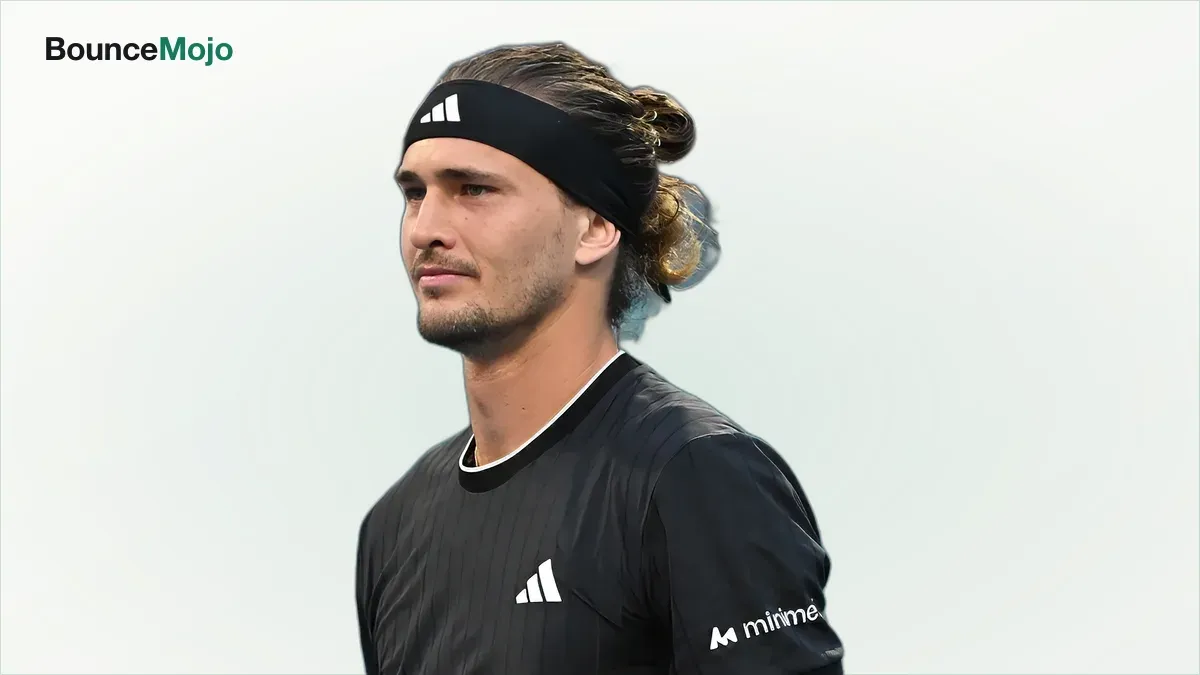
Most people know Alexander Zverev as the enormous German who kept losing the matches that mattered most. That reputation misses the bigger picture.
Here’s what most people miss: Zverev’s story isn’t about a choker who couldn’t win the big one. It’s about a player who has carried the weight of “best without a major” longer than almost anyone in history, and refused to let it break him.
The Myth vs. The Reality
The myth is cruel. Alexander Zverev: the perennial nearly-man, the towering talent who folded under Grand Slam pressure, the guy who could never win the big one.
The reality is always more complicated.
Here’s the deal: Zverev was never a failure. He is an Olympic gold medalist, a two-time ATP Finals champion, a multiple Masters winner, and for years one of the two or three most consistent players on tour. He banked over $45 million in career prize money. He just kept running into the sport’s greatest generation at the worst possible moments.
Think about it: winning your first major takes talent, but it also takes timing. Zverev came of age while Djokovic, Nadal, and a wave of hungry rivals owned the biggest stages. The “choker” label ignored how thin the margins really were.
You might be wondering: how does a kid born in Hamburg to Russian parents end up carrying German tennis on his back? To understand that, you have to understand the family that made him.
The World That Made Alexander Zverev
Zverev was born in 1997 into a world reshaped by the fall of the Soviet Union.
His parents, both professional tennis players in the USSR, had left a collapsing country to build a new life in Germany. They landed in Hamburg, took jobs as tennis instructors, and raised their sons inside the sport. This was a household where tennis wasn’t a hobby. It was the family business, the reason they had emigrated, and the path to a better future.
Now: that immigrant story matters. Zverev grew up German by birth and Russian by heritage, carrying the expectations of a family that had risked everything for a fresh start built on tennis.
The pressure was baked in from day one. His father coached. His mother coached. His older brother was already a touring pro. To be a Zverev was to live and breathe the game.
But before the pressure and the near misses, there was a little boy on a Hamburg court, hitting balls at age three.
The Crucible: Early Life and the Climb
The Environment That Shaped Him
Alexander Zverev, called Sascha by his family, was raised in a tennis dynasty in miniature. His father, Alexander Sr., had been the top-ranked men’s player in the Soviet Union. His mother, Irina, was among the best women in the country.
Here’s the truth: Zverev never had to search for his path. It was laid out in front of him from birth. He began training under his mother at three, absorbed the game from his father, and modeled himself on his older brother Mischa, who reached world No. 25.
That environment produced a prodigy. Zverev broke into the top ten young and announced himself as the future of the sport.
The Catalyst
Then came the moment that defined the next chapter of his career, for better and worse.
The 2020 US Open final. Zverev, chasing his first major, took a two-set lead against Dominic Thiem. The title was in his hands. And then it slipped away, Thiem clawing back to win in five sets. Zverev was inches from glory and left with nothing.
That defeat became the template for years of heartbreak, the origin of the “best without a major” burden that his net worth story shows he carried even as the money piled up.
There is far more to his story than the losses. But first, the people and forces that shaped him deserve their due.
The Key Players
No one climbs alone, and Zverev’s rise is a family affair with a few key rivals.
Alexander Zverev Sr. and Irina Zvereva. His parents are the foundation, former Soviet pros who emigrated to Germany and turned their household into a tennis academy. His father has served as his coach throughout much of his career.
Mischa Zverev. His older brother and first idol, a former top-25 pro who showed Sascha what the tour looked like and remained a close ally.
Novak Djokovic and the elite generation. The wall Zverev had to climb. Novak Djokovic and the sport’s greatest champions repeatedly stood between Zverev and the titles he chased, forging him through defeat.
Dominic Thiem. The man on the other side of his most painful loss, whose 2020 US Open comeback turned Zverev into the story of what might have been.
Think about it: every one of these relationships pushed the same question, could Zverev finally win the biggest prize? For years the answer stayed no, even as he dominated almost everywhere else.
The Turning Point
The Pinnacle
Zverev’s career is full of high points that most players never reach.
He won singles gold at the 2020 Tokyo Olympics, beating the sport’s best on the way. He captured two ATP Finals titles and a stack of Masters events. He banked over $45 million in career prize money. By any normal measure, he is a giant of his era.
The one prize still missing is a Grand Slam singles title. That absence has defined the “best without a major” narrative more than any single match, and it is the burden Zverev has carried since 2020.
The Price
Here’s the kicker: the wait extracted a real toll.
For years, every deep run reopened the same wound. Every final loss, every collapse, fed a narrative that questioned his nerve and his mentality. Zverev played through all of it while also managing type 1 diabetes, a condition he kept largely private, and while fending off serious controversies off the court.
That is the price of chasing a crown that keeps eluding you. Zverev has absorbed years of doubt in public and kept competing at the top. Which brings us to the parts of his story the highlight reels leave out.
The Unvarnished Truth
Zverev’s career has not been without darkness, and honesty demands acknowledging it.
He has faced serious allegations of domestic abuse from former partners, claims he has firmly denied, which prompted an ATP investigation. These allegations have shadowed his career and remain a significant part of any honest account of his life. He has also drawn criticism for on-court conduct, including an infamous incident where he struck an umpire’s chair with his racket and was defaulted from a doubles event.
Now: reporting these facts is not the same as passing final judgment on unproven claims. Zverev has denied the most serious allegations, and the legal picture has been contested. What is fair to say is that his public life has been more turbulent than his composed baseline game suggests.
There is also a quieter truth: Zverev has managed type 1 diabetes since childhood, competing at the highest level while monitoring his blood sugar, a challenge most fans never saw. That detail humanizes a player often reduced to a caricature.
Controversies and Criticisms
Zverev has attracted both sporting and personal criticism.
The abuse allegations. The most serious controversies of his career are the domestic abuse claims made by former partners, which he denies. They triggered an ATP inquiry and remain a central, unresolved part of his public story.
On-court temper. His 2022 default from the Mexican Open doubles, after he smashed his racket against the umpire’s chair, drew widespread condemnation and a fine.
The “choker” narrative. Critics have long questioned his ability to close out the biggest matches, a label that will only fully dissolve when he wins his first major.
Nationality debates. Born in Germany to Russian parents, Zverev has occasionally faced questions about identity, which he has answered by firmly identifying as German.
What We Can Learn From Alexander Zverev
Navigating Hard Times
The first lesson is about carrying doubt. Zverev has been defined by what he hasn’t done, and he keeps showing up anyway, keeps reaching finals, keeps giving himself chances.
Here’s the truth: persistence through public failure is its own kind of courage. Zverev could have crumbled under the “best without a major” label. Instead he keeps knocking, and the results elsewhere keep piling up.
The Success Blueprint
If you want the replicable part, it is this: Zverev built a fortune and a top-tier career on consistency, not fireworks. He wasn’t always the flashiest player, but he was reliably excellent, week after week, year after year.
That is transferable. The lesson isn’t “hit a huge serve.” It’s “be so consistently good that opportunity becomes inevitable.” That relentless steadiness put Zverev among the sport’s wealthiest names on our richest tennis players ranking, even without a major to his name.
Becoming Better
The deepest lesson is about the gap between reputation and reality. Zverev has spent years labeled a choker while quietly being one of the best and most durable players alive. The label is loud. The truth is quieter, and it holds up.
In other words, don’t let the crowd’s verdict become your own. The full story of how Zverev turned years of near misses into a lasting fortune lives in his net worth breakdown.
Final Verdict
Alexander Zverev is one of the defining players of his generation, and he is widely described as the best active player yet to win a major. That label is not an insult. It is the record of a man who has outlasted years of doubt, a punishing generation of rivals, and a “nearly man” reputation that would have buried a weaker competitor.
And here’s the twist that reframes his whole career: the man who seems to lose the biggest matches has, all along, been winning almost everything else, the money, the medals, the rankings. A major would be the last piece, not the whole puzzle. His earnings and his trophy cabinet already say plenty about how good he is.
If you follow tennis, remember Zverev not as the choker who couldn’t win the big one, but as the player who refuses to stop trying. His career is a study in persistence through public failure, and a reminder that a career can be great even while one prize stays out of reach because the competition was that good.
Shop Alexander Zverev on Amazon
Books, audiobooks, merch and more, handpicked for fans.
As an Amazon Associate we earn from qualifying purchases.
Frequently Asked Questions
Where is Alexander Zverev from?+
Alexander Zverev was born in Hamburg, Germany, in 1997 to Russian parents who were both professional tennis players and settled in Germany after the collapse of the Soviet Union. He identifies as German and competes under the German flag.
Did Alexander Zverev win a Grand Slam?+
Not yet. Zverev is widely described as the best active player yet to win a major. He does own a singles gold medal from the 2020 Tokyo Olympics, two ATP Finals titles, multiple Masters 1000 titles, and several Grand Slam finals.
What happened in the 2020 US Open final?+
Zverev reached his first Grand Slam final at the 2020 US Open and led Dominic Thiem by two sets to love, only to lose in five sets. It became one of the most painful near misses of his career.
Who is Alexander Zverev's brother?+
His older brother, Mischa Zverev, is also a former ATP professional who reached a career-high ranking of world No. 25. The brothers grew up in the same tennis-focused family in Hamburg.
Has Alexander Zverev faced controversy?+
Yes. Zverev has faced domestic abuse allegations from former partners, which he has denied, and an ATP investigation. He has also spoken publicly about managing type 1 diabetes throughout his career.
Want the money side of the story?
Read Alexander Zverev's Full Net Worth Breakdown →Shop Alexander Zverev on Amazon
Books, audiobooks, merch and more, handpicked for fans.
As an Amazon Associate we earn from qualifying purchases.