Alex Rodriguez Biography: The Prodigy, the Fall, and the Comeback
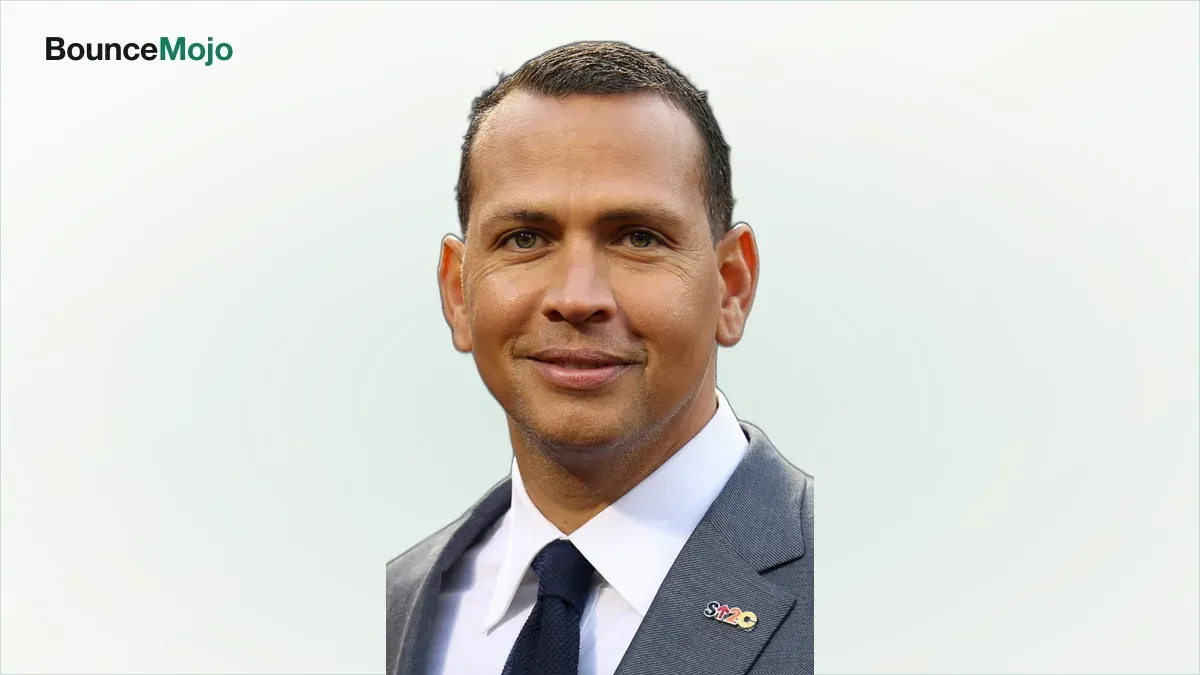
Most people picture Alex Rodriguez one of two ways: the greatest talent of his generation, or the cheater who threw it away. Both are true, and neither is the ending. His life reads best as a sequence of dates, because each one is a consequence of the last.
The Year Victor Left
Rodriguez was born in 1975 in New York City to Dominican immigrant parents. The family moved before it settled: part of his early childhood in the Dominican Republic, then New York, then Miami for good. Every move meant a new start, new friends, new instability.
Then the floor fell out. His father, Victor, left when Alex was around nine. In interviews across his life, Rodriguez has described that absence as the wound that drove him, the reason he chased security, approval, and greatness with such ferocity. He has said the fear of poverty never fully left him, and that fear, as much as ambition, drove his obsession with earning and keeping money.
His mother, Lourdes, worked as a secretary and a waitress. Alex has spoken openly about watching her exhaustion and vowing to change the family’s fortunes. Baseball became the one constant he could control, and the vehicle for the plan.
The relentless hunger the world would later read as arrogance started here, as a boy terrified of ending up with nothing.
Westminster Christian, Where the Scouts Ran Out of Comparisons
Miami in the 1980s was a baseball hotbed, and Rodriguez threw himself into the sport as both escape and mission.
At Westminster Christian School he became a national high-school phenom, a shortstop with power, speed, and polish rarely seen at that age. Scouts tracked him for years and called him a generational talent.
The label arrived before he could legally vote, and the pressure that came with being a can’t-miss superstar at 17 never really left him. The expectations were enormous, and so was his need to meet them.
1993: First Overall, and a Debut at 18
The Seattle Mariners made Rodriguez the first overall pick in the MLB Draft. He debuted in the majors at just 18.
1996: .358, 36 Home Runs, and a Second-Place MVP Vote
At age 20, in his first full season of real playing time, the talent detonated. He hit .358 with 36 home runs and 123 RBIs, one of the greatest offensive seasons ever produced by a shortstop, and finished a razor-thin second in the AL MVP vote.
A player that young simply wasn’t supposed to dominate like that. The baseball world had never seen a shortstop with his blend of size, power and speed, and scouts ran out of comparisons.
That is the context for the contracts. Teams weren’t paying for a great player. They were paying for a once-in-a-generation one.
$252 Million in Texas, and the Ring That Came in 2009
In 2000 he signed a ten-year, $252 million contract with the Texas Rangers, then the largest deal in sports history. He later reset the record with the Yankees.
The money made him a target. His deals turned him into a symbol of baseball’s money problems, and fans held the size of his salary against him during every slump. Critics painted him as a player who shrank in October, a framing that stuck for years. Every awkward interview got magnified.
The playing record answered most of it. Three American League MVP awards, 696 career home runs, fourth all-time, more than 2,000 runs driven in. And in 2009 he finally won a World Series with New York, on the back of a strong October run, the ring that had eluded him and the argument that silenced the clutch narrative. The fame of these years built the fortune his net worth breakdown details.
Beneath the surface, choices were being made that would detonate the whole thing.
Biogenesis, and the Whole Season He Lost
In 2013, Rodriguez was linked to the Biogenesis clinic, a Miami operation tied to distributing banned performance-enhancing drugs. After a bitter fight he was suspended for the entire 2014 season, the longest doping-related ban in MLB history at the time.
It was not the first admission. In 2009 he had acknowledged using banned substances from 2001 to 2003 with Texas, undercutting his image and fueling doubts about his numbers.
The fight itself was as damaging as the offense. During the suspension battle he publicly feuded with his own team and with Major League Baseball, filing lawsuits and lashing out before eventually backing down. It was ugly and drawn out, and it wrecked relationships.
Then he stopped. He quit fighting, acknowledged the mistakes publicly, and set about earning back trust rather than denying reality. The Biogenesis scandal remains the defining controversy of his career and the central argument against his Hall of Fame candidacy. None of it is excused. But the recovery only began when the denial ended.
Lourdes, Jeter, Boras, Buffett
Four people explain most of him.
Lourdes Rodriguez, the single parent who worked multiple jobs and modeled the work ethic that became his identity, is the person he has credited most for who he became.
Derek Jeter was first a friend, then a Yankees teammate, then something cooler. The comparison between them, the smooth champion and the gifted lightning rod, followed A-Rod everywhere, and their contrasting legacies still shape how fans see both men, in the business world too, as his net worth story shows.
Scott Boras, the powerful agent, negotiated the record contracts that made him the highest-paid player in the game.
Warren Buffett was never a personal mentor, but the investor A-Rod studied and cited as a model while building his post-baseball empire.
The common thread is a man chasing security and validation, on the field and off.
A-Rod Corp, the Booth, and the Long Way Back
He returned to the Yankees in 2015, had a productive season, retired on better terms in 2016, and pivoted into broadcasting and business.
The broadcasting turn worked because he treated it like a rookie year. He studied film, took the job seriously, and let his genuine love of the game show. Fans who had booed him began to appreciate his analysis, and the narrative shifted slowly from cheater to elder statesman. That required a humility he did not always show as a player: admitting he was wrong, enduring public ridicule, and rebuilding trust one honest conversation at a time.
The business had been running the whole while. He treated his baseball money as capital, not lifestyle, buying real estate, studying investors, and building A-Rod Corp while still playing. The transferable lesson isn’t “sign a $275 million contract.” It’s “whatever you earn, convert it into assets that keep paying.” That discipline put him near the top of our richest baseball players ranking and among the wider richest athletes as well.
His personal life stayed in the spotlight throughout. A high-profile relationship with singer Jennifer Lopez turned the couple into a tabloid fixture and a business brand of its own before the two parted ways.
Three MVPs, 696 home runs, a World Series ring, and a doping scandal that will follow his name forever. The fatherless kid who chased security with such fury that he cut corners eventually found real stability the honest way, which is the only ending this story could have earned. The prodigy who fell hardest may be remembered as the one who climbed back the furthest.
Shop Alex Rodriguez on Amazon
Books, audiobooks, merch and more, handpicked for fans.
As an Amazon Associate we earn from qualifying purchases.
Frequently Asked Questions
Where did Alex Rodriguez grow up?+
Rodriguez was born in New York City to Dominican parents and raised largely in Miami, Florida, after his father left the family when Alex was a child.
Why was Alex Rodriguez suspended from baseball?+
Rodriguez was suspended for the entire 2014 season over his connection to the Biogenesis clinic and the use of banned performance-enhancing drugs, the longest doping-related ban in MLB history at the time.
How many home runs did Alex Rodriguez hit?+
Rodriguez hit 696 career home runs, fourth-most in Major League Baseball history, and won three American League MVP awards.
Did Alex Rodriguez win a World Series?+
Yes. Rodriguez won a World Series title with the New York Yankees in 2009, the crowning achievement of his playing career.
What does Alex Rodriguez do now?+
He works as a baseball broadcaster and businessman, running A-Rod Corp and pursuing sports team ownership after retiring as a player in 2016.
Want the money side of the story?
Read Alex Rodriguez's Full Net Worth Breakdown →Shop Alex Rodriguez on Amazon
Books, audiobooks, merch and more, handpicked for fans.
As an Amazon Associate we earn from qualifying purchases.