Agnieszka Radwanska Biography: The Professor Who Out-Thought Tennis
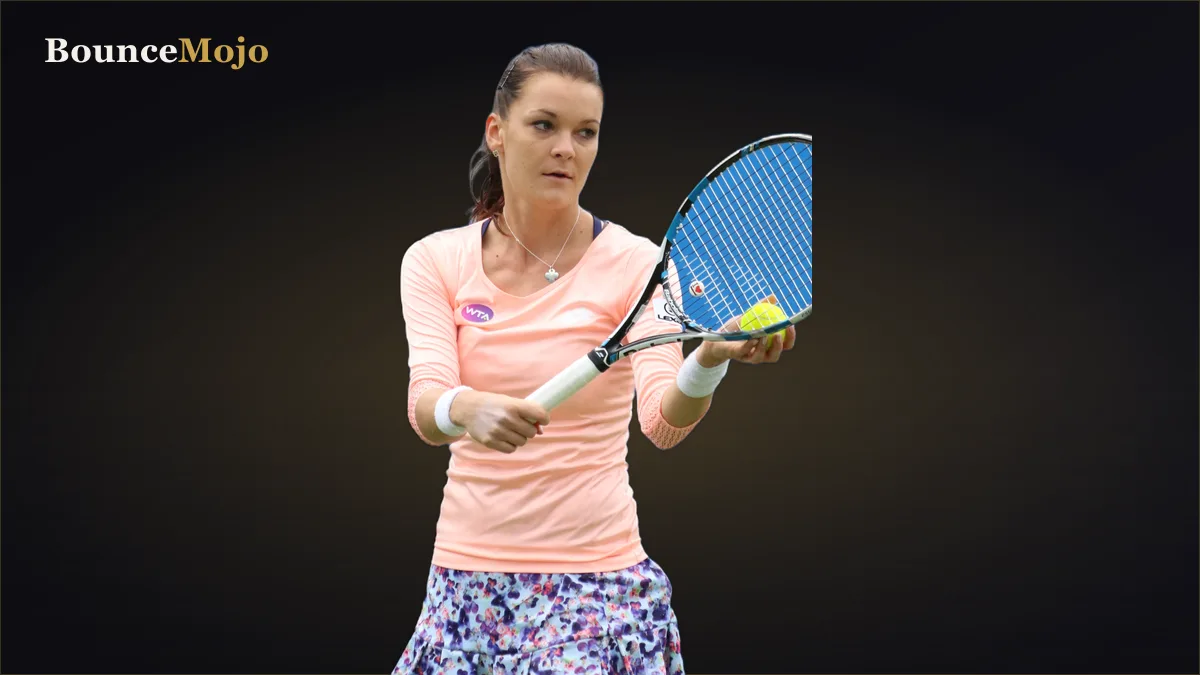
Most people remember Agnieszka Radwanska as the clever one, the player who hit shots nobody else would even try. That’s true, and it barely scratches the surface.
Here’s what most people miss: she reached the very top of a sport built for giants and power hitters while standing five-foot-eight and refusing to overpower anyone.
The Myth vs. The Reality
The myth is simple: Agnieszka Radwanska, the trick-shot artist, a fun highlight-reel player who never quite won the big one.
The reality is far more impressive.
Here’s the deal: Radwanska wasn’t a novelty act. She was world No. 2, a Wimbledon finalist, a WTA Finals champion, and a fixture in the world’s top 10 for the better part of a decade. In an era ruled by the raw power of Serena Williams and a wave of big hitters, she carved out elite success on pure intelligence and touch.
The “never won a Slam” line flattens a remarkable career. Plenty of players with a major title never sniffed No. 2 in the world or banked the kind of prize money Radwanska did, as her full net worth breakdown makes clear.
You might be wondering: how does a finesse player thrive in the age of power? To understand that, you have to understand where she came from.
The World That Made Agnieszka Radwanska
Radwanska came up in a tennis world that was getting bigger, faster and stronger by the year.
She was born in Krakow in 1989, the year the Berlin Wall fell, into a Poland shaking off its communist past and rejoining the West. Polish tennis had no real tradition of global champions. There was no blueprint, no famous predecessor to follow.
Now: the women’s game she entered was transforming. The graceful, tactical tennis of earlier decades was giving way to overwhelming power, huge serves, flat, heavy groundstrokes, players hitting the ball harder than ever. The template for success was becoming brute force.
Radwanska was the opposite of that template. Small, slight, and physically unremarkable next to her rivals, she should have been overwhelmed. Instead, she treated the court like a chessboard, and that made her one of a kind.
But before the drop shots and the top-10 rankings, there was a girl on a court in Germany with her father feeding her balls.
The Crucible: Early Life and the Climb
The Environment That Shaped Her
Radwanska’s first and most important coach was her father, Robert, himself a former tennis player.
The family spent part of her childhood in Germany, where Robert drilled both Agnieszka and her younger sister Urszula relentlessly. This wasn’t a wealthy academy pipeline. It was a father’s project, built on discipline, repetition and a deep understanding of the game’s geometry.
Robert taught her to think. Without the size to bully opponents, she learned to move them, to construct points, to find angles others couldn’t see. That education in tennis IQ became her superpower.
There’s a specific poverty of resources behind that brilliance. The Radwanski family didn’t have the backing of a wealthy federation or a corporate academy in Agnieszka’s earliest years. What they had was a knowledgeable, obsessive father and endless hours on the court. That scarcity forced creativity. When you can’t out-muscle or out-spend the competition, you learn to out-think it, and Radwanska turned that necessity into the most distinctive style in the women’s game.
Here’s the truth: the same intense, all-consuming coaching that forged her game would later strain the family relationship, a common story among prodigies raised by a driven parent. But in those early years, it worked. She was a junior star, winning the junior Wimbledon and French Open titles.
The Catalyst
The turning point came fast. Radwanska turned pro as a teenager and climbed quickly, cracking the top 10 by 2008 at just 19.
She wasn’t hitting anyone off the court. She was outsmarting them. Her results forced the tennis world to take the thinking game seriously again. Every win was proof that craft could still beat power, if the craft was good enough.
It gets better: the best was still to come. A run to a Grand Slam final would soon put her one set away from the sport’s ultimate prize. But the people around her, family, coaches, rivals, shaped how far she could go.
The Key Players
No one climbs alone, and Radwanska’s story is stitched together with a few crucial figures.
Robert Radwanski. Her father and first coach built the foundation of her entire game. His demanding methods produced two professional daughters and one genuine star. The relationship was famously intense, and they parted ways professionally at times, but his fingerprints are on every clever shot she ever hit.
Urszula Radwanska. Her younger sister was her constant companion on the journey, also a professional player. Sharing the grind, the travel and the surname created a bond few athletes have, along with the complicated feelings of two siblings chasing the same dream at different levels of success.
Serena Williams. The defining rival, and the wall Radwanska couldn’t quite climb. The power and dominance Serena represented were exactly what Radwanska’s game was built to counter, and their 2012 Wimbledon final was the ultimate test of finesse versus force.
Petra Kvitova. A recurring rival of the same generation, and the player she beat to win her biggest title. As Kvitova’s own net worth story shows, the two careers ran parallel, one built on power, one on guile.
Think about it: every relationship in her career was a version of the same question, could intelligence beat power? That question came to a head on Centre Court.
The Turning Point
The Pinnacle
Wimbledon, 2012. Radwanska reached the final, the first Polish woman in the Open Era to reach a Grand Slam singles final.
Across the net stood Serena Williams, arguably the most powerful player in the sport’s history. Radwanska lost the first set, then, showing the grit under the guile, fought back to take the second. For a few electric games, the thinking player was genuinely threatening to topple the ultimate power player.
Serena reasserted herself and won the third. But Radwanska had made her point. She rose to world No. 2 in the rankings, and in 2015 she claimed the biggest title of her career, the season-ending WTA Finals, beating Kvitova in the final.
Her wealth, chronicled on our richest tennis players ranking, reflects that sustained excellence at the top of the game.
The Price
Here’s the kicker: playing that style, at that level, against those opponents, took a physical toll that never showed on the highlight reels.
Radwanska covered enormous ground. Beating power players meant chasing down balls, extending rallies, and absorbing pace she couldn’t generate herself. Her body carried the cost of every clever point she constructed. And the pressure of being a nation’s only tennis hope, with no Slam to show for her brilliance, was its own quiet weight.
The finesse that made her great also made every match a grind. Which brings us to the parts of her career that weren’t so tidy.
The Unvarnished Truth
Radwanska was not a flawless competitor, and honesty demands acknowledging the gaps.
She could be inconsistent. The same creativity that produced magic could tip into over-elaboration, choosing the clever shot when the simple one would win. Against the very biggest hitters on the very biggest days, her lack of raw power was a ceiling she couldn’t always break through.
Now: none of that diminishes her. It’s the honest trade-off of her style. When you refuse to overpower people, you accept that on some days the power wins anyway.
Her relationship with her father and coach also had its public strains, the familiar tension of a prodigy raised by an exacting parent. And she carried, year after year, the label of “best player never to win a Slam”, a burden she handled with more grace than most.
The most honest thing you can say is this: her greatest strength and her greatest limitation were the same trait. She played tennis like a puzzle, and sometimes the puzzle beat the opponent, and sometimes it beat her.
Controversies and Criticisms
Radwanska largely avoided scandal, but her career wasn’t free of debate.
The style critics. Some argued her game was “soft”, that she should have added more power to win the biggest titles. Defenders countered that her intelligence was exactly what made her special, and that reshaping her game would have erased what made her Radwanska.
The 2013 photo shoot. She posed for ESPN’s Body Issue, a decision that drew criticism from a Catholic youth group in Poland that had sponsored her, leading to a public split. She defended the shoot as tasteful and empowering.
The “no Slam” narrative. Critics used her lack of a major to define her whole career, an unfair frame that ignored her No. 2 ranking, her WTA Finals title, and her decade of elite results. It was a reminder that in tennis, a single trophy can overshadow years of excellence.
What We Can Learn From Agnieszka Radwanska
Navigating Hard Times
The first lesson is about working with what you have. Radwanska was never going to be the strongest or the biggest. She won anyway, by maximizing her actual gifts instead of mourning the ones she lacked.
Here’s the truth: most people lose by trying to compete on their weakest ground. Radwanska built an entire top-tier career on her strongest ground, her mind, and let that carry her past physically superior rivals.
The Success Blueprint
If you want the replicable part, it’s this: differentiate, don’t imitate. In a field rushing toward power, Radwanska zigged. She became the most distinctive player of her era precisely because she refused to copy everyone else.
That’s transferable far beyond tennis. The lesson isn’t “be weak”, it’s “sharpen the thing only you do.” Her creativity made her a fan favorite and a sponsor magnet, and it earned her a place among the wealthiest names on our richest athletes list.
Becoming Better
The deepest lesson is about knowing when to stop. Radwanska retired at 29, still relatively young, when injuries meant she could no longer meet her own standards.
In other words, she protected her legacy and her health instead of chasing diminishing returns. She left on her terms, with her game intact in the memory, rather than fading through years of decline. That kind of self-awareness is rare, and it leads to the final verdict.
Final Verdict
Agnieszka Radwanska is one of the most important players of her generation, and “important” is doing real work there, not just “successful.” She proved that in an age of overwhelming power, a thinking player could still reach world No. 2, a Grand Slam final, and the top of the sport’s earnings.
And here’s the twist that reframes everything: the player labeled “never won a Slam” out-earned and out-ranked a long list of players who did. Her fortune, detailed in her net worth breakdown, was built on the least glamorous virtue in sports: consistency, powered by the most glamorous skill, imagination.
She was Poland’s first great tennis star, the bridge to Iga Swiatek’s dominance, and the finest touch artist of her time. The Professor didn’t just play tennis. She solved it, one clever point at a time, and left the game richer for having watched her think.
Here’s the lasting truth of her career: she made intelligence exciting. In a sport that was rewarding brute force more and more each year, Radwanska reminded everyone that the mind is a weapon too. Fans didn’t watch her to see aces and winners. They watched her to see what impossible shot she’d conjure next, what angle no one else would even attempt. That’s a rarer legacy than a trophy, and it’s why, years after her retirement, her highlight reel still draws new admirers who can hardly believe a human being thought that fast on a tennis court.
Shop Agnieszka Radwanska on Amazon
Books, audiobooks, merch and more, handpicked for fans.
As an Amazon Associate we earn from qualifying purchases.
Frequently Asked Questions
Where did Agnieszka Radwanska grow up?+
Radwanska was born in Krakow, Poland, in 1989 and spent part of her childhood in Germany, where her father Robert coached both her and her sister Urszula from a young age.
What was Agnieszka Radwanska's best Grand Slam result?+
Her best major result was reaching the 2012 Wimbledon final, where she lost to Serena Williams after winning the second set. She never won a Grand Slam singles title.
Why was Agnieszka Radwanska called 'The Professor'?+
Fans and commentators nicknamed her 'The Professor' for her intelligent, improvisational style, full of drop shots, disguised spins and clever point construction in a power-dominated era.
Did Agnieszka Radwanska win the WTA Finals?+
Yes. She won the season-ending WTA Finals in 2015 in Singapore, beating Petra Kvitova in the final, the biggest title of her career.
When did Agnieszka Radwanska retire?+
Radwanska retired in 2018 at age 29, citing recurring injuries that made it impossible to compete at the level she demanded of herself.
Want the money side of the story?
Read Agnieszka Radwanska's Full Net Worth Breakdown →Shop Agnieszka Radwanska on Amazon
Books, audiobooks, merch and more, handpicked for fans.
As an Amazon Associate we earn from qualifying purchases.