Victoria Azarenka Biography: The Belarusian Warrior Who Fought On
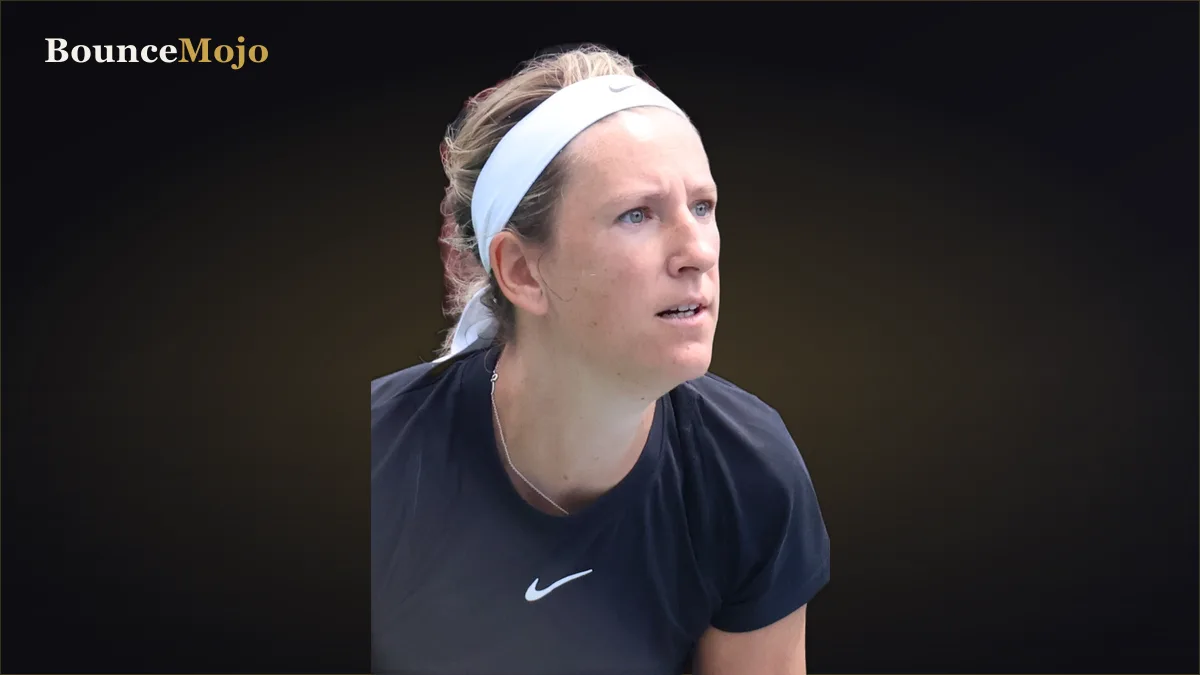
Most people remember Victoria Azarenka for the loud on-court grunt and the two Australian Open trophies. Fewer remember the 15-year-old who boarded a plane alone, leaving everything she knew behind.
Here’s what most fans miss: her hardest fights were never against opponents. They were against homesickness, injury, and a custody battle that nearly broke her.
The Myth vs. The Reality
The myth is that Victoria Azarenka was a fierce, sometimes controversial champion who won two majors and then faded from the scene as quickly as she had risen.
Here’s the truth: she is a fighter whose career was repeatedly interrupted by forces far bigger than tennis, and who kept coming back anyway.
She did not just win in Melbourne twice. She left her home country as a child, built herself into the best player in the world, and later fought through injury and a devastating personal ordeal to compete again. The intensity people saw on court was only a fraction of what she carried off it.
You might be wondering: what makes a teenager brave enough to leave home for a dream?
The World That Made Victoria Azarenka
Azarenka grew up in Belarus, a country with limited tennis infrastructure and few pathways to the global tour.
For a gifted young player, opportunity meant leaving. The elite training, competition, and coaching she needed simply were not available at home. That reality forced a brutal choice on a child: chase greatness abroad or stay and stall.
Now: she was also entering a golden, punishing era of women’s tennis. Serena Williams sat at the peak, with Maria Sharapova, Petra Kvitova, and a wave of power players fighting for every title. To rise to No. 1 in that field, Azarenka would have to beat the best of an all-time generation.
That combination, a homeland without a ladder and a tour full of legends, shaped the risks she was willing to take.
Think about it: everything about her path required a bet against the odds. A child from a country with little tennis infrastructure, chasing a sport dominated by wealthy academies and established powers. To even have a chance, she and her family had to gamble on leaving. That early willingness to risk everything for a shot at greatness would define the rest of her life.
The Crucible: Early Life and the Climb
The Environment That Shaped Her
Victoria Azarenka was born in Minsk in 1989. Her mother worked at a tennis club, so the sport was around her from the start, and her talent showed early.
Here’s the deal: to keep improving, she needed resources her home country could not provide. With the help of a sponsor, she moved to the United States, settling in Arizona, at around 15 years old. She left her family, her language, and her comfort zone to chase a career.
That kind of sacrifice at such a young age forged the toughness that would define her. She was alone, far from home, and betting everything on tennis.
Here’s the deal: that early hardship built the fierce, no-excuses competitor fans would later see on court. She had already left home, learned a new culture, and pushed through homesickness before she ever contended for a major. The intensity people sometimes read as harshness was really the armor of a kid who had grown up fast and fought for everything. By her late teens she had climbed the junior ranks and announced herself as one of the game’s brightest young talents.
The Catalyst
The gamble paid off in 2012. Azarenka won the Australian Open, rose to world No. 1, and added Olympic mixed-doubles gold in London. In 2013 she defended her Melbourne title.
Think about it: the girl who left Minsk with almost nothing was now the best player on the planet. Her aggressive, fearless game had carried her to the very top of a stacked era. The risk had become a reign.
Here’s the truth about that peak: it validated every sacrifice she had made. The lonely teenager who left her family behind, who fought homesickness and doubt in a foreign country, had turned that pain into fuel. She played with a ferocity that reflected everything she had given up to get there. Two Australian Open titles and Olympic gold in a single stretch announced that the gamble of her childhood had paid off in full. For a moment, the world was hers.
The Key Players
Azarenka’s career was defined by two forces: her great rival and her family.
Her rivalry with Serena Williams produced some of the most gripping matches of the era, including two US Open finals where Azarenka pushed the greatest of all time to the brink. Those battles measured her greatness, even in defeat.
Here’s the kicker: the most important person in her later story was her son, Leo. His birth transformed her life and her priorities, and the fight to be a present mother while pursuing tennis became the central drama of her comeback.
Her mother and her close inner circle kept her grounded through the highs and lows, a support system for a woman who had left home so young. And her fellow players, including other mothers on tour like Serena Williams, gave her a community that understood the impossible balance she was trying to strike.
Coaches and her tight support team helped her navigate the peaks and the injuries. But nothing tested her like the personal battle that followed motherhood.
The Turning Point
The Pinnacle
Her peak was 2012 to 2013: two majors, the No. 1 ranking, Olympic gold, and a run as the most feared competitor in women’s tennis outside of Serena. She played with ferocity and belief, and for a stretch, no one wanted to face her.
She combined power, movement, and a relentless will, announcing herself as a genuine star of the sport. Her loud, distinctive game and her fierce court presence made her instantly recognizable, and for a stretch she was the one player fans believed could consistently trouble Serena Williams at the majors.
The Price
But the price was steep. Injuries, including foot and knee problems, repeatedly stalled her momentum just as she seemed poised to add more titles. The window at the very top narrowed faster than her talent deserved.
Then came the hardest blow. After Leo was born, a painful custody dispute left her unable to travel freely with her son. She was forced to choose between her career and being with her child, an impossible situation that derailed years of her prime.
The Unvarnished Truth
Azarenka has been open about the emotional toll of those years.
She spoke honestly about depression, about the pain of the custody fight, and about the guilt and heartbreak of being separated from her son during tournaments. She stepped away from the tour at times because she simply could not carry it all.
Now: that vulnerability is exactly what makes her comeback so powerful. She did not pretend to be unbreakable. She admitted the struggle, then fought her way back anyway. And that return stunned everyone.
Controversies and Criticisms
Azarenka drew criticism early in her career for her intensity and for on-court behavior that some found excessive, including a controversial medical timeout during a major that sparked debate.
Her loud grunt, like several stars of her era, was a lightning rod for critics. And her fierce competitiveness occasionally read as abrasive to fans who preferred a softer style.
You might be wondering: did any of it stick? Over time, the narrative shifted entirely. Her openness about mental health and motherhood turned her into a respected advocate and a sympathetic figure. The public came to see the fighter behind the fire. Honesty reshaped how the world viewed her.
Words That Reveal Her
Azarenka’s words reveal a woman who fought hardest off the court.
She has spoken candidly about her lowest point, describing a period after her son’s birth when she battled depression and could not travel freely with him. She admitted there were times she did not want to get out of bed, a raw honesty rare among elite athletes. That vulnerability, from a former world No. 1, told fans that the toughest opponent she ever faced was her own circumstance.
Here’s the truth in her comeback mindset: she has said that motherhood changed her definition of winning, that being present for her son mattered more than any trophy. Read that from a fierce competitor who once lived for rankings, and you understand how deeply she was transformed. She learned to measure success by more than the scoreboard.
She has also been outspoken as a player advocate, pushing for better support for mothers on tour and for players’ mental health. Her voice carries because she lived the struggle she speaks about. Azarenka’s words reveal a champion who turned private pain into public purpose, and who kept fighting even when the fight had nothing to do with tennis.
What We Can Learn From Victoria Azarenka
Navigating Hard Times
Her lesson is endurance through the unfair. Azarenka faced injuries and a personal crisis that would have ended most careers, and she refused to disappear.
She showed that setbacks off the court can be heavier than any loss on it, and that surviving them is its own kind of victory. She kept going when quitting would have been understandable.
The Success Blueprint
Here’s the blueprint: bet on yourself early, even when it costs you comfort. A 15-year-old left home to chase greatness, and that courage built a No. 1. She trusted her ambition over her safety.
She also learned to redefine success. After motherhood, winning was no longer the only measure. Competing at all, on her own terms, became the triumph. That flexibility kept her in the game and kept her sane through years that would have broken many players.
And she used her hardship to help others. By speaking openly about mental health and fighting for better support for mothers on tour, she turned her private pain into a cause. The lesson is powerful: your worst chapter can become the source of your greatest impact, if you are brave enough to talk about it.
The final lesson is the one her comeback taught the whole tour.
Final Verdict
Victoria Azarenka is proof that a career is not just trophies. Two majors, an Olympic gold, and a world No. 1 ranking are elite achievements, but her real legacy is resilience.
She showed that you can be knocked down by injury, by circumstance, and by heartbreak, and still find a way back to the arena. Her 2020 US Open final run, made as a mother who had fought for the right to travel with her son, was as inspiring as any title.
For anyone facing a fight bigger than their goal, Azarenka is the athlete to study. She lost some battles she never should have had to fight, and she kept swinging anyway.
That is the truth at the center of her story. Trophies measure a career, but character measures a person, and Azarenka’s character was forged in the hardest moments, far from the cameras. A teenager who left her country, a champion who conquered the world, a mother who fought for the right to hold her son, she kept getting back up every single time. In the end, that resilience may inspire more people than any Australian Open title ever could.
Shop Victoria Azarenka on Amazon
Books, audiobooks, merch and more, handpicked for fans.
As an Amazon Associate we earn from qualifying purchases.
Frequently Asked Questions
Where was Victoria Azarenka born?+
She was born in Minsk, Belarus, on July 31, 1989. She began playing tennis as a young child, and her mother worked at a local tennis facility, giving her early access to the game.
Why did Victoria Azarenka leave Belarus?+
As a teenager, she moved to the United States to pursue better training and opportunities, leaving home at around 15. A sponsor helped fund her move to Arizona to develop her game.
What did Victoria Azarenka win?+
She won two Australian Open singles titles (2012 and 2013), reached world No. 1, and captured Olympic mixed-doubles gold at the 2012 London Games.
What was Victoria Azarenka's custody battle?+
After the birth of her son Leo, Azarenka faced a difficult custody dispute that kept her from traveling freely with him, disrupting her career and causing deep personal strain during her comeback years.
Did Victoria Azarenka return after having a child?+
Yes. She made a strong comeback after becoming a mother, reaching the 2020 US Open final and continuing to compete at the top level of the women's tour.
Want the money side of the story?
Read Victoria Azarenka's Full Net Worth Breakdown →Shop Victoria Azarenka on Amazon
Books, audiobooks, merch and more, handpicked for fans.
As an Amazon Associate we earn from qualifying purchases.