Tyronn Lue Biography: From Iverson's Step-Over to Championship Coach
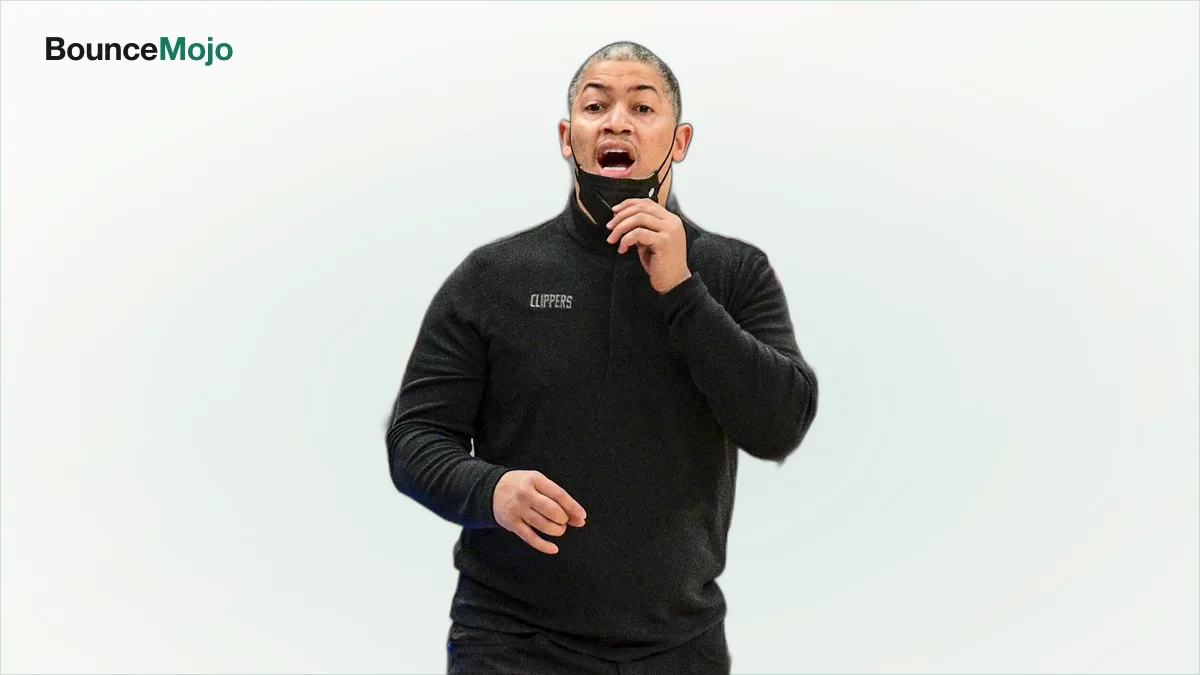
Everybody remembers Allen Iverson stepping over him. Almost nobody remembers that the man on the floor went on to win more championships than the man who stepped over him.
Here’s what most people miss: the moment that could have defined Tyronn Lue as a punchline is the exact thing he refused to let define him at all.
The Myth vs. The Reality
The myth is a single freeze-frame. Tyronn Lue, flat on the hardwood, as Allen Iverson coolly steps over him in the 2001 Finals. For years, that was the whole story a lot of people knew.
That image is real. It’s also wildly incomplete.
Here’s the truth: the guy on the ground was a two-time NBA champion who played 11 seasons in the league, then became one of the most respected coaches in the sport and won a title from the bench. The “victim” of the most famous step-over in basketball history has more rings than most of the players who ever laughed at that photo.
Think about it. We love a humbling image because it’s simple and it sticks. But Lue’s actual career is the opposite of that snapshot. He was an undersized, overlooked guard who kept outlasting expectations, first as a player nobody projected, then as a coach nobody handed anything to.
Now, that resilience didn’t appear out of nowhere. It was built by a specific place and a specific climb. Which raises the question: what makes a kid this hard to knock down?
The World That Made Tyronn Lue
To understand Lue, you have to understand where he started, a long way from the NBA spotlight.
He was born on May 3, 1977, in Mexico, Missouri, a small town far from any basketball mecca. This was middle-America, not a coastal talent factory. Lue grew up having to prove himself against bigger, more hyped players, and he learned early that size and reputation weren’t the same as skill.
But the era mattered too. Lue came up as a guard in the 1990s, when the position was being redefined and a smart, quick playmaker could carve out a role even without star size. He starred in the Kansas City area and earned his way to the University of Nebraska, where he became one of the best guards in the program’s history.
Here’s the deal: at every level, the knock on Lue was the same. Too small. Too slight. Not a future pro. And at every level, he answered it by simply being too competitive to cut.
But being underestimated meant he’d have to fight for a foothold in the league. And that fight is where the real story starts.
The Crucible: Early Life and the Climb
The environment that shaped him
One thing defined young Tyronn Lue: he was always the guy who had to earn it.
At Nebraska, he put up big numbers and left after his junior year for the 1998 NBA draft, betting on himself. He was taken 23rd overall by the Denver Nuggets and immediately traded to the Los Angeles Lakers, landing on a team about to become a dynasty. For an undersized guard from Missouri, it was the deep end.
He didn’t play a star’s minutes. He fought for a rotation spot on a loaded roster, learning the pro game from the inside of a championship locker room. That’s a specific kind of education: watching Kobe Bryant’s obsession and Phil Jackson’s calm up close, absorbing how winning teams actually operate.
You might be wondering: how does a end-of-the-bench guard turn into a championship coach? The answer is that Lue was studying the whole time. He wasn’t just surviving in the NBA. He was quietly cataloging everything, the schemes, the personalities, the pressure, storing away a coaching education years before he knew he’d need it.
By 2000 and 2001, he had two championship rings. The overlooked kid was a champion, even if the wider world barely noticed.
The catalyst
The catalyst came, ironically, from his most humbling moment, and later from a mentor named Doc Rivers.
In Game 1 of the 2001 Finals, Iverson hit a jumper right over Lue and stepped over him. The image went everywhere. A lesser competitor might have been buried by it. Lue treated it as fuel, a reminder that respect in the NBA is earned and re-earned, never given.
Here’s the kicker: after an 11-year playing career that took him through the Lakers, Wizards, Magic, Hawks and more, Lue moved straight into coaching under Doc Rivers with the Celtics and then the Clippers. Rivers became the mentor who turned a smart ex-player into a real coach, giving Lue responsibility and grooming his voice. That apprenticeship set up everything that followed.
In January 2016, the Cavaliers made Lue their head coach midseason. Months later, he was standing on top of the sport.
The guy from the step-over photo was about to author one of the great moments in Finals history. But the people around him made it possible.
The Key Players
No career this layered is a solo act, and Lue was shaped by people at every stage.
Start with Doc Rivers, the coach who gave Lue his start on the sideline. Rivers trusted Lue with real responsibility as an assistant, and much of Lue’s calm, players-first coaching style traces back to that mentorship.
Then there’s Kobe Bryant, his teammate during the Lakers’ championship years. Sharing a locker room with Bryant’s relentless drive gave Lue an up-close model of what elite commitment looks like, a lesson he’d later teach as a coach.
And there’s LeBron James, the superstar Lue coached to the 2016 title. Their partnership was central to the greatest comeback in Finals history, and managing a talent that large is exactly the kind of challenge that made Lue’s reputation.
There was also Allen Iverson, the opponent whose step-over became the defining image of Lue’s early career, a moment that, oddly, kept his name in the conversation long enough for his later success to rewrite it.
Now: learn from the right people and answer your humbling moments the right way, and you can build something historic. Lue was about to do exactly that. But the pressure came with a real cost.
The Turning Point
The pinnacle
The pinnacle came in June 2016, on the road in Oakland.
Lue’s Cavaliers were down 3-1 in the Finals to a Golden State team that had won a record 73 regular-season games. No team in NBA history had ever come back from that hole in the Finals. Lue, in his first year as a head coach, kept his team composed, made the adjustments, and rode LeBron James and Kyrie Irving to three straight wins and the championship.
It was Cleveland’s first NBA title, and it ended a decades-long championship drought for the city. For Lue, it was total vindication, the undersized guard, the step-over guy, now a champion coach.
Across his career, the totals became remarkable: two rings as a player, one as a head coach, and a reputation as one of the sharpest tactical minds and best man-managers in the league. Few people have won at the highest level in two such different roles.
Here’s the truth: he reached the summit of his profession in his very first season running a team, and it still didn’t make the job easy.
The price
Because the pressure of that world took a real toll.
During his time coaching in Cleveland, Lue stepped away from the team for a stretch due to health concerns, dealing with chest pains and anxiety brought on by the relentless grind. It was a rare, public reminder that the demands on an NBA head coach, the travel, the scrutiny, the stress of managing superstars and championship expectations, can break a person’s health.
Then came the abrupt turn. Just a few games into the following season, with LeBron James gone and the roster gutted, the Cavaliers fired Lue. The same job that had crowned him a champion discarded him almost overnight, a brutal lesson in how conditional a coach’s security really is.
He’d reached the mountaintop faster than almost anyone. He also learned how quickly the mountain can drop out from under you.
The Unvarnished Truth
Lue’s story isn’t a simple fairy tale, and pretending otherwise flattens it.
The most common criticism is that his 2016 title was really LeBron James’s doing, that any competent coach with the best player on the planet would have won. It’s an unfair oversimplification, but it followed Lue for years and only faded as he proved himself again with the Clippers.
There’s also the reality of the injuries and near-misses. His Clippers teams, loaded with talent, have battled significant injuries to their stars and fallen short of the Finals, leaving open the debate about how much of that is coaching and how much is luck and health.
Here’s what’s easy to miss: the same trait that makes Lue effective, his calm, low-ego, player-friendly style, is exactly what critics use against him. To supporters, he’s a masterful manager of stars. To skeptics, he’s a coach carried by talent. Both are describing the same man.
None of that erases the rings. But it does explain why Lue is a more debated figure than his championship résumé alone would suggest.
Controversies and Criticisms
Lue’s career has carried its share of debate, and it’s worth being honest about it.
His promotion to Cavaliers head coach in 2016 came at the expense of David Blatt, who was fired despite a strong record. Some viewed the move as awkward and unearned at the time, though Lue’s title quickly quieted that criticism.
The “LeBron’s coach” label was the more lasting knock, a shorthand suggesting Lue was a beneficiary of circumstance rather than a difference-maker. His success in Los Angeles, without James, has done the most to answer it.
There’s also the fair debate about playoff results. With a star-laden Clippers roster, Lue has faced pressure to reach a Finals, and injuries have repeatedly derailed those runs. Whether that’s on the coach or on cruel luck is a genuine, unresolved argument.
So what does a life like this actually teach the rest of us? A lot, and not the lessons you’d expect.
What We Can Learn From Tyronn Lue
Navigating hard times
Lue’s real lesson isn’t about winning. It’s about refusing to be defined by your lowest moment.
The step-over could have been his whole story. The Cleveland firing could have ended his career. The health scare could have driven him out of the game. Instead, Lue kept absorbing the hits and coming back, treating each setback as information rather than a verdict.
In other words: the rings were the reward. The refusal to be buried by embarrassment and rejection, that was the real skill.
The success blueprint
The blueprint here is about turning experience into authority.
Lue was never the most talented guy on the floor. But he spent 11 years studying the NBA from the inside, then converted that hard-won knowledge into a coaching voice that stars actually listen to. He didn’t out-athlete anyone. He out-understood them.
Want the fuller picture of how that translated into wealth? The full net worth breakdown shows how two careers, player and coach, stacked into a multimillion-dollar fortune. And to see how he ranks among the game’s biggest earners, the richest coaches list puts it in context.
The deeper takeaway is about reinvention. Lue proved that the role you start in doesn’t have to be the one you’re remembered for. The people who last are the ones willing to become something new when the first version of their career ends.
Which brings us to the final reckoning on the man.
Final Verdict
Tyronn Lue is going to be remembered for the wrong image.
Most people will freeze him in that 2001 photo, on the floor as Iverson steps over him. A smaller, smarter group will remember something harder and more valuable: an undersized guard from small-town Missouri who won two rings as a player, absorbed the most famous humiliation in NBA history, and then rebuilt himself into a championship coach who out-thinks rooms full of superstars.
Here’s the bottom line: the step-over made him a footnote. Everything he did afterward made him a headline. By refusing to accept the story others wrote for him, Lue turned a punchline into one of the most respected careers in basketball.
He is a champion as a player and a coach, a rare double almost no one achieves. He is also living proof that your most humbling moment is not your final one. And in the long run, that story, the reinvention, is the version worth remembering.
Shop Tyronn Lue on Amazon
Books, audiobooks, merch and more, handpicked for fans.
As an Amazon Associate we earn from qualifying purchases.
Frequently Asked Questions
Where did Tyronn Lue grow up?+
Lue was born in Mexico, Missouri, on May 3, 1977, and starred in high school basketball in the Kansas City area before playing college ball at the University of Nebraska.
Did Tyronn Lue win championships as a player?+
Yes. Lue won two NBA titles with the Los Angeles Lakers, in 2000 and 2001, playing as a reserve guard alongside Kobe Bryant and Shaquille O'Neal during the team's dynasty run.
What was the Allen Iverson step-over?+
In Game 1 of the 2001 NBA Finals, Allen Iverson hit a shot over Lue and then stepped over him, creating one of the most iconic images in NBA history. Lue has said he embraced the moment rather than let it define him.
How did Tyronn Lue become a head coach?+
After 11 seasons as a player, Lue became an assistant under Doc Rivers, then took over as Cleveland Cavaliers head coach in January 2016, leading the team to a championship that same year.
Did Tyronn Lue win a title as a coach?+
Yes. In 2016, Lue coached Cleveland back from a 3-1 deficit to beat the 73-win Golden State Warriors in the Finals, delivering the city its first NBA title and one of the great comebacks in league history.
Want the money side of the story?
Read Tyronn Lue's Full Net Worth Breakdown →Shop Tyronn Lue on Amazon
Books, audiobooks, merch and more, handpicked for fans.
As an Amazon Associate we earn from qualifying purchases.