Thomas Tuchel Biography: The Obsessive Mind Behind England's Bench
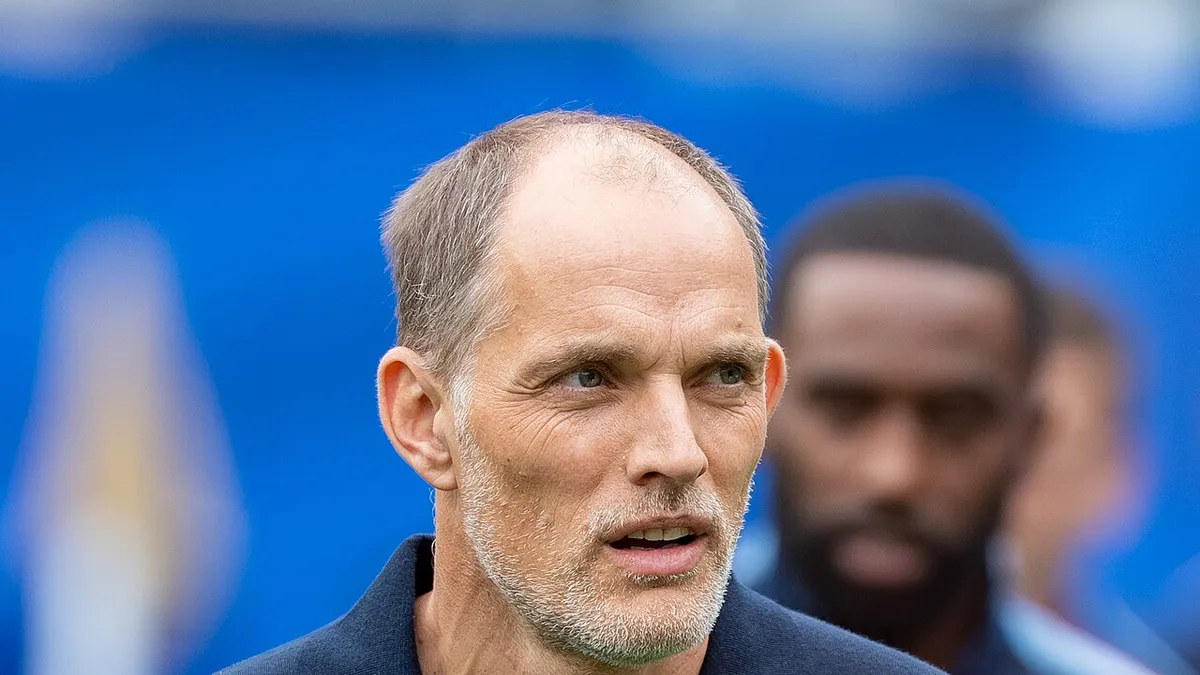
Everybody remembers the Champions League night in 2021. Almost nobody remembers the young defender whose knee gave out before his career ever really began.
Here’s what most people miss: the injury that ended Thomas Tuchel’s playing days at 25 is the exact reason he became one of the most obsessive, decorated coaches in the world.
The Myth vs. The Reality
The myth is sleek. Thomas Tuchel, the tactical genius, the manager who parachutes into a struggling giant and wins the biggest prize in club football within months. A coaching machine built to solve any team.
That version is real. It’s also wildly incomplete.
Here’s the truth: Tuchel never had the playing career that usually launches a top manager. He was a limited defender in the lower reaches of German football whose body failed him young. The tactical brilliance everyone praises wasn’t inherited from a glittering playing career, because there wasn’t one. It was built, painstakingly, by a man who had to out-think the game because he could no longer out-play it.
Think about it. We love a story of the born tactician because it feels like magic. If Tuchel simply sees football differently, then his success is a gift. But that’s not what happened. He became a genius the slow way, by studying, obsessing and grinding through unglamorous jobs until the ideas were undeniable.
Now, that obsession didn’t come from nowhere. It was shaped by a specific setback, a specific football culture, and a specific refusal to quit the game. Which raises the question: what turns a failed defender into a European champion?
The World That Made Thomas Tuchel
To understand Tuchel, you have to understand the German football system that raised and educated him.
He was born on August 29, 1973, in Krumbach, a small town in Bavaria. He grew up in a football-mad country and played the game seriously, but as a defender of modest ability rather than a future star. His path ran through the lower and middle tiers of German football, the unglamorous engine room of the sport.
But the era mattered too. Tuchel came up as German football was becoming one of the most sophisticated coaching cultures in the world, obsessed with structure, pressing and tactical education. The German system produced badges, courses and a generation of thinker-coaches, and it gave a sharp, curious young man a ladder to climb even without a playing pedigree.
Here’s the deal: because Tuchel was never going to coast on reputation as a former great, he had to master the craft itself. He immersed himself in the details, the drills, the systems, the psychology, the kind of granular obsession that defines him to this day.
But before any of that, his body made the decision for him. And that forced ending is where the real story starts.
The Crucible: Early Life and the Climb
The environment that shaped him
The defining event of Tuchel’s early adulthood wasn’t a match. It was an injury.
A chronic knee problem ended his playing career in his mid-twenties, far too young. For a man whose life had been built around football, that’s a brutal blow: the game you’ve organized your whole identity around suddenly rejects you, with decades of life still ahead.
Most players in that position drift away from the sport. Tuchel did the opposite. He stayed, moving into coaching almost immediately, and threw the same energy he’d once spent trying to be a good player into becoming a great coach. He worked with youth teams, studied relentlessly, and began developing the detailed, demanding style that would become his signature.
You might be wondering: how does a lower-league defender end up managing PSG, Chelsea and Bayern? The answer is that Tuchel treated coaching as a discipline to be mastered rather than a retirement plan. He didn’t have a famous name to open doors, so he made his ideas open them instead.
By the time he took his first senior club job at Mainz, he had spent years quietly building an approach that would soon force the whole of German football to pay attention.
The catalyst
The catalyst was Mainz 05, and then Borussia Dortmund.
At Mainz, Tuchel took a modest club and made it punch far above its weight, earning a reputation as one of the brightest young coaches in Germany. That earned him the Dortmund job, one of the country’s biggest clubs, where he won the DFB-Pokal in 2017 and confirmed he could succeed under real pressure and scrutiny.
Here’s the kicker: Tuchel’s intensity was a gift and a complication from the start. His attention to detail made his teams brilliant, but his uncompromising nature sometimes strained relationships with executives and directors. That tension, brilliance paired with friction, would follow him throughout his career.
From Dortmund, the path led abroad, to Paris and then England, where his biggest moment was waiting.
The Key Players
No career this eventful is a solo act, and Tuchel’s path was shaped by powerful figures.
Start with the German coaching culture and mentors who educated him, the system that let a non-star build a world-class managerial mind through study rather than status.
Then there’s Roman Abramovich, the Chelsea owner who hired Tuchel mid-season in 2021 and backed him as he chased European glory. It was under that ownership that Tuchel reached the pinnacle of club football.
There’s also Todd Boehly, part of the group that took over Chelsea and dismissed Tuchel early in the following era, a reminder of how quickly a manager’s fortunes can turn when ownership changes.
And there’s Jurgen Klopp, the fellow German whose parallel journey, from unremarkable player to elite coach, mirrors and illuminates Tuchel’s own, marking them as products of the same influential football culture.
Now: master your craft and take the biggest jobs, and you can reach the top of the sport. Tuchel was about to do exactly that, though the triumph came wrapped in the same volatility that shadowed him everywhere.
The Turning Point
The pinnacle
The pinnacle came in Porto, in May 2021.
Tuchel had taken over a stumbling Chelsea only months earlier, in January, with the season half gone. What followed was a stunning turnaround that carried the club all the way to the Champions League final, where they beat a star-studded Manchester City. In a matter of months, Tuchel had gone from a manager freshly sacked by PSG to a European champion.
It was validation of everything, the obsession, the study, the refusal to leave the game after his injury. He added the UEFA Super Cup and the Club World Cup soon after, and later won the Bundesliga with Bayern Munich, cementing a reputation as a serial winner across multiple countries.
Here’s the truth: even that level of success never bought him lasting security.
The price
Because the same intensity that won trophies made his relationships combustible.
Tuchel has repeatedly clashed with the people above him. He was sacked by PSG despite reaching a Champions League final. He was dismissed by Chelsea’s new ownership just months into their tenure, barely more than a year after winning them Europe. He departed Bayern after a difficult spell. A manager this successful has spent a striking amount of his career being let go.
The pattern reveals the price of his approach. Tuchel demands total commitment, control and standards, and when those demands rub against boardroom politics, the partnerships fracture. The brilliance and the friction are the same trait, viewed from two sides.
He had learned, over and over, that winning is not the same as being safe. In elite football, even champions get fired.
The Unvarnished Truth
Tuchel is a proven winner, but honesty means naming the recurring pattern too.
He is, by reputation, difficult to manage from above. His fallouts with sporting directors and owners are a thread running through his whole career, and fair critics note that a coach who wins everywhere yet stays nowhere for long may be part of the reason for his own instability.
There’s also the question of temperament under scrutiny. Tuchel’s intensity, so effective on the training ground, can spill into public friction and pointed comments that create noise around his teams. Taking the England job, one of the most heavily scrutinized positions in world sport, and as a rare foreign appointment, places that temperament under a spotlight brighter than any he has faced.
Here’s what’s easy to miss: none of this undercuts his quality. The firings are, in a strange way, evidence of his standards. He would rather be exacting and exit than compromise and coast.
So what does a career like this actually teach the rest of us? More than the trophy count alone.
What We Can Learn From Thomas Tuchel
Navigating hard times
Tuchel’s real lesson starts with what he did when his first dream died.
A knee injury ended his playing career before it began, and instead of drifting away bitter, he redirected all that energy into a second act that dwarfed the first. He turned a devastating setback into the foundation of everything that followed.
In other words: the end of one path can be the start of a far bigger one, if you’re willing to rebuild rather than mourn.
The success blueprint
The blueprint here is about substituting mastery for status.
Tuchel had no famous playing name to trade on, so he became so good at the craft of coaching that his ideas spoke for him. He out-studied, out-prepared and out-thought people with far grander résumés, and it carried him to the very top of the sport.
Want the fuller picture of how that translated into wealth? The full net worth breakdown shows how a run of elite jobs built a $30 million fortune. And to see how he ranks among the game’s biggest earners in the dugout, the richest coaches list puts it in context.
The deeper takeaway is about conviction. Tuchel proved that standing firmly by your standards can cost you jobs and still make you a champion. If you’re willing to be exacting, you may not always be comfortable, but you’ll be very hard to ignore.
Which brings us to the final reckoning on the man.
Final Verdict
Thomas Tuchel is going to be remembered for the wrong reason.
Most people will file him under “the manager who keeps getting fired,” the volatile genius who never settles. A smaller, smarter group will remember something harder and more valuable: a limited defender whose body quit on him young, who refused to leave the game, and who out-worked and out-thought his way to a Champions League title and the trust of an entire footballing nation.
Here’s the bottom line: the trophies made him elite. The obsession made him Tuchel. By treating coaching as a craft to be mastered rather than a name to be leaned on, he built one of the most decorated careers in the modern game from almost nothing.
He is a Champions League winner and now the man charged with England’s dreams. He is also living proof that a ruined playing career can be the making of a manager. And in the long run, that second story, the reinvention, is the version worth remembering.
Shop Thomas Tuchel on Amazon
Books, audiobooks, merch and more, handpicked for fans.
As an Amazon Associate we earn from qualifying purchases.
Frequently Asked Questions
Where is Thomas Tuchel from?+
Tuchel was born on August 29, 1973, in Krumbach, Bavaria, Germany, and came up through modest German football before injury pushed him into coaching.
Why did Thomas Tuchel stop playing football?+
Tuchel was a defender whose career was ended by a chronic knee injury in his mid-twenties. The setback moved him into coaching far earlier than most players, and he never looked back.
What is Thomas Tuchel's greatest achievement?+
His crowning moment is winning the 2021 UEFA Champions League with Chelsea, beating Manchester City in the final just months after taking charge of the club mid-season.
Which clubs has Thomas Tuchel managed?+
Tuchel has managed Mainz 05, Borussia Dortmund, Paris Saint-Germain, Chelsea and Bayern Munich, before becoming manager of the England national team.
Is Thomas Tuchel the England manager?+
Yes. Tuchel became England's head coach at the start of 2025 on a contract built around the 2026 World Cup, one of the few foreign managers ever to lead the national team.
Want the money side of the story?
Read Thomas Tuchel's Full Net Worth Breakdown →Shop Thomas Tuchel on Amazon
Books, audiobooks, merch and more, handpicked for fans.
As an Amazon Associate we earn from qualifying purchases.