Sean McVay Biography: The Boy Wonder Who Rewired the NFL
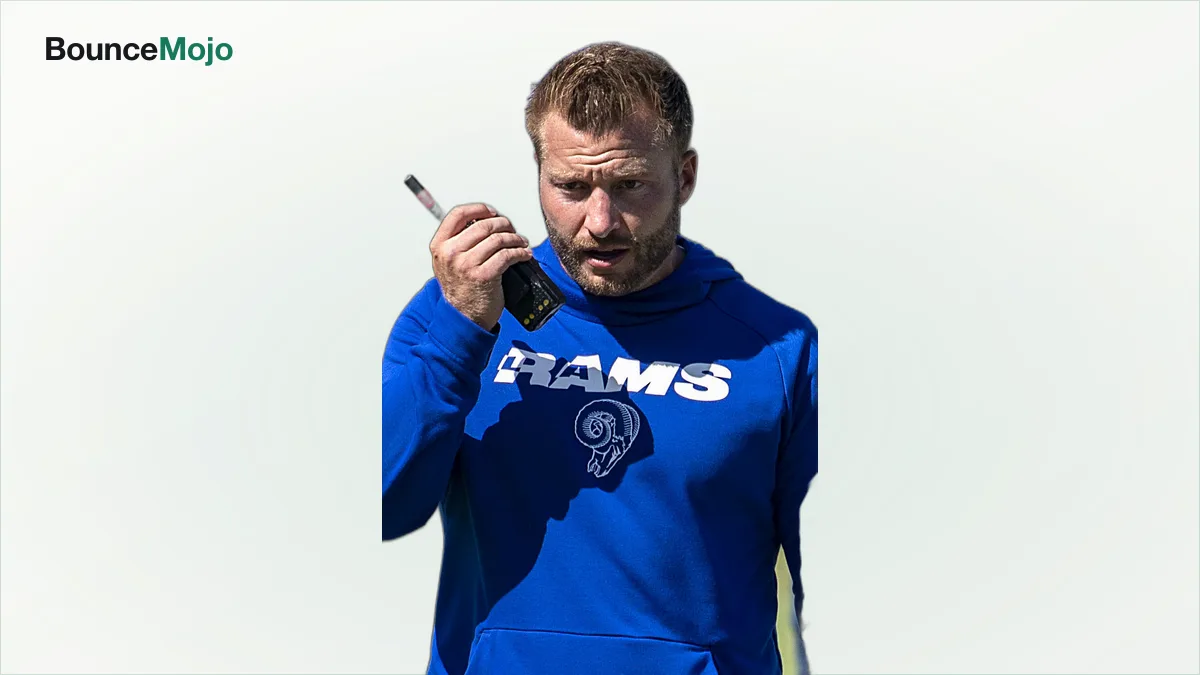
Everybody remembers the youngest coach to hoist a Lombardi Trophy. Almost nobody remembers that he got the job before he was old enough to have coached a full decade.
Here’s what most people miss: the thing that made McVay look like a reckless gamble, his age, is the exact thing that made him the most influential mind in modern football.
The Myth vs. The Reality
The myth is tidy. Sean McVay, the boy genius, a photographic memory for plays, born to coach, who walked into Los Angeles and instantly turned losers into a Super Bowl team.
That version is real. It’s also wildly incomplete.
Here’s the truth: the “boy wonder” label erases how much groundwork went into the overnight success. McVay grew up inside football, apprenticed under demanding mentors, and grinded through unglamorous assistant jobs before anyone handed him a team. The genius was real, but it was built, not beamed down.
Think about it. We love a story of effortless prodigy because it makes the success feel like magic. If McVay was simply born knowing football, his rise is untouchable and unrepeatable. But that’s not what happened. He was a kid with a rare head start who then did the work to deserve it.
Now, that head start didn’t appear by accident. It came from a specific family, a specific city, and a specific era of football. Which raises the question: what world produces a head coach barely older than his players?
The World That Made Sean McVay
To understand McVay, you have to understand the football household he was born into.
He was born on January 24, 1986, in Dayton, Ohio, into a family where the sport was practically the family business. His grandfather, John McVay, was a respected executive with the San Francisco 49ers during their dynasty years, and his father worked in sports as well. Dinner-table conversation in the McVay home wasn’t small talk. It was football operations.
But the era mattered too. McVay came of age as the NFL was shifting toward wide-open, pass-heavy offenses, and as analytics and scheme were becoming as valuable as raw talent. A young mind fluent in modern offensive concepts was about to become one of the most prized commodities in the sport.
Here’s the deal: McVay was a standout high school quarterback at Marist School in the Atlanta area, then played wide receiver at Miami University in Ohio. He was good, but not NFL-bound as a player. The pro career was never going to be on the field.
But the absence of a playing career didn’t slow him down. It freed him to start coaching young. And that is where the real story begins.
The Crucible: Early Life and the Climb
The environment that shaped him
Two things defined the young McVay: a football bloodline and an early start.
Because the game ran in his family, McVay didn’t discover coaching as a second act. He aimed at it from the beginning. When his playing days ended in college, he moved almost immediately into the profession, taking an entry-level role with the Tampa Bay Buccaneers in 2008 under Jon Gruden, one of the most intense offensive coaches in the league.
That environment was a pressure cooker, and it was exactly what he needed. You might be wondering: how does someone become a head coach so young? The answer is that McVay compressed the usual timeline by starting early and attaching himself to demanding mentors who let his talent show.
By his late twenties, he was the offensive coordinator in Washington, where he helped turn Kirk Cousins into a productive starting quarterback. The young assistant was quietly building the résumé that would make him the most talked-about name in coaching.
The catalyst
The catalyst was a struggling franchise willing to take a swing.
In January 2017, the Los Angeles Rams, coming off a dismal season with one of the worst offenses in football, made a stunning choice. They hired McVay as head coach at just 30 years old, making him the youngest head coach in the NFL’s modern era. It was a gamble that could have made the front office look foolish.
Here’s the kicker: it worked immediately. In his first season, McVay took the NFL’s lowest-scoring offense and turned it into the highest-scoring unit in the league, and he was named Coach of the Year. The gamble didn’t just pay off. It changed how the entire league thought about who should be a head coach.
The boy wonder had arrived. And the NFL would never quite look the same.
The Key Players
No rise this fast is a solo act, and McVay was surrounded by people who shaped his path.
Start with John McVay, his grandfather, whose front-office career gave Sean a lifelong education in how winning football organizations actually run. That inheritance is impossible to overstate.
Then there’s Jon Gruden, the demanding offensive mind who gave McVay one of his first NFL jobs and modeled the relentless preparation that became McVay’s trademark.
And there’s Kyle Shanahan, a fellow young offensive coach who overlapped with McVay in Washington. The two came up in the same offensive tradition and would later face each other as division rivals, part of a generation that remade NFL offense.
There was also Matthew Stafford, the veteran quarterback McVay acquired in Los Angeles, whose arrival helped push the Rams over the top and turned McVay’s system into a championship machine.
Now: surround yourself with the right mentors and the right players, and you can accomplish something historic fast. McVay was about to do exactly that.
The Turning Point
The pinnacle
The pinnacle came in Los Angeles, in February 2022.
McVay’s Rams reached Super Bowl LVI and defeated the Cincinnati Bengals 23-20 in a tight, dramatic finish. With that win, McVay became the youngest head coach in NFL history to win a Super Bowl, at age 36. The gamble the Rams made on a 30-year-old had turned into a championship.
It was validation on the grandest stage. The coach too young to be trusted had out-schemed the entire league and won it all.
Across his tenure, the numbers piled up: division titles, deep playoff runs, and a franchise transformed from an afterthought into a perennial contender. Few coaches in NFL history have accomplished so much so early.
The price
Because the same intensity that fueled the winning came with a cost.
McVay has spoken candidly about the exhausting, all-consuming nature of NFL head coaching, the relentless hours and the toll it takes. After the Super Bowl, there was open speculation about whether he would step away for the far easier life of a broadcaster, and reporting suggested he was courted with a lucrative media offer.
He stayed. But the very fact that he weighed it revealed the truth: the job that made him famous also nearly burned him out young. The genius label came with a grind few outsiders ever see.
The Unvarnished Truth
McVay’s story isn’t pure fairy tale, and pretending otherwise flattens it.
He inherited advantages most coaches never get: a football family, early access, and mentors who fast-tracked him. That doesn’t diminish his talent, but it does mean his path can’t simply be copied by grinding harder. Timing and lineage were part of the formula.
There’s also the reality of the “McVay effect.” His success set off a leaguewide rush to hire young offensive coaches, and not all of those hires worked out. The trend McVay inspired produced plenty of failures alongside the successes, a reminder that his particular blend of talent and preparation is rarer than the copycats assumed.
Here’s what’s easy to miss: his greatest strength and his greatest strain are the same trait. The obsessive preparation that makes him elite is also what makes the job so draining that he has openly wondered how long he can sustain it.
None of that erases the achievement. But it does explain why McVay is more interesting than the boy-genius cartoon suggests.
What We Can Learn From Sean McVay
Turning a head start into results
McVay’s real lesson isn’t about being born lucky. It’s about what you do with an advantage once you have one.
Plenty of people grow up around a family trade and never build on it. McVay took his football inheritance and added relentless work, early risk-taking, and a willingness to be the youngest person in every room. He didn’t just coast on the name. He earned the job.
In other words: the head start opened the door. The work walked him through it.
The success blueprint
The blueprint here is about compressing the timeline by attaching yourself to the right people.
McVay didn’t wait 20 years for his shot. He started young, learned from demanding mentors, and made himself impossible to overlook. Want the fuller picture of how that translated into wealth? The full net worth breakdown shows how a record-setting coaching contract turned early success into an eight-figure fortune. And to see how he ranks among the game’s biggest earners, the richest coaches list puts it in context.
The deeper takeaway is about timing. McVay proved that experience is not the same as readiness. Sometimes the person most prepared for the job is the one nobody thinks is old enough to have it.
Which brings us to the final reckoning on the man.
Final Verdict
Sean McVay is going to be remembered for a number: youngest to win it all.
Most people will file him under “boy wonder,” the coach who won a Super Bowl at 36 and made the NFL fall in love with young offensive minds. A smaller, smarter group will remember something more useful: a kid raised inside football who turned a rare head start into real substance, then reshaped how an entire league hires and thinks.
Here’s the bottom line: the age made him a story. The results made him matter. By winning early and winning big, he didn’t just build his own career, he rewrote the template for everyone who came after.
He is the youngest head coach in modern NFL history to win a championship. He is also proof that readiness doesn’t always wait for the calendar. And in the long run, that second story, the one about timing and preparation, is the version worth remembering.
Shop Sean McVay on Amazon
Books, audiobooks, merch and more, handpicked for fans.
As an Amazon Associate we earn from qualifying purchases.
Frequently Asked Questions
Where did Sean McVay grow up?+
McVay was born in Dayton, Ohio on January 24, 1986, and later attended Marist School in the Atlanta, Georgia area, where he starred as a high school quarterback before playing wide receiver in college.
Is Sean McVay related to a famous football figure?+
Yes. His grandfather, John McVay, was a longtime San Francisco 49ers executive during the team's dynasty era, giving Sean a football-operations education from childhood.
How old was Sean McVay when he became a head coach?+
McVay was hired by the Los Angeles Rams in January 2017 at just 30 years old, making him the youngest head coach in the NFL's modern era.
Did Sean McVay win a Super Bowl?+
Yes. He led the Rams to victory in Super Bowl LVI in February 2022, beating the Cincinnati Bengals 23-20 and becoming the youngest head coach in NFL history to win the title at age 36.
What is the 'McVay effect'?+
It refers to the NFL trend of hiring young, offensive-minded coaches inspired by McVay's success, and to the many assistants from his staff who went on to become head coaches themselves.
Want the money side of the story?
Read Sean McVay's Full Net Worth Breakdown →Shop Sean McVay on Amazon
Books, audiobooks, merch and more, handpicked for fans.
As an Amazon Associate we earn from qualifying purchases.