Roger Federer Biography: The Hot-Headed Kid Who Became Calm King
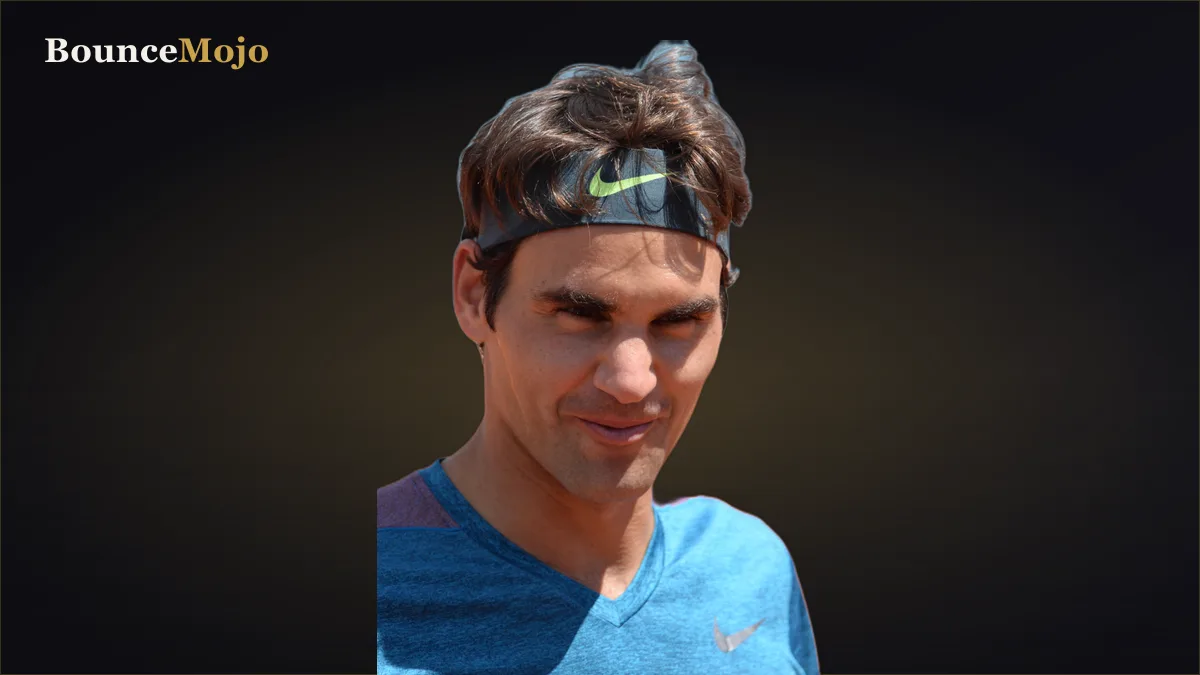
The most composed champion tennis ever produced spent his adolescence hurling rackets across courts and dissolving into tears after losses.
That is not a contradiction in his story. It is the story.
The Serenity Was Manufactured
Federer was not born calm. He built calm, slowly, out of a temperament fierce enough to have sunk the whole career before it started.
As a junior he was notorious for on-court meltdowns: smashed rackets, screaming at himself, sulking for hours afterward. He was ranked among the best juniors in the world, good enough to win junior Wimbledon in 1998, and yet coaches and even his parents warned him his attitude would waste the talent attached to it. The gap between his ability and his composure was the single biggest question hanging over his early years, and nobody could be certain he would close it.
He did not suppress the temper. He learned to channel it, turning raw emotion into the focus that eventually won 20 majors. But it was not a switch he flipped. It took years of catching himself, failing, and trying again, leaning on coaches and on his family’s warnings until the new habit finally held. The serenity the world later admired is scar tissue.
Basel Built the Brand Before It Built the Player
Federer was born in 1981 in Basel, a Swiss city sitting on the borders of France and Germany. His father was Swiss, his mother South African. He started at the local club as a young boy and turned professional at 17.
The dual heritage gave him a global outlook and easy fluency in several languages, which later made him tennis’s most universally beloved ambassador. Switzerland itself was prosperous, orderly, comfortable, and not a place known for producing sporting superstars. He changed that single-handedly.
That background also shaped the commercial half of his life more than most people notice. The Swiss reputation for precision, discretion, and quality became the foundation of the Federer image, an image that would eventually underwrite a fortune in luxury endorsements. He grew up understanding, almost by instinct, the value of class.
He arrived into a tennis world still ruled by power and grinding baseline rallies, and offered something else: fluid, attacking elegance that made brutal athleticism look like ballet. He served like a surgeon, moved like he was gliding, and hit a single-handed backhand that became the most beautiful shot in the sport. Fans did not just admire him for winning. They loved how he won, and that beauty became a brand sponsors would pay a fortune to attach themselves to.
Peter Carter Died in 2002. Federer Won Wimbledon in 2003.
The Australian Peter Carter was Federer’s early coach and mentor, and he shaped both the game and the character. In 2002 Carter was killed in a car accident while on holiday in South Africa.
The loss shattered him. Federer has said it forced him to grow up, to honor Carter by becoming the disciplined professional his mentor had always insisted he could be. The following year he won his first Wimbledon title.
Carter was not the only person who made him. Mirka Federer, a former professional player he met at the 2000 Sydney Olympics, managed his career, raised their four children, and became his steadiest anchor through two decades at the top. Rafael Nadal was his greatest rival and, unusually, his close friend, pushing him to heights he might never have reached alone. Tony Godsick, his agent and co-founder of Team8, turned the fame into the equity deals and events that outlasted the tennis. A mentor, a wife and manager, a rival, and a dealmaker, each shaping a different quarter of the legend.
Twenty Majors, and the Two Championship Points He Lost in 2019
The peak stretched across nearly two decades: 20 Grand Slam singles titles, a record eight at Wimbledon, and the world No. 1 ranking held for a record run of weeks. The angry boy from Basel had become the calmest and most admired man in his sport.
Greatness that long charges for itself. Federer endured brutal defeats, none more painful than the 2019 Wimbledon final, where he held two championship points on his own serve against Novak Djokovic and lost anyway. He fought through knee surgeries and long injury layoffs late in his career, chasing a level his body could no longer fully deliver. The perfection people saw concealed a constant, grinding effort to stay at the summit and keep answering younger, hungrier rivals long past the point most legends fade.
What he almost never lost was his dignity. He congratulated the players who beat him, cried openly when it was over in September 2022, and left the game more loved than he found it. His calm was never the absence of pain. It was the decision to meet it with class.
Clay, the GOAT Count, and the “Too Polished” Charge
The career is remarkably clean, which is itself part of the story. A few arguments still follow him.
For years he was called the greatest of all time, until Nadal and Djokovic passed his Grand Slam total. Critics argue his major count no longer makes him the statistical best, even if many still crown him for style and impact.
He won the French Open only once, repeatedly beaten on clay by Rafael Nadal. Some see it as the one hole in an otherwise complete résumé, and a reminder that even the most complete player of his era faced a rival built precisely to beat him on his weakest surface.
A handful of critics find the image almost too perfect, too corporate, too careful. Others see a genuinely gracious man who simply never gave scandal a foothold. And some questioned whether the injury-plagued final years dimmed the legacy, where most fans saw only a champion refusing to quit.
Why the Money Didn’t Stop in 2022
Federer retired and his income barely blinked, because his most valuable assets, the On stake, the Rolex and Uniqlo deals, the Laver Cup, were never tied to whether he could still win a match.
That is the difference between earning and owning. Most athletes stop making money the day they stop playing. He had spent 20 years building a brand trusted enough to detach from his results, then engineered a fortune designed to keep growing after his last serve. It did exactly that, which is why he ranks near the top of our richest tennis players list, second only to the businessman Ion Tiriac. The full accounting sits in his net worth breakdown.
Excellence opened the door. Reputation is what kept paying him after the performances stopped, and reputation was the one thing the hot-headed kid from Basel had to build from scratch.
Shop Roger Federer on Amazon
Books, audiobooks, merch and more, handpicked for fans.
As an Amazon Associate we earn from qualifying purchases.
Frequently Asked Questions
Was Roger Federer always calm on court?+
No. As a teenager Federer was famously hot-tempered, known for smashing rackets and losing his composure. Learning to control that fury was one of the turning points of his career.
Who was Peter Carter?+
Peter Carter was Federer's early coach and mentor, an Australian who shaped his game and character. Carter's death in a 2002 car accident devastated Federer and is often cited as a moment that matured him.
How many Grand Slam titles did Roger Federer win?+
Federer won 20 Grand Slam singles titles, including a record eight Wimbledon championships, and spent a record number of weeks ranked world No. 1.
When did Roger Federer retire?+
Federer retired from professional tennis in September 2022, ending his career with an emotional doubles match alongside his rival and friend Rafael Nadal at the Laver Cup in London.
Want the money side of the story?
Read Roger Federer's Full Net Worth Breakdown →Shop Roger Federer on Amazon
Books, audiobooks, merch and more, handpicked for fans.
As an Amazon Associate we earn from qualifying purchases.