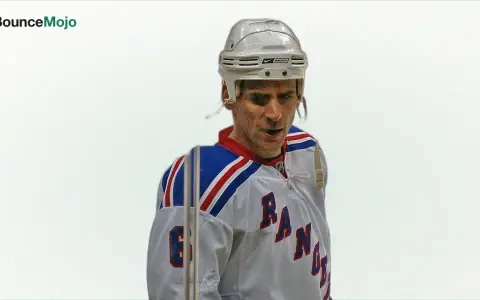
Ricky Hatton Biography: Hyde's Fighter Who Took Manchester to Vegas
The MGM Grand Garden Arena holds 16,459 people. In December 2007, more than 25,000 British fans flew to Las Vegas for Ricky Hatton’s fight with Floyd Mayweather, and roughly 33,000 had been on the waiting list for tickets back home.
Read those three numbers together and you have the commercial fact of Hatton’s career. He sold out a building nearly twice over from four thousand miles away, in a country where most of the audience could not name his weight class.
Hattersley, and the Carpet Shop
He was born Richard John Hatton on 6 October 1978 in Stockport and grew up in Hattersley, on the eastern edge of Greater Manchester. His parents ran a carpet business. His father Ray had been on Manchester City’s books as a young footballer, and Ricky played for City’s junior sides himself before boxing took over.
He started in a gym at around ten. The amateur career was good without being decorated, and he turned professional in September 1997 at eighteen, trained by Billy Graham at the Phoenix Camp in Denton.
The style was set immediately and never changed: pressure from the opening bell, hooks to the body, no interest whatsoever in a step backwards. Between fights he ate and drank himself up by two or three stone, then boiled it off in camp, and made jokes about it in public that his own trainer did not find funny.
4 June 2005: Tszyu Stays on His Stool
For seven years Hatton was a hugely popular domestic fighter with a padded record, and the criticism that he had beaten nobody was fair.
He answered all of it in one night.
Kostya Tszyu was 35, held the IBF light-welterweight title, and had owned a version of it since 1995. The fight went on at the MEN Arena at two in the morning to suit Australian television, in front of 22,000 people who had simply not gone to bed. Hatton mauled him, roughed him up on the inside, leaned on him, and kept coming for eleven rounds until Tszyu’s corner pulled him out before the twelfth.
The Ring made Hatton its Fighter of the Year for 2005. The following May he moved up and outpointed Luis Collazo for a welterweight belt, giving him titles in two divisions.
Manchester-on-the-Strip
British fighters had been to Las Vegas before. None of them brought the crowd with them.
The Hatton travelling support became a promotional asset in its own right, worth real money at the negotiating table, because it guaranteed a sold-out building and enormous UK pay-per-view numbers regardless of what the American audience did. The Mayweather fight drew about 1.2 million UK buys at £14.95, still the British record, against roughly 850,000 in the United States.
They came for two nights that both ended badly. On 8 December 2007 Mayweather stopped him in the tenth after catching him with a check hook against the ropes. On 2 May 2009, back at the MGM Grand, Manny Pacquiao knocked him out in the second with one of the most brutal single punches of the decade.
He was 30. He did not box again for three and a half years, and he split from Billy Graham, ending the partnership that had run his entire career. The money from those two nights is broken down on his net worth profile.
The Comeback, and the Years After the Noise
He came back once, on 24 November 2012, against Vyacheslav Senchenko at the MEN Arena, and was stopped in the ninth with a body shot. He retired in the ring that night on 45-3 (32 KOs).
What followed was a working retirement rather than a quiet one. He ran Hatton Promotions, opened a gym in Hyde that trained amateurs and professionals, and worked corners, including for his son Campbell, who boxed professionally. He fought an exhibition against Marco Antonio Barrera in 2022. He was inducted into the International Boxing Hall of Fame in 2024, while he was alive to attend.
He also spoke, repeatedly and with very little filtering, about depression and about alcohol and drug use in the years after the Pacquiao defeat. He described what happens when the fights, the camps and the crowd all stop at once, and he said plainly that he had attempted to take his own life during that period. He gave those interviews on the record over more than a decade, and said he did it because other people were going through the same thing in silence.
14 September 2025
Hatton was found dead at his home in Hyde on the morning of Sunday 14 September 2025. He was 46. He had been preparing for a comeback bout scheduled for Dubai that December, and his bags were packed for the flight.
The inquest concluded on 20 March 2026. The medical cause of death was given as hanging. The coroner recorded a narrative conclusion rather than one of suicide, stating that she could not be satisfied he had intended to end his life: there was no note, no evidence of planning, and he had made significant future arrangements. Toxicology showed alcohol above the drink-drive limit, with traces of earlier cocaine and cannabis use. A post-mortem examination also found evidence of chronic traumatic encephalopathy, the degenerative brain condition associated with repeated head impacts in boxing.
Thousands lined the streets of Manchester for his funeral in October 2025, with figures from boxing, football and music among the mourners.
If any of this is familiar to you, support is available. In the UK, Samaritans can be reached free on 116 123, at any hour of any day.
What He Was Actually Worth to Boxing
He is on the richest boxers list on the strength of two Las Vegas paydays, and by the standards of that list his fortune was modest. I think the number understates him badly.
Hatton proved something the sport had never tested: that a fighter’s own crowd, if it is loyal enough, is a bankable asset with a price attached. Promoters had always paid for a champion, a record or an American television slot. He was the first British fighter who got paid for the twenty-five thousand people who would follow him anywhere, and every UK fighter who has since taken a purse based on ticket-moving power is working off the precedent he set.
He never pretended to be anything other than what he was. That was the product, and it was not an act.
Shop Ricky Hatton on Amazon
Books, audiobooks, merch and more, handpicked for fans.
As an Amazon Associate we earn from qualifying purchases.
Frequently Asked Questions
When did Ricky Hatton die?+
Hatton was found dead at his home in Hyde, Greater Manchester, on 14 September 2025, aged 46. An inquest concluded on 20 March 2026 with a narrative conclusion; the coroner said she could not be satisfied he had intended to take his own life.
What was Ricky Hatton's biggest win?+
Stopping Kostya Tszyu at the MEN Arena in Manchester on 4 June 2005. Tszyu, the long-reigning IBF light-welterweight champion, retired on his stool after eleven rounds. The Ring named Hatton its Fighter of the Year.
How many fans followed Ricky Hatton to Las Vegas?+
For the Mayweather fight in December 2007, more than 25,000 British fans travelled and around 33,000 people were on a UK ticket waiting list. The MGM Grand Garden Arena holds 16,459.
What was Ricky Hatton's professional record?+
45 wins and 3 losses, with 32 knockouts, from 1997 to 2012. He won world titles at light welterweight and welterweight, and lost only to Floyd Mayweather, Manny Pacquiao and Vyacheslav Senchenko.
Want the money side of the story?
Read Ricky Hatton's Full Net Worth Breakdown →Shop Ricky Hatton on Amazon
Books, audiobooks, merch and more, handpicked for fans.
As an Amazon Associate we earn from qualifying purchases.