Prince Fielder Biography: The Story of Baseball's Gentle Giant
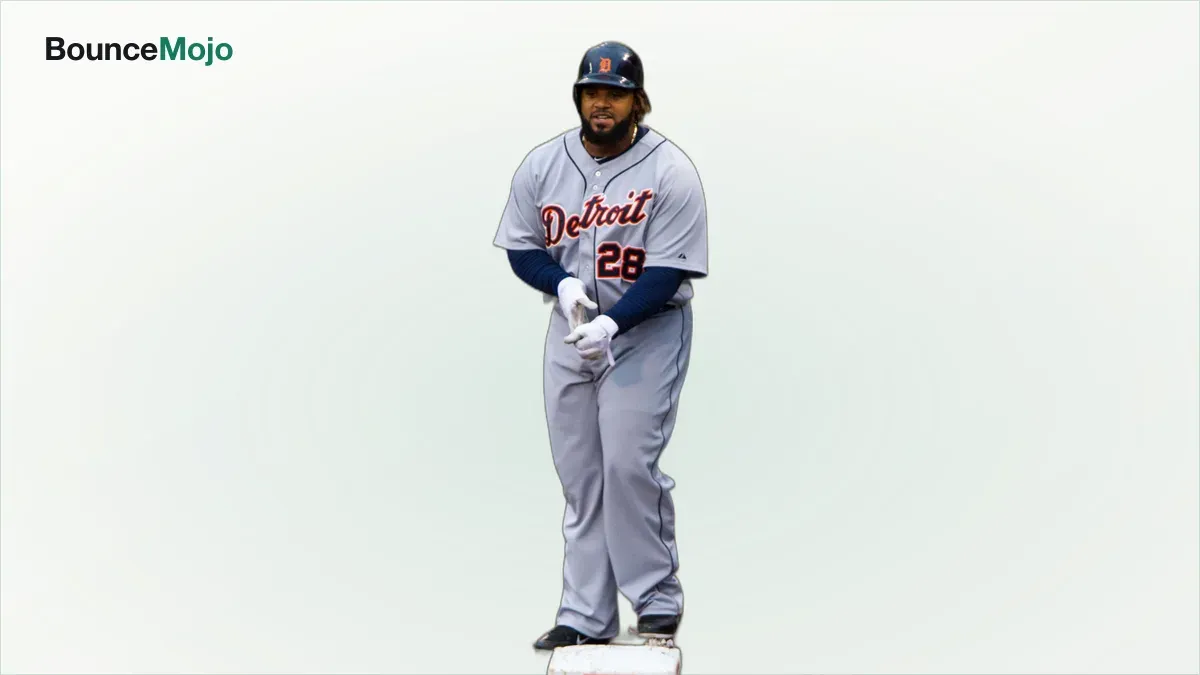
The wide smile, the tape-measure home runs, the joy of a big man who loved to hit. That’s the Prince Fielder most fans remember.
Here’s what most people miss: the kid taking those famous batting-practice swings grew up carrying a wound most people never see, and it shaped the man he became.
The Myth vs. The Reality
The myth is simple. Prince Fielder was a happy slugger, a big joyful presence who mashed home runs and grinned his way through the game.
The reality carries more weight.
Here’s the truth: behind the smile was a young man estranged from his own father, a former star who Prince felt had let him down in the deepest way. The joy was real. So was the pain underneath it.
Now think about the pressure. Fielder grew up as the son of a famous home-run hitter, expected to follow in footsteps that had turned complicated and bitter.
Instead of collapsing under it, he built his own name. And to understand how, you have to start in a major-league clubhouse in Detroit.
The World That Made Prince Fielder
Prince Semien Fielder was born on May 9, 1984, into baseball royalty. His father, Cecil Fielder, was one of the most feared power hitters of the late 1980s and 1990s, a man who once hit 51 home runs in a season for the Detroit Tigers.
Prince practically grew up in the ballpark. As a boy he took batting practice at Tiger Stadium and reportedly launched balls into the seats before he was even a teenager, a legend that followed him for years.
This was baseball in the shadow of a giant, and the giant was his own dad. Every scout, every writer, every fan measured Prince against Cecil from the very beginning. The expectation was crushing, and the family behind it was starting to fracture.
Consider the era, too. Prince came up in the early 2000s, a time when big-market money was flooding into baseball and the biggest sluggers were becoming very rich very fast. A left-handed power hitter with a famous name and prodigious strength was exactly the kind of player teams dreamed about. The stage was set for enormous success, if he could handle the weight of the name he carried.
But here’s the kicker: before Prince could chase his father’s legacy on the field, that relationship would blow apart off it.
The Crucible: Early Life and the Climb
The environment that shaped him
Fielder’s talent was never in doubt. A left-handed hitter with rare power, he was drafted seventh overall by the Milwaukee Brewers in 2002 out of high school in Florida.
He moved quickly through the minors, and by 2005 he was in the big leagues. In 2007 he exploded, hitting 50 home runs to become the youngest player in MLB history to reach that mark, one better in a single number than almost anyone expected so soon.
The talent got him to the majors fast. What tested him was everything happening in his family at the same time.
The catalyst
The break with his father was the defining wound of his early life.
The relationship shattered amid reports of gambling debts, a divorce, and a dispute over Prince’s signing-bonus money. A Detroit newspaper quoted a young Fielder saying his father was “dead to me.” For a son raised in his dad’s clubhouse, that was as deep a cut as baseball can produce.
Imagine the weight of that. Prince had spent his childhood idolizing a father who was a genuine major-league star, taking those famous batting-practice hacks at Tiger Stadium while dreaming of following him. To then feel betrayed by that same man, over money and broken trust, would shake anyone. Many young players have crumbled under far less. The estrangement lasted for years, a painful undercurrent beneath every home run he hit.
Here’s the deal: Fielder had a choice. He could let that bitterness define him, or he could pour it into his own career.
Want to know what he did with all that pain? He built one of the most bankable careers of his era.
The Key Players
You cannot tell the Prince Fielder story without a few names.
Cecil Fielder is the first, the father whose fame opened doors and whose fall caused years of estrangement. Their long, painful road eventually softened into a slow reconciliation, but the rift shaped Prince’s entire early life. Fittingly, both men finished their careers with exactly 319 home runs, a coincidence that bound them together in the record books whether they were speaking or not.
Ryan Braun is the second, his co-star in Milwaukee. Together they turned the Brewers into a contender and gave Fielder the protection in the lineup that let his power play.
Miguel Cabrera is the third. When Fielder signed with Detroit, he joined Cabrera to form one of the most fearsome middle-of-the-order duos in the sport, a partnership that helped push the Tigers deep into October.
Here’s the truth: all that success was about to collide with a body that couldn’t hold up.
The Turning Point: Triumph and Its Hidden Cost
The pinnacle
Start with the triumph, because Fielder reached heights few sluggers do.
He became a six-time All-Star and one of the game’s premier power hitters. He won the Home Run Derby twice, first in 2009 in St. Louis as a Brewer, then again in 2012 in Kansas City as a Tiger, joining a short list of players to claim the crown more than once.
Then came the money. In free agency, the Tigers handed him a nine-year, $214 million contract, one of the largest deals in baseball at the time. At 27, Fielder had it all: fame, family of his own, and financial security for life.
The price
Now the cost, and it was brutal.
Fielder’s power was tied to a strong, durable frame, but his neck betrayed him. He underwent cervical fusion surgery, fought his way back to win the 2015 American League Comeback Player of the Year award, then suffered a second neck injury that required another fusion.
Doctors delivered the verdict in 2016: it was not safe to keep playing. At just 32, with years and tens of millions left on his contract, Fielder’s career was over.
The moment he announced it was one of the most emotional in recent baseball memory. Fielder, flanked by family, broke down as he described being told he could no longer play the game he loved. There was no farewell tour, no chance to leave on his own terms. One day he was a productive slugger, the next he was medically forced into retirement in his prime. For a player who had overcome so much to build his career, the ending felt cruelly abrupt.
You might be wondering how a man handles losing the thing he was born to do. The answer revealed a side of Fielder that stats never captured.
The Unvarnished Truth
Let’s not pretend it was all smiles and home runs.
Fielder’s weight and conditioning were constant talking points throughout his career, with critics questioning whether his body would hold up long term. In a cruel way, they were proven right, though it was his neck, not his frame, that ended things.
He also carried the emotional weight of the family rift for years, a private burden that occasionally spilled into public view. The image of the carefree slugger masked a more complicated inner life. And there was the strange, poignant symmetry with his father to reckon with. Both men finished with exactly 319 home runs. Both were the only father-son pair to each hit 50 in a season. Prince spent his career trying to escape his father’s shadow, only to end up bound to him forever in the record books, a fate that must have carried complicated feelings for a son who once called his dad dead to him.
Here’s the truth: Fielder’s greatest strength, his all-in, muscle-everything approach at the plate, may have contributed to the wear that shortened his career. He gave the game everything, and the game took a physical toll in return.
Even so, he never publicly blamed anyone for the way it ended.
Controversies and Criticisms
For a player of his stature, Fielder’s controversies were more human than scandalous.
The estrangement from his father was the biggest storyline that followed him, dissected endlessly by writers who saw a Shakespearean angle in a son surpassing and disowning his famous dad. Fielder rarely fed the narrative, keeping the details private.
His conditioning drew years of criticism, and some questioned whether the Tigers had overpaid for a player whose body was a long-term risk. When the injuries came, those doubters felt vindicated, though Fielder handled the ending with grace.
Beyond that, the knocks are minor. In a sport with its share of villains, Fielder’s biggest sins amount to being big, being blunt, and being born into a hard situation.
Here’s the thing though: none of it erases what he did. Because his emotional retirement press conference showed a man at peace with a career cut short.
What We Can Learn From Prince Fielder
Navigating the darkness
When the people closest to you let you down, you can carry the bitterness or you can build something of your own.
Fielder built. He refused to let his father’s mistakes or their broken relationship define his path, and he created a name and a fortune independent of the man whose shadow he was born into. The lesson isn’t to cut people off. It’s that you get to write your own story even when your origin is painful.
The success blueprint
Now the part that built the career and the money.
Fielder peaked early and got paid at the exact right moment, signing a guaranteed contract at 27 when his power was at its height. When injury struck, that structure protected almost everything he had earned. It’s a reminder that timing and guarantees can matter as much as talent. The full money breakdown lives in our Prince Fielder net worth analysis, and you can see where he ranks among the richest baseball players and the wider richest athletes list.
Becoming better
The deepest lesson is about acceptance. Fielder lost his career against his will, at his peak, and walked away without self-pity. He leaned on the family he built rather than the one that fractured, and he found peace on the other side.
So what’s the final word on baseball’s gentle giant?
Final Verdict
Prince Fielder is the rare star whose life story is bigger than his stat line.
On the field, he was a two-time Home Run Derby champion, a six-time All-Star, and one of the most feared bats of his generation. Off it, he was a son who overcame a painful rift and a man who faced a premature ending with uncommon calm.
Here’s the bottom line: the smile was real, but so was everything behind it. Fielder chased his father’s legacy, matched his home-run total to the digit, and then wrote an ending entirely his own.
Anyone who remembers only the tape-measure blasts has missed the depth underneath. Fielder’s real story is resilience, and it’s better than the highlight reel.
Shop Prince Fielder on Amazon
Books, audiobooks, merch and more, handpicked for fans.
As an Amazon Associate we earn from qualifying purchases.
Frequently Asked Questions
Where did Prince Fielder grow up?+
Prince Fielder was born on May 9, 1984, and grew up around big-league clubhouses as the son of MLB slugger Cecil Fielder, taking batting practice hacks that became famous while his father played for the Detroit Tigers.
Why were Prince and Cecil Fielder estranged?+
The rift stemmed from family and financial trouble, including a reported dispute over Prince's signing bonus. The two were estranged for years before slowly reconnecting later in life.
What was Prince Fielder's biggest achievement?+
Fielder was a six-time All-Star and two-time Home Run Derby champion who hit 319 career home runs, the exact same total as his father.
Why did Prince Fielder's career end?+
His career ended in 2016 after a second cervical (neck) fusion surgery, a condition that made it unsafe to keep playing at the age of 32.
Are Prince and Cecil Fielder in the record books together?+
Yes. They are the only father-son duo in MLB history to each hit 50 home runs in a single season.
Want the money side of the story?
Read Prince Fielder's Full Net Worth Breakdown →Shop Prince Fielder on Amazon
Books, audiobooks, merch and more, handpicked for fans.
As an Amazon Associate we earn from qualifying purchases.