Pete Sampras Biography: The Quiet Assassin Who Ruled Tennis
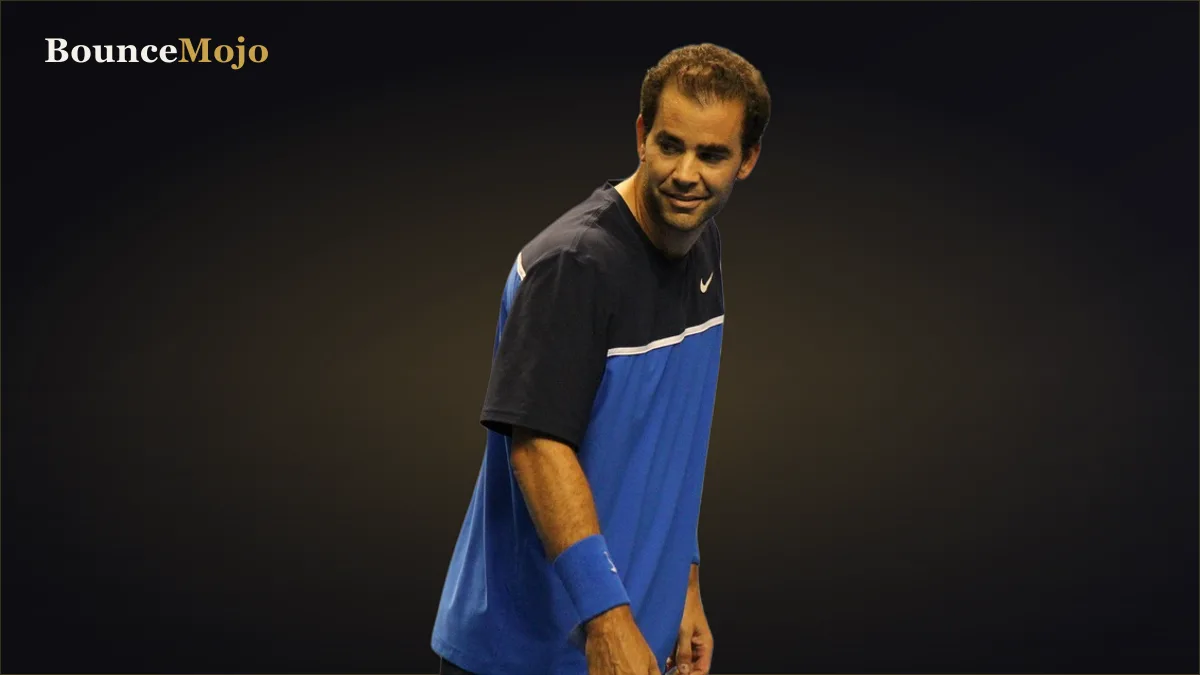
Most people remember Pete Sampras as the guy who won everything and said almost nothing. The silence was the whole point, and it hid more than it revealed.
Here’s what most people miss: the calmest, most machine-like champion of his era carried grief, pressure, and a rare disease through his body while smiling for no cameras and asking for no sympathy.
The Myth vs. The Reality
The myth is simple. Pete Sampras: the boring genius. Big serve, huge forehand, 14 majors, no personality, no drama. A winning machine you respected but never quite felt anything for. Roll credits.
The reality is far more human.
Here’s the deal: the man labeled robotic was actually intensely emotional, so much so that he once wept openly on court in the middle of a Grand Slam match. The blank expression wasn’t the absence of feeling. It was a shield, built by a naturally shy person who found the spotlight uncomfortable and let his tennis do every ounce of the talking.
And the “effortless” narrative? It hides a body that betrayed him. Sampras played much of his career managing a blood condition that left him exhausted, a fact he kept almost entirely private so it could never be used as an excuse.
You might be wondering: how does a quiet kid from California become the most dominant player of his generation? To understand that, you have to understand the world that made him.
The World That Made Pete Sampras
Sampras was born in 1971 in Washington, D.C., to Greek-American parents, Sam and Georgia, and the family later moved to Palos Verdes, California.
That move mattered. Southern California in the 1970s and ’80s was a tennis incubator, sunshine, courts everywhere, and a conveyor belt of talent feeding the American game.
Now: this was a golden era for U.S. men’s tennis, the age of Connors, McEnroe, and later a whole crop of young Americans fighting for supremacy. The sport was brash, loud, and full of personality. Into that world walked a reserved, respectful kid who idolized the elegant Australian Rod Laver and quietly modeled himself on a classic, all-court style rather than the fiery theatrics around him.
Think about it: Sampras came up in an era built for showmen, and became the greatest of them all by being the opposite of a showman. That contrast is the backdrop for everything he achieved.
The Crucible: Early Life and the Climb
The Environment That Shaped Him
The origin story is almost too tidy. As a young boy, Sampras reportedly found a tennis racket in the family basement and started hitting a ball against the wall for hours. His talent was obvious early, and his parents, undemonstrative people themselves, supported it without turning into the overbearing tennis parents that dominate the sport.
One decision defined his game. A coach named Pete Fischer, who worked with young Sampras, made a bold call: switch him from a two-handed backhand to a one-hander, betting it would serve him better at the highest level.
Here’s the truth: that gamble, made on a kid, built the elegant, attacking style that would win seven Wimbledons. His family gave him stability, and his early coaches gave him a game designed for greatness, not just for junior results.
The Catalyst
The breakthrough came shockingly young. In 1990, at just 19 years old, Sampras won the US Open, becoming the youngest men’s champion in the tournament’s history, beating Agassi in the final.
Let that land. A teenager who barely spoke to the press had just announced himself as the future of the sport.
It gets better, and darker. That win started a climb that would make him No. 1 in the world, but the person who guided him to the very top would soon be taken from him in the cruelest way imaginable. And the way Sampras responded would reveal the emotional core the public never saw.
The Key Players
No champion rises alone, and Sampras’ story turns on a small circle of people who shaped him.
Tim Gullikson. The coach who became a father figure. Gullikson helped transform Sampras from a talented young pro into a machine, sharpening his tactics and steadying his temperament. Their bond was deep and genuine.
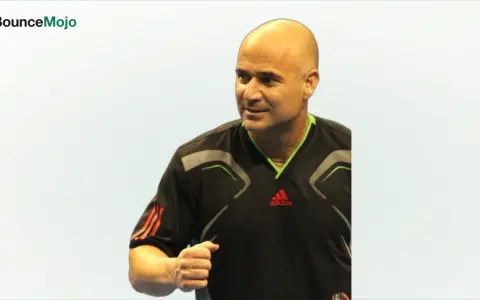
Andre Agassi. The rival who defined his career. Where Sampras was quiet, Agassi was flamboyant. Where Sampras served and volleyed with cold precision, Agassi returned serve better than anyone alive and played to the crowd. Their contrasting styles and personalities made every meeting an event, and pushed both men to greater heights. As Agassi’s own story of wealth and reinvention shows, they were financial equals too.
Pete Fischer. The early coach who made the fateful decision to give Sampras a one-handed backhand and steer him toward an all-court, attacking game modeled on the greats.
Bridgette Wilson. The actress who became his wife and the center of the private, quiet family life he chose over the celebrity his talent could have delivered.
By the way, every one of these relationships points at the same theme: a man who let a trusted few in and shut the rest of the world out. That instinct made his hardest moment almost unbearably private.
The Turning Point
The Pinnacle
Sampras’ peak was a decade of near-total control.
He won 14 Grand Slam singles titles: seven Wimbledons, five US Opens, and two Australian Opens. He finished as world No. 1 for a record six straight years, 1993 through 1998. His serve was arguably the best the game had ever seen, and on the fast grass of Wimbledon he was close to unbeatable. As his own net worth story lays out, that dominance also built a fortune.
The single most emotional moment came in 1995. At the Australian Open, mid-match against Jim Courier, Sampras learned that Tim Gullikson had collapsed and was gravely ill with what turned out to be terminal brain cancer. Sampras broke down in tears on court, then somehow gathered himself and won. Gullikson died in 1996. Sampras played much of the rest of his career for him.
The Price
Here’s the kicker: greatness this complete came with quiet costs.
There was the grief for Gullikson, carried publicly for years. There was the blood disorder, a form of thalassemia minor, that left him fatigued and which he refused to discuss so it could never look like an alibi. And there was the one glaring gap: the French Open, the clay-court major, which Sampras never won. For all his dominance elsewhere, the slow red dirt of Paris was the puzzle he could never solve.
The pinnacle brought records and riches, and a body he had to manage in silence. Which brings us to the flaws the highlight reels leave out.
The Unvarnished Truth
Sampras was not a flawless figure, though his flaws were the undramatic kind.
He could be dull for the media, giving clipped answers and showing little of himself, which frustrated a sport that craved personality. Some fans found him hard to love precisely because he made everything look so easy and gave away so little. His rivalry-era coldness was sometimes read as arrogance.
Now: none of that makes him a bad man. Much of it traces straight back to a naturally introverted temperament. When you’re wired to be private and you’re thrust onto the biggest stages in sport, you build a wall, and the public mistakes the wall for the whole person.
But the honest reckoning is this: his greatest strength and his greatest weakness were the same. Emotional control. It made him unshakable under pressure, and it made him, for years, the champion the public admired without ever quite embracing.
Controversies and Criticisms
Sampras’ career was unusually clean, but it drew its share of pointed criticism.
The “boring” charge. The most persistent knock was that Sampras was bad for the sport’s popularity, too dominant, too quiet, too lacking in charisma to sell tennis to casual fans. Critics argued his serve-and-volley precision, while brilliant, made for one-sided viewing.
The clay-court gap. His failure to win the French Open was held up as the one blemish separating him from the very top of the all-time debate. To some, a career without a Roland Garros title was incomplete no matter how many Wimbledons he collected.
The record that fell. When Roger Federer surpassed his 14-major mark in 2009, it reopened the argument about where Sampras truly ranks. He had been the standard, then the standard moved, and his era’s dominance was suddenly measured against a player who seemed to do it all with more flair.
The private life. Some observers criticized him for retreating so completely after retirement, feeling a champion of his stature owed the game a bigger post-career presence. Sampras simply chose family and privacy instead.
What We Can Learn From Pete Sampras
Navigating Hard Times
The first lesson is about grace under grief: you can carry pain without weaponizing it. Sampras lost the coach he loved, managed a chronic blood condition, and never once used either as a public crutch. He absorbed the hard things and kept performing.
But here’s the truth his silence makes plain: composure is not coldness. The man who looked emotionless wept on a Grand Slam court when it mattered most. Real strength wasn’t the absence of feeling, it was the ability to feel deeply and still deliver.
The Success Blueprint
If you want the replicable part, it’s this: Sampras won through relentless consistency, not drama. He didn’t reinvent himself every season or chase headlines. He built one elite game and executed it at the highest level for a decade.
That’s transferable. The lesson isn’t “be dull.” It’s “master your craft so completely that flash becomes unnecessary.” That approach put him among the sport’s immortals and, financially, near the top of our richest tennis players ranking, right alongside his old rival Agassi.
Becoming Better
The deepest lesson is about knowing when to walk away. Sampras won the 2003 US Open, then simply stopped, retiring on the highest possible note without a farewell tour or a slow decline.
In other words, he understood that the perfect exit is worth more than one more paycheck or one more season. He left with the crowd wanting more, protected his legacy, and chose a life on his own terms, which is the strangest and most enviable twist in his whole story.
Final Verdict
Pete Sampras is one of the greatest players in the history of tennis, and “greatest” is not overstating it. Fourteen majors, six straight years at No. 1, and a serve that redefined what dominance looked like on grass. He set the standard that later legends were measured against.
And here’s the twist that reframes everything: the man dismissed as an emotionless machine was, underneath, one of the most feeling competitors the sport ever produced, carrying grief and illness in total silence so no one could ever call it an excuse. The full picture of the quiet fortune he built lives in his net worth breakdown, and it’s the most fitting ending imaginable: the champion who said the least won the most, then walked away at the very top and never looked back.
Pistol Pete didn’t need a memoir, a scandal, or a farewell tour to cement his place. He just won, grieved privately, and left on his own terms, which is exactly why, decades later, the tennis world still argues about how great he really was.
Shop Pete Sampras on Amazon
Books, audiobooks, merch and more, handpicked for fans.
As an Amazon Associate we earn from qualifying purchases.
Frequently Asked Questions
Where did Pete Sampras grow up?+
Sampras was born in Washington, D.C., to Greek-American parents and grew up mostly in Palos Verdes, California, after the family moved west, where the year-round climate let him train constantly.
Why did Pete Sampras cry during a match?+
At the 1995 Australian Open, Sampras broke down in tears mid-match after learning his coach and mentor Tim Gullikson had collapsed from what turned out to be terminal brain cancer. He won the match through the emotion.
How many Grand Slams did Pete Sampras win?+
Sampras won 14 Grand Slam singles titles, including seven Wimbledons, five US Opens, and two Australian Opens. He never won the French Open, the one gap in his résumé.
Who was Pete Sampras' biggest rival?+
His defining rival was Andre Agassi. Their contrasting styles and personalities, the quiet Sampras versus the flashy Agassi, produced one of the greatest rivalries in tennis history.
What did Pete Sampras do after retiring?+
Sampras retired in 2003 after winning the US Open and chose a private family life in California with his wife, actress Bridgette Wilson, playing occasional exhibitions and staying out of the spotlight.
Want the money side of the story?
Read Pete Sampras's Full Net Worth Breakdown →Shop Pete Sampras on Amazon
Books, audiobooks, merch and more, handpicked for fans.
As an Amazon Associate we earn from qualifying purchases.