Penny Hardaway Biography: The Memphis Kid Who Should Have Been Elite
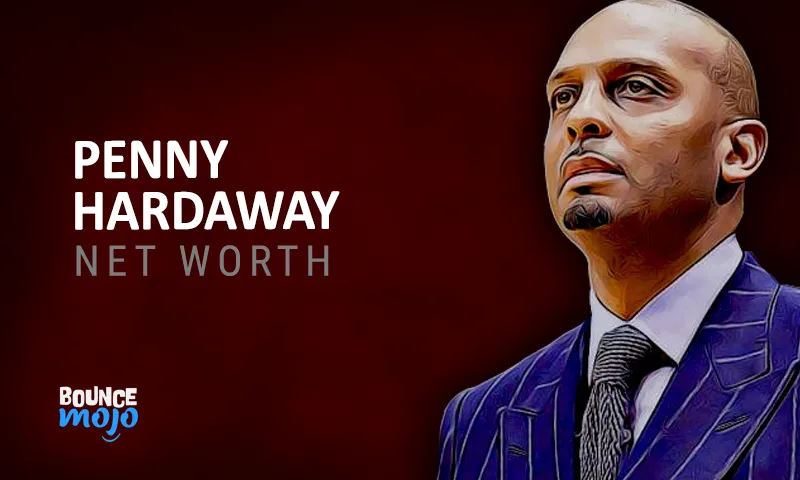
You remember Penny Hardaway as the smooth six-foot-seven point guard with a signature shoe and a hilarious puppet doing his talking.
Here’s what most people miss: the injury that actually broke his career wasn’t the one you’re thinking of.
The Myth vs. The Reality
The myth is simple. Penny Hardaway was a smooth, six-foot-seven point guard with movie-star cool, a signature shoe, and a hilarious puppet doing his talking. Ad money. All-Star games. A face on billboards from coast to coast.
Here’s the truth:
That version of Penny only tells you about three or four good years. The real story is grittier than any commercial. It starts in a shotgun house in one of Memphis’ toughest neighborhoods, runs straight through a robbery that put a bullet in his foot, and ends with a coach standing on a college sideline trying to fix the thing his own body took from him.
Most people saw the cool. They never saw the cost.
He was, for a brief window, the best all-around guard on Earth. Magic Johnson in a smaller frame. Then his knees betrayed him, one surgery at a time, and the “what if” became the loudest thing about his career. Ask any old-head who watched him in 1995 and 1996. They’ll tell you the same thing: nobody that size had ever moved like that.
But to understand how big he was, you have to understand the world that made him a phenomenon. And that world was very specific.
The World That Made Penny
The early 1990s NBA was hunting for the next Magic Johnson.
Magic had retired in 1991 after his HIV diagnosis, and the league suddenly had a hole where its most creative big guard used to be. Michael Jordan owned the top of the mountain. Everyone else was auditioning for the throne behind him. Into that gap stepped a kid from Memphis who could handle like a guard, see the floor like a maestro, and finish over trees.
Think about it:
This was the golden age of the sneaker deal. Jordan had proven that a player could become a global brand. Nike was pouring money into personalities, not just performers. If you had game and charisma, you could sell shoes to kids who would never make a jump shot in their lives.
Penny arrived with both, at exactly the right moment. The cameras loved him. Kids wanted to be him. And a company in Oregon was about to turn him into a cartoon that outshined the man himself.
Now here’s what almost nobody saw coming: the star who became a marketing empire came from a place with almost nothing.
The Crucible: Early Life and the Climb
The environment that shaped him
Anfernee Deon Hardaway was born on July 18, 1971, in Memphis, Tennessee.
His mother, Fae, was young and stretched thin. She moved to California when he was three, and Penny stayed behind. He was raised by his grandmother, Louise Hardaway, in Binghampton, a working-class Memphis neighborhood of shotgun houses where money was short and toughness was mandatory.
Here’s the deal:
Louise was the whole world. She worked as a school crossing guard. She kept him fed, kept him disciplined, and kept him off the football field on purpose because she worried he’d get hurt. She steered him toward basketball instead. And she gave him his name.
She used to call the baby “Pretty,” because she thought he was a beautiful child. But her thick Memphis drawl bent the word, and in the ears of everyone around them, “Pretty” came out sounding like “Penny.” The nickname of a global sneaker icon was born from a grandmother’s accent in a rented house. You cannot make that up.
He grew into a legend at Treadwell High School, a McDonald’s All-American, one of the most hyped recruits in the country. Then came the part of the story the commercials never touched.
The catalyst
In April 1991, during his time at Memphis State, Penny was robbed near his aunt’s house in Binghampton.
A gun went off. A bullet ricocheted off the ground and tore into his right foot, breaking several toes. Doctors weren’t sure he would ever play at a high level again. For a can’t-miss prospect, that is about as close to the edge as it gets.
But here’s the kicker:
He came back. Not just physically, either. He returned to the court, cleaned up his grades, and made the Dean’s List as an education major. That detail matters, because education is exactly where he’d land decades later. He led Memphis State to the NCAA Tournament and became a national name.
By 1993, the whole league wanted him. What happened on draft night, though, would test his nerve before he ever played a pro minute.
The Key Players
Two men defined the arc of Penny’s story: one who made him a star, and one who made him a legend by accident.
The first was Shaquille O’Neal.
Orlando drafted Chris Webber first overall in 1993, then flipped him to Golden State for the third pick, which was Penny, plus a bundle of future first-rounders. Magic fans were furious. They wanted Webber. The team president stood on stage and told a booing crowd, “Penny is going to turn your boos to cheers.” Penny later admitted, “I thought I was a Golden State Warrior, for about two minutes.”
He turned those boos to cheers fast. Paired with Shaquille O’Neal, the young Magic became appointment television. Shaq was the unstoppable force. Penny was the surgeon feeding him. They just fit.
The second key player never had a heartbeat.
Nike, through the ad agency Wieden+Kennedy, created “Lil’ Penny,” a foul-mouthed, oversized puppet voiced by comedian Chris Rock. Rock only got the gig after Eddie Murphy, Damon Wayans, and Martin Lawrence all passed. From 1995 to 1997, the puppet became almost bigger than the player, showing up on posters, in commercials, even on talk shows before Chris Rock himself did.
There was also family blood on the court. His cousin, Tracy McGrady, would later inherit the very Orlando spotlight Penny once owned.
The pieces were all there for a dynasty. So why does everyone still talk about what didn’t happen?
The Turning Point
The pinnacle
The 1994-95 season was the mountaintop.
Orlando won a franchise-best 57 games. They beat Michael Jordan’s Bulls in the playoffs, an almost unthinkable result for a team that young, and rolled into the NBA Finals against the Houston Rockets. Penny was electric. In that Finals he averaged 25.5 points and 8 assists while shooting 50 percent, going toe to toe with the champs.
Here’s the truth:
They lost. Houston, led by Hakeem Olajuwon, swept them in four. But nobody watching thought the story was over. This was supposed to be chapter one. Two young superstars, a Finals appearance in year two, decades of dominance ahead. The Magic looked like the NBA’s next dynasty in waiting.
Penny made four straight All-Star teams and three All-NBA First Teams. For a stretch, he was arguably the best guard in basketball not named Jordan.
The price
Then the dynasty evaporated before it ever really existed.
In 1996, Shaq left for the Lakers in free agency. Penny suddenly went from co-headliner to sole savior of a franchise. And his body, quietly, was already breaking down. He blamed an early knee injury on a 1996 playoff shot from Detroit’s Joe Dumars. “My knee never felt the same,” he said.
The bigger blow came later. In May 2000, as a Phoenix Sun, he underwent microfracture surgery on his knee. He called it “instantly the worst decision I had made in my life.” A second procedure followed. The explosion, the burst, the thing that made him special, it drained away.
He went from a dynamic, athletic marvel to, in his own brutal words, “a post-up guy that was hobbling down the court.” The injuries pulled him into depression. “Mentally I was gone,” he admitted.
The cool exterior hid something a lot heavier. That’s the part fans almost never saw.
The Unvarnished Truth
Penny’s real struggle wasn’t ego. It was grief.
He was grieving the athlete he used to be while still wearing the uniform. That is a specific kind of pain, and he has been honest about it. Watching yourself become a lesser version of your own talent, in front of millions, is a slow public heartbreak.
You might be wondering:
Did the fame get to him first? Some around Orlando thought so. Horace Grant and others pointed to “egos, egos, egos” as a reason the Shaq-Penny pairing splintered. Penny has pushed back on that, calling Shaq “my favorite teammate” and insisting playing with him was easy. The full truth is probably somewhere in the messy middle, two young superstars, too much too soon, and a business that pulled them apart.
He bounced from Orlando to Phoenix to the New York Knicks, chasing a body that would never come all the way back. He earned more than $120 million in salary along the way, but the money was never the point of the pain. The point was the game he could no longer play the way he heard it in his head.
That vulnerability is exactly what makes his second act land the way it does.
Controversies and Criticisms
Penny’s career drew its share of second-guessing.
Critics said he leaned on the Lil’ Penny fame, that the marketing machine got out ahead of the man, that a quiet, private person got packaged as something louder than he really was. There was tension in Orlando about who the team belonged to once Shaq left. And there were whispers, common with any injured star, that he could have been tougher, could have pushed through more.
Now:
The knee tells the real story. You can’t will cartilage back into a joint. The microfracture procedure that failed him was, at the time, still a gamble that ended plenty of careers. Blaming Penny for his knees is like blaming a runner for a broken leg.
As a coach, the criticism shifted. His Memphis program has faced scrutiny over recruiting, roster turnover, and the transfer-portal churn that defines modern college hoops. Some questioned whether a former NBA great could actually teach, or whether he was just a famous name in a good suit.
Seven straight 20-win seasons answered that one. But the answer only makes sense when you hear how he talks about the work.
Quote Analysis and Literary Breakdown
Penny’s words carry the weight of a man who has been both the phenomenon and the cautionary tale.
On the surgery that broke him: “It was the worst decision I had made in my life.” Read that again. Not a bad game, not a lost series. A medical decision. It tells you he still replays that choice, still lives in the alternate timeline where his knee held up.
On the depression that followed: “Mentally I was gone.” Four words. No self-pity, no dressing it up. That’s a man who found language for something a lot of athletes bury forever.
On the trade that started it all: “I thought I was a Golden State Warrior, for about two minutes.” There’s the humor underneath the pain, the same charm that sold a million sneakers, used here to shrug off one of the wildest draft-night swings in league history.
His whole life is in those three lines. The dream, the wound, the ability to laugh at the chaos anyway. And that combination is exactly what he now sells to teenagers in Memphis.
What We Can Learn From Penny Hardaway
Navigating hard times
Penny’s life is a clinic in surviving the loss of the one thing you were built to do.
He got shot before his career began. He lost his prime to his own knees. He watched a dynasty dissolve. Any one of those could have ended him. Instead, he kept finding the next room to walk into: a high-school gym, an AAU sideline, eventually a college arena with his own name in the rafters.
The lesson is uncomfortable but real. You don’t get to choose when your gift gets taken. You only choose what you do the morning after.
The success blueprint
Here’s the part that should stick.
Penny didn’t chase the spotlight back. He went home. He started coaching kids at Lester Middle School and then Memphis powerhouse East High School, winning three straight state titles from 2016 to 2018. Then Memphis, his alma mater, handed him the keys to the whole program.
In seven seasons he went 155-68, delivered seven straight 20-win seasons, a 2021 NIT title, a 2023 conference tournament crown, and multiple NCAA Tournament trips. He turned his legend into leverage for a city, not just a paycheck.
Want to know the best part? He built his comeback in the exact place that built him.
That’s the blueprint. Reinvention doesn’t mean escaping your roots. Sometimes it means going back and paying them off.
Final Verdict
Penny Hardaway is the greatest “what if” of his generation, and one of its quietest success stories at the same time.
For a few dazzling years he was as good as anyone alive, a six-foot-seven point guard who moved like a shooting guard and thought like a coach. His knees stole the ending he deserved as a player. No Hall of Fame plaque, no championship ring, just a highlight reel that still makes people ache for the career that got away.
But here’s the thing the puppet and the sneakers never told you.
The kid Louise raised in a Binghampton shotgun house didn’t disappear when the cheering stopped. He turned into a builder. He took the discipline his grandmother drilled into him and handed it to a new generation of Memphis kids who never saw him play. The player was cut short. The man kept going.
To see exactly how his playing fortune, sneaker royalties, and coaching salary add up today, read our full Penny Hardaway net worth breakdown. And to see where he ranks among the sport’s biggest earners, check our richest NBA players list.
Shop Penny Hardaway on Amazon
Books, audiobooks, merch and more, handpicked for fans.
As an Amazon Associate we earn from qualifying purchases.
Frequently Asked Questions
How did Penny Hardaway get his nickname?+
His grandmother Louise called him 'Pretty' because she loved how he looked as a baby. Her thick Memphis accent turned 'Pretty' into 'Penny,' and the name stuck for life.
Was Penny Hardaway really shot in college?+
Yes. In April 1991, during his time at Memphis State, Hardaway was shot in the right foot during a robbery in his Binghampton neighborhood. A ricocheting bullet broke several toes, and doctors weren't sure he would play again.
Why didn't Penny Hardaway and Shaq win a title in Orlando?+
They reached the 1995 NBA Finals together but were swept by the Houston Rockets. Shaquille O'Neal left for the Lakers in 1996, and the partnership lasted only three seasons before it could mature into a dynasty.
What injury ended Penny Hardaway's prime?+
A series of knee injuries and microfracture surgery robbed him of his explosiveness. He later called the surgery 'the worst decision I had made in my life.'
What does Penny Hardaway do now?+
He is the head coach of the University of Memphis Tigers, his own alma mater, a job he took in 2018 after leading Memphis powerhouse East High School to state titles.
Want the money side of the story?
Read Penny Hardaway's Full Net Worth Breakdown →Shop Penny Hardaway on Amazon
Books, audiobooks, merch and more, handpicked for fans.
As an Amazon Associate we earn from qualifying purchases.