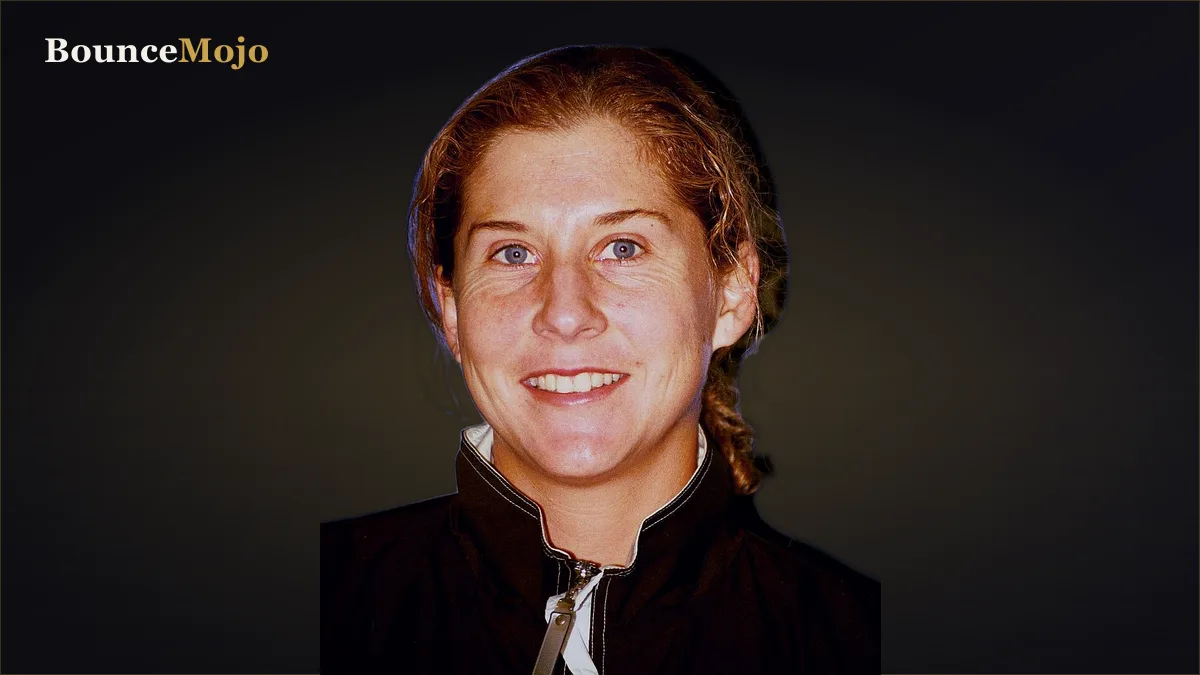
Monica Seles Biography: The Champion Who Came Back
Most people know three things about Monica Seles: the grunt, the two-handed strokes, and the stabbing.
The tragic version of her story leaves out the Grand Slam she won afterwards.
The Myth vs. The Reality
The myth is a tragedy with a tidy shape: Monica Seles, the young champion whose career was destroyed by a madman’s knife.
The reality is both darker and more hopeful.
Here’s the deal: the stabbing did not destroy her career. She came back and won another Grand Slam, a fact the tragic framing often forgets. But the attack did steal her prime, her peace, and years of her life to depression and grief, wounds the highlight reels never show.
The myth also underrates what she was before Hamburg. Seles was not just good. From 1991 to 1993 she was arguably the most dominant force the women’s game had seen, a teenager who bent the sport to her will.
You might be wondering: how does a kid from a small city in Yugoslavia become the best player in the world before she can legally drink? To understand that, you have to understand the world she came from.
The World That Made Monica Seles
Seles was born in 1973 in Novi Sad, in the former Yugoslavia, into an ethnic Hungarian family and a country that would soon tear itself apart.
Her tennis education was unlike anyone else’s. Her father, Karolj, was a cartoonist and photographer, and he taught young Monica the game by drawing cartoons on the court and using them to make practice a game. He kept it joyful. He kept it hers.
Now: this mattered enormously. Seles did not come from a rigid academy system or a tennis dynasty. She came from a loving, creative family that protected her spark. When Yugoslavia’s tensions rose, her family made the leap to the United States and the Bollettieri academy in Florida, chasing a future the old world could not offer.
Think about it: a girl raised on cartoons and family joy, dropped into the most competitive tennis factory on earth. That collision, warmth meeting ferocity, forged a champion. And it made the later cruelty land all the harder.
The Crucible: Early Life and the Climb
The Environment That Shaped Her
At Nick Bollettieri’s academy, Seles trained alongside future stars in a pressure cooker built to produce champions. Her two-handed strokes off both wings, her flat, early-strike power, and her fearless aggression made her a phenomenon.
Her father remained her guiding force, coach, protector, and emotional anchor. That bond, forged over cartoons in Novi Sad, stayed central to her whole career. She was close to him in a way few athletes are to a parent.
Here’s the truth: the family’s sacrifice paid off almost immediately. Seles was not a slow-burn project. She was a supernova.
The Catalyst
In 1990, at 16, Seles won the French Open, becoming the youngest champion in the tournament’s history. The tennis world had a new queen before she had finished growing up.
What followed was one of the great runs the sport has ever seen. Between 1991 and 1993, she won eight Grand Slam titles and dominated the rankings, overtaking Steffi Graf as world No. 1 and turning their rivalry into the defining story of women’s tennis.
It gets darker from here. That very rivalry, and one deranged man’s obsession with it, was about to change everything on an April afternoon in Germany.
The Key Players
No champion rises or falls alone, and Seles’ story is shaped by a handful of essential people.
Karolj Seles. Her father, coach, and the creative heart of her tennis. His cartoons made her a player, and his cancer diagnosis and eventual death would devastate her during the hardest years of her life.
Steffi Graf. Her great rival, the German champion whose battles with Seles defined an era. Their rivalry was fierce and clean, and its intensity would be twisted into something monstrous by a stranger who could not accept Seles beating his idol.
Nick Bollettieri. The coach whose academy sharpened her game and gave her family a foothold in America.
Günter Parche. The name that changed everything. An obsessed fan of Graf, he is the villain of the story, the man who walked onto the court in Hamburg. We will get to what he did.
Think about it: the same rivalry that made Seles great became the pretext for the attack that nearly ended her. That is the cruel hinge the whole story turns on.
The Turning Point
The Pinnacle
By early 1993, Seles was the best player in the world, still only 19, with eight majors already won and years of dominance seemingly ahead.
Then came April 30, 1993. During a changeover at a tournament in Hamburg, Günter Parche, a fan obsessed with restoring Graf to the top, walked onto the court and stabbed Seles in the back with a knife. She was the world No. 1. She was a teenager. And in an instant, her reign was over.
The Price
Here’s the kicker: the physical wound healed faster than everything else.
Seles stepped away from tennis for more than two years. The trauma triggered depression and a binge eating disorder she would later describe with painful honesty. Her attacker never served prison time, a verdict that deepened her sense of injustice. And through it all, her beloved father was fighting the cancer that would take his life.
When she finally returned in 1995, she was different, heavier of heart, no longer the untouchable phenom. Yet she found one more summit: the 1996 Australian Open, her ninth Grand Slam title, won on the far side of unimaginable pain. As her net worth story notes, the years she lost capped a fortune that could have been far larger. Which brings us to the flaws and wounds the trophies hide.
The Unvarnished Truth
Seles never pretended the comeback was clean or the recovery complete.
She has been strikingly honest about the depression that swallowed her, the binge eating she used to cope, and the grief over her father that layered on top of the trauma. For years she carried it privately, smiling for cameras while struggling underneath.
Now: none of this makes her weak. It makes her human, and her willingness to say so out loud, in her memoir and interviews, has helped countless others. She refused to let the public keep only the triumphant version.
The most honest thing anyone can say about Seles is this: her greatest strength was never her forehand. It was the quiet, unglamorous courage to keep living, and eventually to keep speaking, after the sport and her own body had given her every reason to disappear.
Controversies and Criticisms
Seles’ story is less about controversy than about the injustices done to her.
The attacker’s sentence. Günter Parche never served jail time, receiving a suspended sentence on the grounds of psychological impairment. Many, including Seles, saw the outcome as a profound failure of justice, and it complicated her return to the game.
The ranking dispute. During her absence, there was debate over how the WTA should protect her ranking. The handling of it added bureaucratic pain to an already traumatic period.
Here’s the truth: the criticisms in Seles’ story are almost all aimed outward, at a system that failed to protect and then failed to fully avenge her. She was the victim, and her grace in the aftermath only sharpens how badly she was let down.
Quote Analysis
Seles’ reflections carry the weight of someone who survived the unimaginable.
Writing about her recovery in Getting a Grip, she framed her struggles with food, body, and mind not as shameful secrets but as a shared human experience. The subtext was generosity: turning her private hell into a hand extended to others fighting the same battles.
On her comeback, she spoke about the joy her father brought to the game and how she had to rediscover it alone. Beneath the words was the deepest loss of all, learning to love tennis again without the man who taught it to her.
What We Can Learn From Monica Seles
Navigating Hard Times
The first lesson is that survival itself is a victory. Seles endured an attack, depression, an eating disorder, and the loss of her father, and she kept going. Not every comeback ends in a trophy. Hers ended in something rarer: a life reclaimed.
But here’s the deeper truth: healing is not linear, and pretending otherwise helps no one. Seles’ honesty about her long, messy recovery is more useful than any fairy tale of instant triumph.
The Success Blueprint
If you want the replicable part, it is this: Seles built her greatness on joy first, taught by a father who made tennis a game before it became a job. That foundation of love for the craft is what carried her back when everything else fell away.
Her nine majors place her among the most decorated names on our richest tennis players ranking, near champions like Li Na, and her resilience is a blueprint for anyone whose path gets violently interrupted.
Becoming Better
The deepest lesson is about turning pain into purpose. Seles took her private suffering and, through her memoir and her later advocacy for myasthenia gravis awareness, made it useful to others. That is a kind of victory no scoreboard can measure.
Final Verdict
Monica Seles is one of the most compelling figures in the history of sport, and “compelling” outweighs even “great,” though she was unquestionably that. She dominated tennis as a teenager, survived an attack that would have broken most people, and rebuilt a life on the other side of trauma.
And here is the twist that reframes everything: the story people remember as a tragedy is actually one of the great survival stories in sports. She lost her prime, her peace, and her father, and she still came back to win, to write, and to help. The full story of how she rebuilt her fortune and her life lives in her net worth breakdown.
If you want the real story, read her memoir Getting a Grip: On My Body, My Mind, My Self (2009). It is honest, unglamorous, and quietly brave, less a champion’s victory lap than a human being’s account of finding her way back. Read it if you love tennis, and read it more closely if you have ever had to rebuild yourself after life broke something you thought was unbreakable.
Shop Monica Seles on Amazon
Books, audiobooks, merch and more, handpicked for fans.
As an Amazon Associate we earn from qualifying purchases.
Frequently Asked Questions
Where was Monica Seles born?+
Monica Seles was born in Novi Sad, in the former Yugoslavia (now Serbia), in 1973, to an ethnic Hungarian family. Her father, a cartoonist, first taught her tennis using drawings to keep her engaged.
What happened to Monica Seles in 1993?+
During a match in Hamburg, an obsessed fan of rival Steffi Graf stabbed Seles in the back on court. She was the world No. 1 at the time and stepped away from the game for more than two years.
How many Grand Slams did Monica Seles win?+
She won nine Grand Slam singles titles and became the youngest French Open champion in history at 16. She won her ninth major, the 1996 Australian Open, after returning from the attack.
What health condition does Monica Seles have?+
Seles was diagnosed with myasthenia gravis, an autoimmune disorder, and has since become a public advocate for awareness of the disease.
Who is Monica Seles married to?+
She is married to Tom Golisano, the billionaire founder of Paychex and former owner of the NHL's Buffalo Sabres.
Want the money side of the story?
Read Monica Seles's Full Net Worth Breakdown →Shop Monica Seles on Amazon
Books, audiobooks, merch and more, handpicked for fans.
As an Amazon Associate we earn from qualifying purchases.