Mikel Arteta Biography: From La Masia Kid to Arsenal's Builder
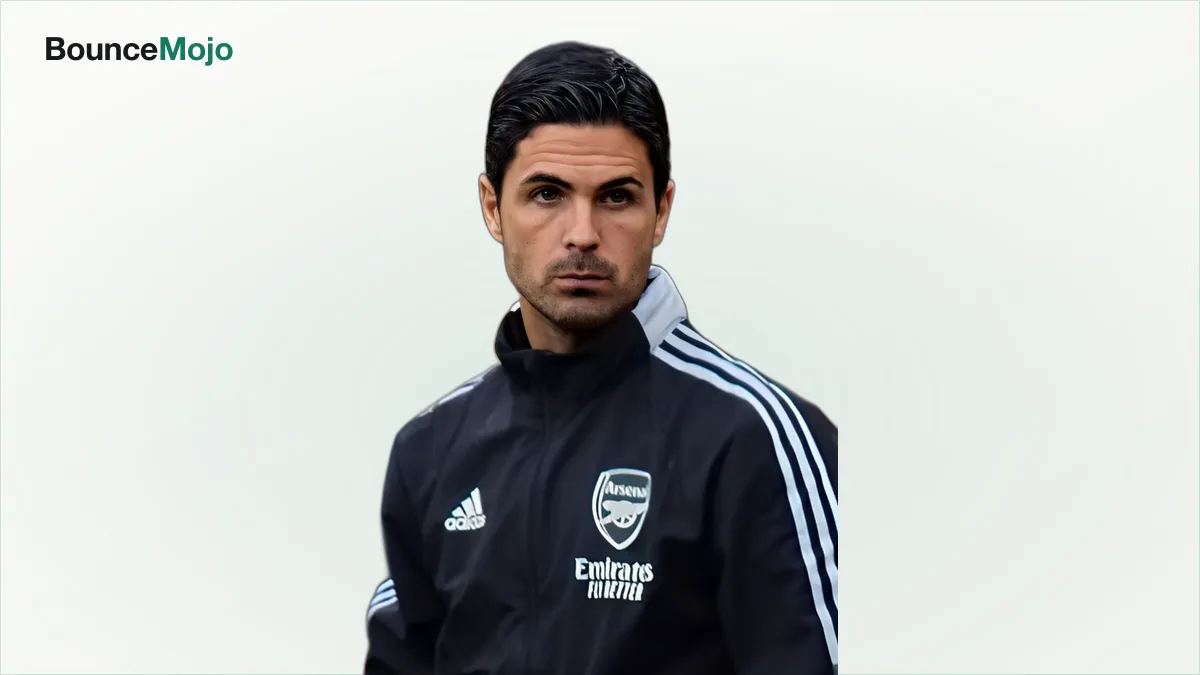
Everybody sees the intense figure on the Arsenal touchline. Almost nobody remembers the 15-year-old who packed a bag in San Sebastián and left home to chase a game.
Here’s what most people miss: long before Mikel Arteta was a manager, he was the quiet student in the room, learning from the best players and coaches alive, and filing it all away for a job he hadn’t been given yet.
The Myth vs. The Reality
The myth is tidy. Mikel Arteta, the natural-born leader, groomed at Barcelona, mentored by Guardiola, destined to manage a giant club. A straight line from talent to touchline.
That version is real. It’s also far too clean.
Here’s the truth: the straight line had detours everywhere. Arteta was a gifted academy kid who couldn’t break into the Barcelona first team, so he built his career at Rangers, Real Sociedad, Everton and Arsenal instead. As a manager, he wasn’t an obvious genius handed a super-club. He was an untested first-timer who took a fading Arsenal and had to rebuild it slowly, through criticism and doubt, before the results arrived.
Think about it. We love a story of effortless destiny because it makes greatness look inevitable. But Arteta’s path was about patience and reinvention, leaving home young, adapting to new countries and leagues, then swapping a comfortable playing wage for an unglamorous apprenticeship in coaching.
Now, none of that happened in a vacuum. It was shaped by a specific place and a specific football culture. Which raises the question: what kind of world produces a player this adaptable and a coach this obsessive?
The World That Made Mikel Arteta
To understand Arteta, you have to understand the football-mad Basque Country and the Barcelona academy that took him in.
He was born on 26 March 1982 in San Sebastián, a coastal city where football and identity are deeply intertwined. This was a region that produces technical, thoughtful players and takes the game seriously as a craft. Arteta grew up steeped in that culture, and his talent was obvious early.
But the era mattered too. Arteta came of age just as Barcelona’s La Masia academy was becoming the most famous talent factory in world football. At 15, in the summer of 1997, he left home to join it, and there he trained alongside a generation of future greats, rooming with Víctor Valdés and Andrés Iniesta and crossing paths with Xavi and a young club captain named Pep Guardiola.
Here’s the deal: that academy didn’t just teach Arteta how to play. It taught him a whole philosophy of the game, positional, possession-based, detail-obsessed, the ideas he would one day carry into his own coaching.
But the dream of starring for Barcelona didn’t come true. And that disappointment is where the real career began.
The Crucible: Early Life and the Climb
The environment that shaped him
Two things defined the young Arteta: extraordinary schooling and a closed door.
The schooling was La Masia, where he absorbed a way of thinking about football that most players never encounter. He was surrounded by future icons and coached in a system that treated the game as an intellectual puzzle. That environment gave him a coach’s brain long before he had a coach’s job.
The closed door was the Barcelona first team. For all his gifts, Arteta couldn’t force his way into a squad stacked with world-class midfielders. So instead of stalling, he left, loaned to Paris Saint-Germain, then sold to Rangers in Scotland.
You might be wondering: how does a knock-back like that build a great manager? The answer is that it forced Arteta to adapt. He learned new leagues, new languages of play, new dressing rooms. At Rangers he won the league in his first season and scored a nerve-shredding last-minute penalty on the final day. At Everton and then Arsenal, he became a leader, eventually wearing the captain’s armband. The boy who couldn’t crack Barcelona became a respected, well-traveled professional, and every stop widened his understanding of the game.
By the end of his playing days, Arteta wasn’t just an experienced midfielder. He was a coach in waiting.
The catalyst
The catalyst had a name: Pep Guardiola.
When Arteta retired in 2016, he didn’t ease into punditry. He accepted an offer to join Guardiola’s staff at Manchester City as an assistant coach, walking straight into the most demanding classroom in the game. There he saw, up close, how the best coach of his generation ran a training ground, managed egos, and shaped a team’s identity down to the smallest detail.
Here’s the kicker: Arteta didn’t just watch. He contributed, winning Premier League titles and cups as part of City’s staff and building a reputation as a coach clubs would fight to hire. That three-year apprenticeship transformed him from a promising ex-pro into one of the most wanted young managers in Europe.
In December 2019, Arsenal, the club he had captained, came calling. Arteta went home, this time as the man in charge. The student was about to become the master builder. But the job would test him harder than anything in his playing career.
The Key Players
No rise this deliberate is a solo act, and Arteta was shaped by a handful of pivotal people.
Start with Pep Guardiola, the mentor. More than a boss, Guardiola became the model for how Arteta thinks about football and leadership. Their relationship, forged first at Barcelona and then at City, is the single biggest influence on Arteta’s coaching identity.
Then there’s Arsène Wenger, the manager who signed Arteta as a player and handed him the Arsenal captaincy. Long before Arteta returned as head coach, Wenger’s Arsenal shaped his sense of what the club could and should be.
And there’s Lorena Bernal, his wife. An Argentine-Spanish actress, model and former Miss Spain, she met Arteta in San Sebastián in 2002 with no idea he was a footballer. Together they built the family life, three sons, that anchors Arteta away from the relentless pressure of management.
There were teammates too, the La Masia generation of Iniesta, Valdés and Xavi, whose shared education gave Arteta a template for excellence he never forgot.
Now: surround yourself with the right mentors and the right family, and you can take on a job that has broken plenty of good men. Arteta was about to find out how heavy it could be.
The Turning Point
The pinnacle
The pinnacle, at least the first one, came quickly and against the odds.
Arteta inherited an Arsenal in decline, low on confidence and drifting from the elite. Within months, he did something no one expected of a rookie manager: he won a trophy, lifting the FA Cup in his very first season. It was proof of concept, a signal that the untested coach could actually deliver silverware.
But the deeper achievement took years. Arteta rebuilt the squad, the culture, and the standards, absorbing heavy criticism when results dipped and refusing to abandon his methods. Slowly, the club climbed back, challenging at the top of the Premier League and returning to the Champions League for the first time in years. He turned a fading giant back into a genuine force.
Here’s the truth: the rebuild was harder and slower than the highlight reel suggests, and that’s exactly why it counts.
The price
Because management at that level extracts a toll.
Arteta faced intense scrutiny in his early seasons, when the rebuild looked shaky and the results hadn’t caught up to the vision. He made bold, unpopular calls on senior players, took public criticism, and carried the pressure of a huge fanbase demanding a return to glory. The job is relentless: near-daily press conferences, constant judgment, and the knowledge that in management, patience is rarely granted.
There was a human dimension too. Arteta has spoken about undergoing a life-saving heart procedure, a reminder that the intensity he pours into the work comes at a real physical cost.
He had spent his playing career adapting to survive. As a manager, he had to withstand a level of pressure that ends most coaching tenures early. That was the price of the chair he’d wanted.
The Unvarnished Truth
Arteta is not a flawless miracle-worker, and pretending otherwise flattens his story.
His early Arsenal seasons brought real struggles, poor runs of form, awkward calls, and open questions about whether he was the right man. His intensity, so useful in driving standards, has at times drawn criticism for the pressure it places on players and staff. The rebuild was not instant, and there were stretches where the doubters looked right.
There’s also the reality that his greatest strength and his biggest risk are the same trait. The obsessive, controlling attention to detail that rebuilt Arsenal is also demanding to sustain, for him and for everyone around him. The gift can become a weight.
None of that erases the achievement. But it does explain why his story is one of persistence under fire rather than effortless success.
So what does a career like this actually teach the rest of us?
What We Can Learn From Mikel Arteta
Navigating hard times
Arteta’s real lesson isn’t about tactics. It’s about enduring the doubt before the results arrive.
When the rebuild looked broken and the criticism was loudest, he didn’t panic or abandon his plan. He held his nerve, trusted his methods, and let the work compound. That patience, in a profession that punishes it, is the heart of his success.
In other words: the first trophy was the easy part. Surviving the long, unglamorous middle of a rebuild was the real test.
The success blueprint
The blueprint here is about learning before leading.
Arteta could have chased a manager’s job the moment he retired. Instead, he apprenticed under Guardiola, absorbing everything before taking charge himself. He turned a playing career full of detours into a coaching education, and a supporting role at City into a launchpad. Want the fuller picture of how that translated into wealth? The full net worth breakdown shows how two careers built a $30 million fortune. And to see how he ranks among the game’s best-paid bosses, the richest coaches list puts it in context.
The deeper takeaway is about patience. Arteta proved that the fastest route to the top isn’t always the direct one. Sometimes you learn from the best, take the long road, and build something that lasts.
Which brings us to the final reckoning on the man.
Final Verdict
Mikel Arteta is going to be remembered as more than a good player who became a coach.
Most people will file him under “Arsenal manager,” the intense figure who rebuilt a giant. A smaller, smarter group will remember the fuller arc: a Basque teenager who left home for Barcelona, built a career across four countries when his boyhood dream stalled, then apprenticed under the best coach alive before taking a fallen club and slowly making it formidable again.
Here’s the bottom line: his playing career made him respected. His patience as a manager made him significant. By absorbing everything and rushing nothing, he turned himself into one of the most complete young coaches in the game.
He is a decorated player and a serious manager. He is also proof that the long way around, learning, adapting, waiting, is often the surest path to the top. And in the long run, that patient story is the version worth remembering.
Shop Mikel Arteta on Amazon
Books, audiobooks, merch and more, handpicked for fans.
As an Amazon Associate we earn from qualifying purchases.
Frequently Asked Questions
Where was Mikel Arteta born?+
Arteta was born on 26 March 1982 in San Sebastián, in the Basque Country of Spain. He left home at 15 to join Barcelona's youth academy, La Masia.
Did Mikel Arteta play at Barcelona?+
Yes. Arteta came through Barcelona's La Masia academy, where he roomed with future stars Víctor Valdés and Andrés Iniesta, though he made his senior name elsewhere at Rangers, Everton and Arsenal.
Who did Mikel Arteta learn management from?+
Arteta spent three seasons as Pep Guardiola's assistant at Manchester City from 2016 to 2019, an apprenticeship he has credited as the foundation of his own coaching philosophy.
When did Mikel Arteta become Arsenal manager?+
Arteta was appointed Arsenal head coach in December 2019, returning to the club where he had captained the side as a player, and won the FA Cup in his first season.
Who is Mikel Arteta's wife?+
Arteta is married to Lorena Bernal, an Argentine-Spanish actress, model and former Miss Spain. The couple met in San Sebastián in 2002 and have three sons.
Want the money side of the story?
Read Mikel Arteta's Full Net Worth Breakdown →Shop Mikel Arteta on Amazon
Books, audiobooks, merch and more, handpicked for fans.
As an Amazon Associate we earn from qualifying purchases.