Mark Webber Biography: The Aussie Battler Who Never Gave an Inch
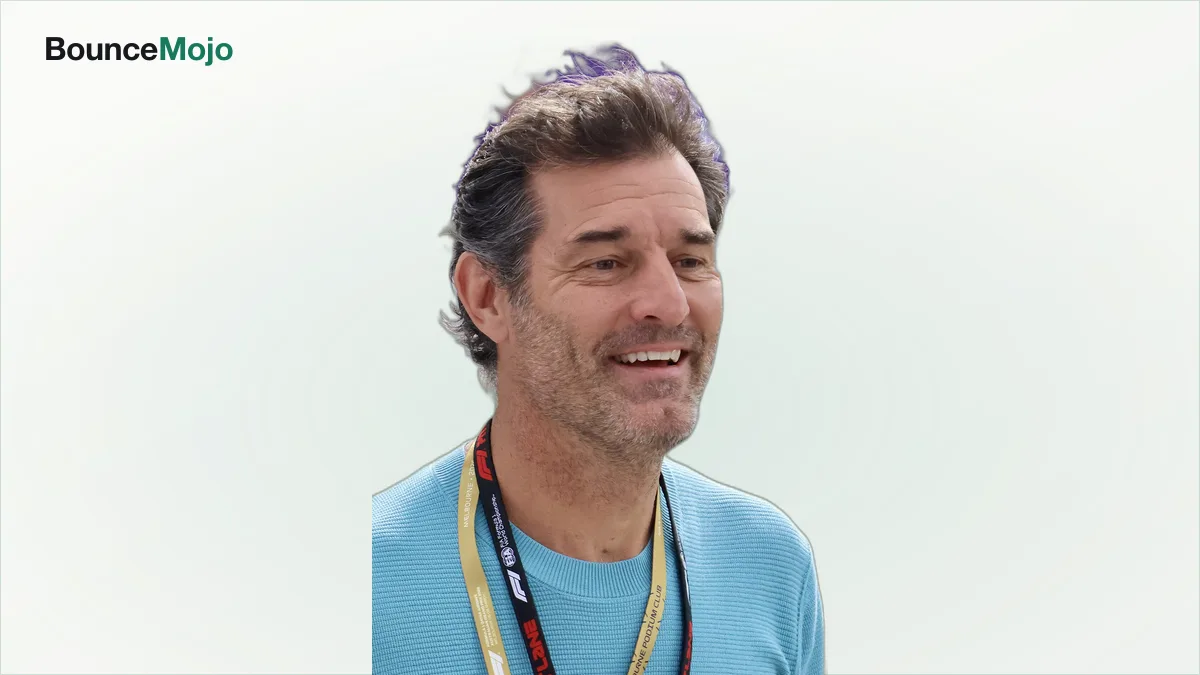
Everybody remembers “Multi 21” and the tension with Sebastian Vettel. Almost nobody remembers just how far Mark Webber had to travel, from a country town in Australia to the front of Formula 1, to earn the right to have that fight at all.
Here’s what most people miss: Webber’s whole career was an act of stubborn refusal to be counted out, and that same trait is exactly what made him a champion in a second sport entirely.
The Myth vs. The Reality
The myth is a familiar one. Mark Webber, the gritty Aussie who won nine Grands Prix at Red Bull but always seemed to be fighting his own team as much as his rivals, forever in Sebastian Vettel’s shadow.
That version is real enough. It’s also wildly incomplete.
Here’s the truth: the reason Webber was in a position to fight a four-time world champion for supremacy is that he was a genuinely elite driver who dragged himself to the top with almost none of the advantages his rivals enjoyed. The “unlucky number two” framing erases how astonishing it was that a kid from Queanbeyan got there at all.
Think about it. Most Formula 1 drivers come up through Europe’s dense karting and junior networks, often with serious financial backing. Webber came from the other side of the world, self-funding much of his early career and relying on sheer determination and the belief of a small team around him. Every rung was a genuine struggle for survival.
Now, that resilience didn’t come from nowhere. It was forged by a specific place and a specific, all-in gamble. Which raises the question: what makes someone risk everything to chase a dream that far away?
The World That Made Mark Webber
To understand Webber, you have to understand the distance, both literal and figurative, he had to cover.
He was born on August 27, 1976, and raised in Queanbeyan, a country town in New South Wales near Australia’s capital, Canberra. This was a world away from the motorsport centers of Europe. Australia has a rich racing culture, but the path from a local track to Formula 1 was long, expensive and traveled by very few.
Here’s the deal: geography shaped everything. For a young Australian, breaking into Formula 1 meant physically leaving home, moving across the world to Europe, and competing against drivers who had grown up inside the sport’s ecosystem. It demanded not just talent but a willingness to gamble your entire life on a long-shot dream.
Webber showed promise early in karting and the Australian junior scene, but the real test was whether he could make the leap abroad. That decision, to leave the safety of home and throw everything at a European career, is where his story truly begins.
But no one makes that leap alone. And the person who made it possible would become the most important figure in his life.
The Crucible: Early Life and the Climb
The environment that shaped him
Two things defined the young Webber: distance and determination.
Coming from Queanbeyan, he had no easy route into the sport. To chase Formula 1, he had to relocate to the United Kingdom and grind through Europe’s junior categories, often scraping together the funding to keep racing. There was no manufacturer safety net, no guaranteed budget, only results and relentless effort.
That environment built the toughness Webber became known for. Every season was a fight for survival, every strong drive a pitch to potential backers. He learned to be honest, hard-working and completely committed, because anything less meant the dream ended.
You might be wondering: how does a driver survive that kind of pressure for years on end? The answer is that he had an anchor. His partner, Ann Neal, became his manager and believed in him completely, helping structure his career and find the backing to keep it alive. That partnership was the foundation everything else was built on.
By the early 2000s, the relentless climb had earned him a seat in Formula 1 itself.
The catalyst
The catalyst was his Formula 1 debut with Minardi in 2002, and the moment that announced him to the world.
Racing for the tiny, underfunded Minardi team at his home Grand Prix in Melbourne, Webber pulled off a stunning drive to finish fifth and score points, an almost unthinkable result for that car. The Australian crowd erupted, and the image of the underdog delivering on home soil made him an instant national hero.
Here’s the kicker: that single result proved he belonged. It showed teams that Webber could extract more from a car than it had any right to give, exactly the quality that gets a driver noticed by better teams. From Minardi he moved to Jaguar, then Williams, steadily building his reputation as a fast, gutsy competitor.
That reputation set up the move that would define his career.
The Key Players
No career this hard-fought is a solo act, and Webber was surrounded by people who shaped his path.
Start with Ann Neal, his partner and long-time manager. She was the constant, the person who believed in him when the odds were long, guided his career decisions, and helped turn a talented Australian into an established Formula 1 driver. Her role in his story is impossible to overstate.
Then there’s Sebastian Vettel, his Red Bull teammate and defining rival. Their relationship was fiercely competitive and often tense, a partnership between an established racer and a rising superstar that produced both success for the team and friction between the two men.
There’s also Dietrich Mateschitz and the Red Bull organization, who gave Webber the front-running machinery that finally let him win Grands Prix and fight at the very front of the sport.
And later, Porsche, the marque that gave Webber his second racing life and a lasting home, and fellow Australian Oscar Piastri, whose early career Webber would help guide.
Now: surround yourself with the right people and seize the right chances, and even the longest journey can reach the summit. Webber did exactly that. But the summit came with a bitter, defining conflict.
The Turning Point
The pinnacle
The pinnacle came at Red Bull Racing, as the team rose to dominate Formula 1.
After joining Red Bull, Webber found himself in a car capable of winning. He took his maiden Grand Prix victory and went on to win nine races in total, along with multiple pole positions, becoming a genuine championship contender in the early 2010s. For a driver who had fought so hard just to reach F1, standing on the top step and challenging for the title was the realization of a lifelong dream.
He was, for a stretch, one of the fastest and most respected drivers on the grid, admired for his honesty and his refusal to hide behind excuses or politics.
Here’s the truth: he reached the front of the sport, and it came tangled up with one of the most famous team rivalries of the era.
The price
Because sharing a garage with Sebastian Vettel came at a cost.
The defining moment came at the 2013 Malaysian Grand Prix, the “Multi 21” incident. Red Bull issued a team order for the drivers to hold position, with Webber ahead. Vettel ignored it, overtook Webber and took the win, sparking open frustration between the two men and exposing the tension at the heart of the team. It crystallized Webber’s sense that, within Red Bull, he was not always racing on equal terms.
The rivalry, and the belief that circumstances often favored his teammate, took its toll. At the end of 2013, Webber chose to leave Formula 1 on his own terms, walking away from the top tier of the sport to seek a new challenge.
He’d fought his way to the front and fought his own garage to stay there. The next chapter would let him win on his own terms.
The Unvarnished Truth
Webber’s story isn’t one of a champion denied by bad luck alone, and the honest picture is more nuanced.
He never won a Formula 1 world title, and in his years partnered with Vettel he was frequently second-best within his own team. Critics point to that as the ceiling of his F1 career. But the fair read is that Vettel was an extraordinary talent in his pomp, and Webber pushed him harder and more honestly than most.
There’s also his reputation for bluntness. Webber was never a political operator; he said what he thought, sometimes to his own detriment inside a team environment that rewarded diplomacy. That straight-talking honesty cost him some battles behind the scenes, even as it earned him enormous respect from fans and media.
Here’s what’s easy to miss: his greatest strength and his greatest limitation were the same trait. The uncompromising, no-inch-given resilience that got him from Queanbeyan to the front of F1 also made him unwilling to play the internal politics that might have tilted a title fight his way. The toughness was the asset and, at times, the cost.
None of that diminishes the achievement. But it does explain why his second act, on his own terms, meant so much.
Controversies and Criticisms
Webber’s career had its share of friction, and it’s worth being honest about it.
The biggest was the “Multi 21” saga, which laid bare the fractured relationship with Vettel and raised questions about team orders and fairness at Red Bull. Webber made no secret of his displeasure, and the incident became one of the defining controversies of the era.
He was also involved in a number of dramatic on-track incidents over the years, including spectacular crashes, that spoke to a driver who raced hard and took risks. His willingness to speak plainly about his team, his rivals and the politics of the sport sometimes put him at odds with the diplomatic norms of Formula 1.
But those same qualities are exactly why he’s remembered so fondly. In a sport often criticized for corporate blandness, Webber was refreshingly real, and that authenticity carried straight into his later broadcasting career.
So what does a life like this actually teach the rest of us? Quite a lot, and not the obvious lessons.
What We Can Learn From Mark Webber
Navigating hard times
Webber’s real lesson is about resilience and reinvention.
He faced setback after setback, the distance from home, the funding struggles, the internal battles at Red Bull, and kept going. Then, when his Formula 1 chapter ended in frustration, he didn’t fade away. He chased and won a World Endurance Championship with Porsche in 2015, proving his class all over again in a completely different discipline.
In other words: he refused to let one team’s politics or one missing title define his career. He simply went and won somewhere else.
The success blueprint
The blueprint here is about building a life bigger than a single result.
Webber turned a driving career into a lasting presence in the sport: a factory champion with Porsche, a respected television pundit, and a driver manager helping guide the next generation. Want the fuller picture of how that translated into wealth? The full net worth breakdown shows how nine wins and a diversified second act became a $40 million fortune. And to see how he ranks among the sport’s biggest earners, the richest race car drivers list puts it in context.
The deeper takeaway is about self-belief and reinvention. Webber proved that where you start doesn’t determine where you finish, and that a career can have several summits if you’re willing to keep climbing.
Which brings us to the final reckoning on the man.
Final Verdict
Mark Webber will be remembered by casual fans for the wrong moment.
Most will file him under “Multi 21,” the driver who feuded with Vettel and never won a title. A smaller, smarter group will remember something better: a kid from a country town in Australia who gambled everything, fought his way to the front of Formula 1 through sheer grit, won nine Grands Prix, and then reinvented himself as a world champion in endurance racing and one of the most respected voices in the sport.
Here’s the bottom line: the F1 wins made him famous, but the resilience and the reinvention made him admired. Webber showed that toughness, honesty and a refusal to give up can carry you further than the smoothest, best-funded path.
He is a nine-time Grand Prix winner and a World Endurance champion. He is also proof that the underdog who never gives an inch can build a career, and a fortune, that most so-called favorites would envy. And in the long run, that story of resilience is the version worth remembering.
Shop Mark Webber on Amazon
Books, audiobooks, merch and more, handpicked for fans.
As an Amazon Associate we earn from qualifying purchases.
Frequently Asked Questions
Where did Mark Webber grow up?+
Webber grew up in Queanbeyan, New South Wales, Australia, a country town near Canberra, far from Europe's motorsport heartlands, which made his rise to Formula 1 especially hard-won.
How did Mark Webber reach Formula 1?+
Webber climbed through karting and junior single-seaters in Australia and Europe, backed by his partner and manager Ann Neal, and made his F1 debut with Minardi in 2002, famously scoring points on his home debut in Melbourne.
How many races did Mark Webber win?+
Webber won nine Formula 1 Grands Prix, all during his time at Red Bull Racing between 2009 and 2013, and later won the 2015 FIA World Endurance Championship with Porsche.
What was Mark Webber's rivalry with Sebastian Vettel?+
As Red Bull teammates, Webber and Sebastian Vettel shared a tense rivalry, most famously after the 2013 Malaysian Grand Prix 'Multi 21' incident where Vettel ignored a team order to hold position, overtaking Webber for the win.
What does Mark Webber do now?+
After retiring from racing at the end of 2016, Webber became a television pundit, a Porsche brand ambassador and a driver manager, helping guide the careers of young talent including fellow Australian Oscar Piastri.
Want the money side of the story?
Read Mark Webber's Full Net Worth Breakdown →Shop Mark Webber on Amazon
Books, audiobooks, merch and more, handpicked for fans.
As an Amazon Associate we earn from qualifying purchases.