Maria Sharapova Biography: The Immigrant Kid Who Screamed to No. 1
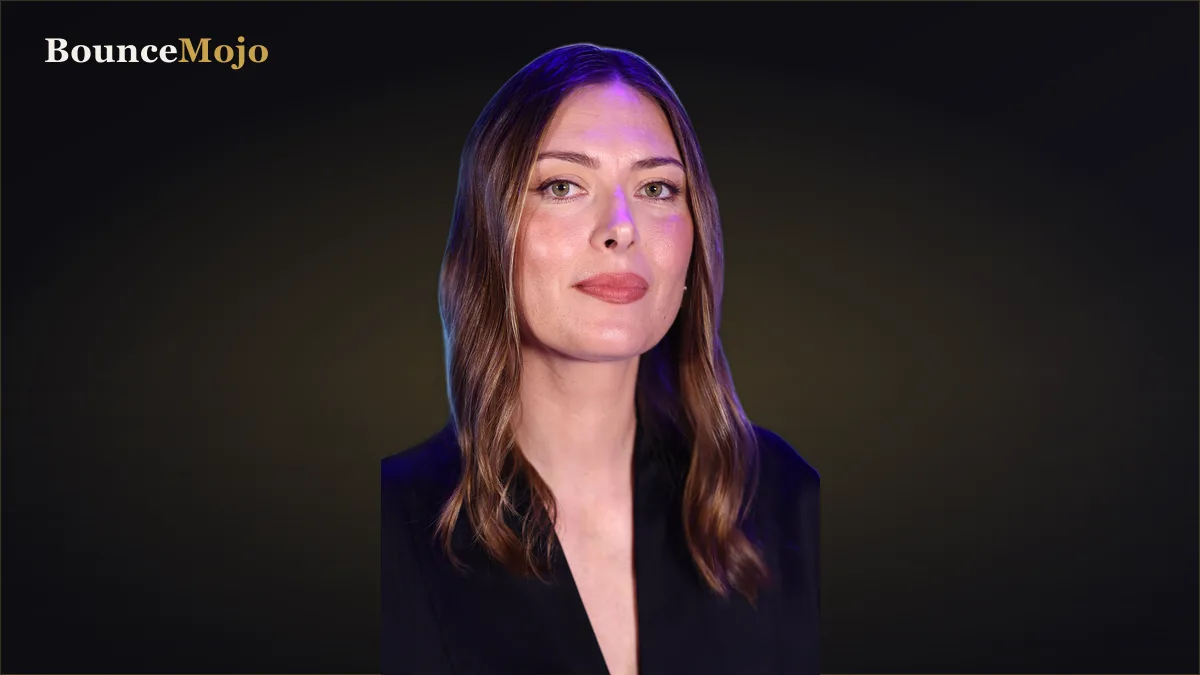
Most people remember Maria Sharapova for two things: the shriek and the Wimbledon fairy tale. Both miss the harder story underneath.
Here’s what most people miss: the polished, blond superstar who topped the earnings lists for over a decade started as an immigrant kid whose father bet everything on a hunch, then nearly lost her whole legacy to a single pill.
The Myth vs. The Reality
The myth is glossy. Maria Sharapova: the ice-cold blond champion, the highest-paid woman in sports, the marketing dream who won Wimbledon at 17 and turned herself into a brand empire. Beautiful, calculated, untouchable.
The reality is grittier.
Here’s the deal: the “overnight” Wimbledon champion had already spent a decade grinding through the loneliest childhood imaginable, separated from her mother for years, sleeping in cramped academy quarters, practicing until her hands blistered. The polish came later. The pain came first.
And the “unbeatable” narrative? It hides an uncomfortable truth. For all her dominance, Sharapova lost to her defining rival again and again, a losing streak that stretched across most of her prime. She was a champion who spent her career chasing one specific ghost.
You might be wondering: how does a kid from a small Russian town end up on a Florida tennis court with almost no money and no English? To understand that, you have to understand the world she was born into.
The World That Made Maria Sharapova
Sharapova was born in 1987 in Nyagan, a town in western Siberia, and raised in Sochi on the Black Sea coast. Her family had fled the region near Chernobyl before she was born, part of the fallout, literally, of the 1986 nuclear disaster.
This was the Soviet Union in its final years, then a chaotic, post-collapse Russia where opportunity was scarce and the path out for a talented kid was anything but obvious.
Now: tennis in Russia was producing champions, and her father Yuri saw something in his daughter early. But the resources to develop that talent simply did not exist at home. The best coaching, the best competition, the money, all of it was an ocean away in the United States. So the family made a decision that most parents would find unthinkable.
Think about it: to give his daughter a shot, Yuri would take her to Florida and leave her mother behind, unable to get a visa for years. That collision of ambition and sacrifice is the backdrop for everything Sharapova became.
The Crucible: Early Life and the Climb
The Environment That Shaped Her
At around six years old, Maria flew to the United States with her father, who reportedly arrived with about $700 and no real command of English. Her mother, Yelena, stayed in Russia for roughly two years, blocked by visa issues.
Let that land. A six-year-old, separated from her mom, in a foreign country, with a father working odd jobs to keep them afloat while she trained.
She landed at Nick Bollettieri’s academy in Bradenton, the same factory that produced Agassi, Seles and others. By her own account in her memoir Unstoppable, she was the youngest, smallest, and among the poorest kids there, and she was picked on for it. She has said the isolation taught her to rely on herself and to turn loneliness into fuel.
Here’s the truth: that childhood built the competitor everyone would later see as cold. It was not coldness. It was armor she forged very young, in a place where she had no one to lean on but herself.
The Catalyst
The breakout came fast once it came. Sharapova turned pro in 2001 at 14 and climbed the rankings with a ferocious baseline game and an on-court intensity that unnerved opponents.
Then came the summer of 2004.
At 17, seeded 13th, she tore through Wimbledon and reached the final against Serena Williams, the two-time defending champion and the most dominant player in the sport. Nobody gave her a chance. She won in straight sets, dropped to her knees on Centre Court, and famously borrowed a phone to call her mother back in Russia.
It gets better, and stranger. That single afternoon transformed her from promising teenager into the most marketable athlete on the planet. But the woman she beat that day would become the defining obstacle of her entire career. The triumph and the torment arrived in the same match.
The Key Players
No champion rises alone, and Sharapova’s story is full of people who pushed, shaped, and challenged her.
Yuri Sharapov. Her father is the engine of the whole story. He made the immigrant gamble, worked menial jobs to fund her training, and drove her relentlessly. Their bond was intense and, at times, publicly scrutinized, the classic tennis-parent dynamic taken to its extreme.
Nick Bollettieri. The legendary coach whose academy took Sharapova in and sharpened a raw, hungry kid into a professional weapon. His pipeline had produced champions before her, and she became one of its most famous graduates.
Serena Williams. The rival who defined her. Sharapova beat Serena in that 2004 Wimbledon final and again shortly after, then lost to her repeatedly for well over a decade, a lopsided head-to-head that shadowed an otherwise brilliant record. The rivalry was frosty, competitive, and endlessly discussed.
Alexander Gilkes. The British tech entrepreneur she later became engaged to, part of the business-minded world she gravitated toward as her career wound down and her second act took shape.
By the way, every one of these relationships points at the same theme: a driven outsider using pressure as fuel. That pressure produced her greatest heights, and set up her hardest fall.
The Turning Point
The Pinnacle
Sharapova’s peak was not one match but a decade of elite results.
She won five Grand Slam singles titles: Wimbledon in 2004, the US Open in 2006, the Australian Open in 2008, and the French Open in 2012 and 2014. That 2012 Roland Garros win completed the career Grand Slam, a feat only a handful of women have achieved, and it came on clay, the surface long considered her weakest. She also reached world No. 1 and won an Olympic silver medal for Russia in 2012.
She did all of it while becoming, per Forbes, the highest-paid female athlete in the world for 11 consecutive years. As her own net worth story lays out, the endorsements towered over the prize money.
The Price
Here’s the kicker: the same relentless drive that built her also wore her body down.
Shoulder injuries dogged her for years and required surgery, sapping the power on her once-fearsome serve. She fought through it, but the physical toll was real, and it slowly narrowed her margin at the very top. The girl who trained through loneliness became a woman who competed through pain.
And then, at the height of her fame and just as her body was rebelling, came the one blow she never saw coming. A blow that would put everything she built at risk.
The Unvarnished Truth
Sharapova was not the flawless brand her sponsors sold, and she has been honest about it.
She could be aloof, guarded, and famously difficult to warm up to inside the locker room. Her on-court shrieking, one of the loudest in the game, drew complaints and accusations of gamesmanship for years. Some rivals found her intensity off-putting; she made little effort to be liked.
Now: none of that makes her a villain. Much of it traces straight back to that isolated childhood, where trusting people was a luxury she never had. When you grow up as the outsider kid nobody protected, you learn to protect yourself first and worry about being liked never.
But the honest reckoning is this: her greatest strength and her greatest vulnerability were the same. Total self-reliance. It made her a champion who needed no one, and it made her, at times, a figure the sport admired more than it embraced.
Controversies and Criticisms
Sharapova’s career carried real controversy, and the biggest one nearly ended it.
The meldonium ban. In early 2016, Sharapova announced at a press conference that she had failed a drug test at the Australian Open. The substance was meldonium, which she said she had taken legally for a decade for health reasons, and which had only just been added to the banned list on January 1, 2016. She said she had missed the email notifying players of the change. She was initially banned for two years, later reduced to 15 months on appeal.
The reaction split the tennis world. Critics called it a convenient excuse and pointed out that ignorance of the rules is no defense. Defenders noted she had disclosed the substance for years and had gained no obvious edge from a heart medication. Either way, the episode dented the spotless image her sponsors had spent a fortune building.
The wildcard debate. When she returned, tournaments handing her wildcard entries drew criticism from players who felt a returning doping offender should have to earn her way back through qualifying.
The rivalry chill. Her long, frosty history with Serena, and the pointed comments in her memoir, kept the two in headlines for reasons that had little to do with tennis. Compared with the warmer public personas of some peers, Sharapova was cast as the cold one, fairly or not.
What We Can Learn From Maria Sharapova
Navigating Hard Times
The first lesson is about resilience under isolation: you can turn being an outsider into a weapon. A six-year-old separated from her mother, mocked at the academy, could have crumbled. Instead she metabolized the loneliness into a competitive edge that carried her to the top of the world.
But here’s the truth the ban makes plain: resilience is not the same as invincibility. Sharapova survived injuries and homesickness, then got blindsided by a paperwork failure that no amount of grit could out-hit. The comeback that counted was learning to rebuild an identity beyond the results.
The Success Blueprint
If you want the replicable part, it’s this: Sharapova understood that fame is fuel, and she refused to let it burn off with her career. While still playing, she built Sugarpova and took equity in brands rather than cashing flat checks.
That’s transferable. The lesson isn’t “be a candy mogul.” It’s “attach your name to things you own, before you need to.” That instinct is why she sits so high among the sport’s wealthiest, alongside legends on our richest tennis players ranking, and why her income outlasted her ranking.
Becoming Better
The deepest lesson is about reinvention. Sharapova’s playing career ended with an injury-forced retirement in 2020, on her own terms and in her own words. She did not cling. She pivoted cleanly into the investor and operator she had quietly been preparing to become for years.
In other words, the smartest athletes plan their second act while the first one is still winning. Sharapova built the exit before she needed the door, and that foresight is the strangest, most instructive twist in her whole story.
Final Verdict
Maria Sharapova is one of the most consequential figures in modern women’s tennis, and “consequential” is doing more work than “dominant,” though she was that too. She won five majors, held No. 1, and completed a career Grand Slam. She also changed what a tennis player’s business could look like, proving an athlete could out-earn the sport itself for over a decade.
And here’s the twist that reframes everything: the immigrant kid who arrived with $700 and no English didn’t just win Wimbledon at 17. She built a fortune sturdy enough that a career-threatening ban and a forced retirement barely slowed her income. The full mechanics of that live in her net worth breakdown, and it’s the most fitting ending imaginable: the girl who learned to rely on no one grew into a woman who owned the businesses instead of renting her face to them.
If you want the real story, read her memoir Unstoppable: My Life So Far (2017). It’s candid about the loneliness, the rivalry with Serena, and the doping ban, told in her own unsparing voice. Read it if you love tennis, and read it more carefully if you’ve ever wondered what it costs to be the outsider who refused to lose.
Shop Maria Sharapova on Amazon
Books, audiobooks, merch and more, handpicked for fans.
As an Amazon Associate we earn from qualifying purchases.
Frequently Asked Questions
Where did Maria Sharapova grow up?+
Sharapova was born in Nyagan, Russia, and raised in the Black Sea town of Sochi. At around six, her father moved her to Florida to train, arriving in the United States with very little money.
How old was Maria Sharapova when she won Wimbledon?+
She was just 17 when she won Wimbledon in 2004, beating two-time defending champion Serena Williams in the final and announcing herself as a global star overnight.
Why was Maria Sharapova banned?+
In 2016 she tested positive for meldonium, a substance newly added to the banned list. She said she had taken it legally for years for a medical condition and had missed the notice. Her ban was reduced to 15 months on appeal.
How many Grand Slams did Maria Sharapova win?+
Sharapova won five Grand Slam singles titles and completed the career Grand Slam, winning Wimbledon, the US Open, the Australian Open, and the French Open twice.
What does Maria Sharapova do now?+
Since retiring in 2020, she has focused on business and investing, running her Sugarpova candy brand and holding equity in consumer companies, while appearing as a guest investor and commentator.
Want the money side of the story?
Read Maria Sharapova's Full Net Worth Breakdown →Shop Maria Sharapova on Amazon
Books, audiobooks, merch and more, handpicked for fans.
As an Amazon Associate we earn from qualifying purchases.