Jimmy Connors Biography: The Brawler Who Made Tennis Personal
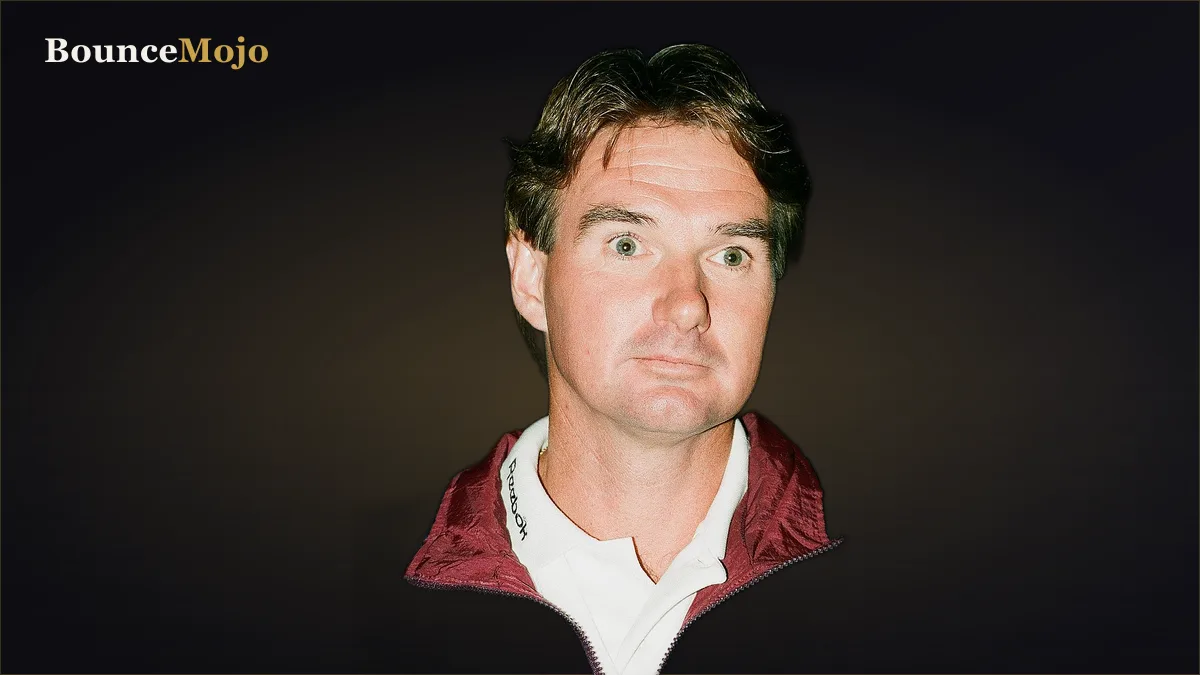
Most people remember Jimmy Connors as the snarling, fist-pumping brawler who fought umpires and crowds alike. That image is real, and it hides the disciplined champion underneath.
Here’s what most people miss: the man who seemed to play on pure rage was actually the product of the most meticulous tennis upbringing imaginable, engineered by a mother who built a court in her backyard before he could walk.
The Myth vs. The Reality
The myth is loud. Jimmy Connors: the brash, obscene, umpire-baiting bad boy who played on anger and antagonized everyone. Tennis’s original villain.
The reality is more disciplined.
Here’s the deal: Connors’ fire was real, but it sat on a foundation of relentless training and technical precision drilled into him from toddlerhood. His mother didn’t raise a hothead. She raised a supremely prepared competitor who happened to wear his emotions on his sleeve. The theatrics were genuine, but so was the craftsmanship underneath.
Think about it: nobody wins 109 titles on rage alone. Connors combined ferocious competitiveness with a game so fundamentally sound it stayed elite for nearly two decades.
And the “villain” framing missed how the crowds actually felt. By the end, the man booed as a brat became the most beloved figure in the sport, precisely because he refused to fade quietly.
You might be wondering: how does a kid from a small Illinois town become the most dominant player in tennis? To understand that, you have to understand the world he came from.
The World That Made Jimmy Connors
Connors was born in 1952 into a genteel, country-club version of tennis that he would soon blow apart.
Tennis in the amateur era was polite, buttoned-up, and often snobbish, a sport of whites-only dress codes and hushed applause. Then the Open Era arrived in 1968, letting professionals compete for real money and real fame, just as Connors was coming of age.
Now: Connors was perfectly built to detonate the old order. He was working-class, brash, and emotional in a sport that prized restraint. He grunted, he fist-pumped, he argued, he played to the crowd. He dragged tennis out of the country club and into the arena.
That collision, gentleman’s game meeting street-fighter energy, is the backdrop for everything Connors became. He didn’t just win matches. He changed the sport’s entire temperature.
But before the arenas, there was a small boy on a homemade court, learning the game from the two women who built him.
The Crucible: Early Life and the Climb
The Environment That Shaped Him
Connors grew up in Belleville, Illinois, near the rough edges of East St. Louis. His mother Gloria was a tennis teacher, and his grandmother Bertha helped raise and coach him.
Here’s the truth: Connors was engineered for tennis from birth. Gloria reportedly cleared the land behind their home to build a court, and she began feeding him balls at age four. She was fiercely protective and relentlessly demanding, drilling fundamentals into her son until they were automatic. His two-fisted backhand, revolutionary at the time, was forged in those early years.
He dominated junior tennis, then went to UCLA and won the NCAA singles title as a freshman before turning pro.
The Catalyst
Then came the moment tennis changed forever: the Open Era and the arrival of a champion who refused to behave.
Connors exploded onto the pro tour in the early 1970s, and by 1974 he had one of the greatest single seasons in history, winning three of the four majors. He seized the world No. 1 ranking and held it for a then-record 160 consecutive weeks.
The money and fame followed, the beginnings of the fortune traced in his net worth story. So did the controversy.
It gets better, and more combative. Connors’ dominance set up the rivalries that would define an era. But first, the people who shaped him deserve their due.
The Key Players
No champion rises alone, and Connors’ story is full of formative figures.
Gloria Connors. His mother, first coach, and the architect of his entire career. She built the court, taught the strokes, and instilled the ferocious will to win. Their bond was unbreakable and central to who he became.
Pancho Segura. The Ecuadorian tennis great who became a key coach and mentor, refining Connors’ game and strategy as he rose through the pro ranks.
Bjorn Borg. The ice to Connors’ fire. Bjorn Borg was his great rival at Wimbledon and beyond, a contrast in temperament that gripped the tennis world. They split their major-final meetings and pushed each other to greatness.
John McEnroe. Fire meeting fire. John McEnroe arrived as a younger, equally combustible lefty, and their clashes were among the most intense and personal in the sport’s history.
Think about it: every one of these relationships tested the same thing, could Connors’ will outlast the greatest competition tennis could throw at him? For years, the answer was a defiant yes.
The Turning Point
The Pinnacle
Connors’ dominance in the mid-1970s is staggering.
His 1974 season, three majors and the No. 1 ranking, stands among the finest ever. He would go on to win eight Grand Slam singles titles, five of them at his beloved US Open, and a record 109 ATP titles overall. He held No. 1 for a total of 268 weeks and stayed in the world’s top ten for a record 16 straight years.
But his most legendary moment came not at his peak, but near the end. At the 1991 US Open, a 39-year-old Connors, entering as a wildcard, made an impossible run to the semifinals, including a five-set comeback win on his birthday over Aaron Krickstein. He called it the best 11 days of his tennis career, and it turned a whole nation into Connors fans.
The Price
Here’s the kicker: the fire that fueled him also cost him.
Connors’ combustible personality made him enemies. He feuded with officials, other players, and the tennis establishment. For years he was cast as the sport’s villain, booed and criticized for behavior that clashed with tennis’s genteel traditions. His refusal to conform kept him on the outside of the sport’s power structure for much of his prime.
That is the price of playing on pure defiance. Connors won constantly and antagonized nearly everyone doing it. Which brings us to the parts of the man the trophies hide.
The Unvarnished Truth
Connors was no saint, and his own career proves it.
He was famously abrasive, prone to obscene gestures, arguments with umpires, and needling opponents. He could be arrogant and difficult, and he alienated peers and officials throughout his career. His rivalry with McEnroe sometimes turned genuinely ugly, two enormous egos refusing to give an inch.
Now: none of that makes him a villain in the simple sense. Much of Connors’ fire came from his working-class chip and his mother’s win-at-all-costs training. He played every point like it was life or death because, in his world, competition always had been.
The honest read on Connors is this: his greatest strength and his greatest weakness were the same trait. His refusal to back down, from opponents, officials, or age itself, made him both maddening and magnificent. It won him 109 titles and cost him plenty of friends along the way.
Controversies and Criticisms
Connors spent much of his career at the center of tennis’s culture wars.
On-court conduct. His obscene gestures, umpire tirades, and crude crowd interactions drew constant criticism and fines, and made him the sport’s designated bad boy for years.
Feuds with the establishment. Connors clashed with tennis’s governing bodies, at times skipping events like the French Open during his prime and refusing to join player organizations, keeping himself at odds with the sport’s structure.
The McEnroe rivalry. His battles with John McEnroe occasionally spilled past competition into genuine personal animosity, with heated exchanges that shocked even a tennis world used to drama.
Personal life scrutiny. Connors’ relationships and personal affairs, including a highly publicized early romance with Chris Evert, drew intense media attention throughout his career.
What We Can Learn From Jimmy Connors
Navigating Hard Times
The first lesson is about defiance as fuel. Connors was told, at various points, that he was too small, too crude, or too old. He answered every doubt by winning, most spectacularly at 39 in that 1991 US Open run.
Here’s the truth: refusing to accept other people’s limits on you can be a superpower, if you back it with real preparation. Connors never played the role others assigned him. He rewrote it.
The Success Blueprint
If you want the replicable part, it is this: Connors combined ferocious will with total fundamental soundness. The passion got the headlines, but the meticulous training his mother instilled is what let him stay elite for 16 straight years.
That is transferable. The lesson isn’t “yell at umpires.” It’s “pair relentless drive with rock-solid fundamentals.” That blend put Connors among the sport’s immortals on our richest tennis players ranking, and it kept him winning long after his peers retired.
Becoming Better
The deepest lesson is about longevity and reinvention. The villain of the 1970s became the beloved elder statesman of the 1990s, not by changing who he was, but by staying true to it long enough for the world to come around.
In other words, authenticity outlasts approval, and the crowd eventually rewards the ones who never quit. The full story of how Connors turned a small-money era into a lasting fortune lives in his net worth breakdown.
Final Verdict
Jimmy Connors is one of the most important figures in tennis history, and “important” matters as much as “great,” though he was certainly both. He didn’t just win 109 titles. He changed the sport’s entire personality, dragging it out of the country club and turning it into gladiatorial theater that millions couldn’t stop watching.
And here’s the twist that reframes his whole career: the man booed as a villain for two decades became the most beloved player in the game, and he did it by aging in public and refusing to go quietly. That 1991 US Open run at 39 wasn’t just a sporting miracle. It was the moment America finally admitted it had loved Jimmy Connors all along.
If you love tennis, remember Connors not as the brat who fought everyone, but as the fighter who made the sport feel alive. He was abrasive, brilliant, and utterly himself, and his story is proof that the people who refuse to conform are often the ones who change everything.
Shop Jimmy Connors on Amazon
Books, audiobooks, merch and more, handpicked for fans.
As an Amazon Associate we earn from qualifying purchases.
Frequently Asked Questions
Where did Jimmy Connors grow up?+
Jimmy Connors was born in Belleville, Illinois, in 1952 and grew up near East St. Louis. His mother Gloria, a tennis teacher, reportedly cleared land behind their home to build a court and coached him from age four.
How many Grand Slams did Jimmy Connors win?+
Connors won eight Grand Slam singles titles: five US Opens, two Wimbledons, and one Australian Open. He also won a record 109 ATP singles titles overall in the Open Era.
Who coached Jimmy Connors?+
Connors was coached from childhood by his mother Gloria Connors and grandmother Bertha. Gloria remained his primary influence, and later Pancho Segura played a key coaching role in his rise.
What was the 1991 US Open run?+
At 39, Connors made a stunning run to the 1991 US Open semifinals as a wildcard, including a five-set comeback win on his birthday over Aaron Krickstein. He called it the best 11 days of his tennis career.
Who were Jimmy Connors' biggest rivals?+
Connors' greatest rivals were Bjorn Borg and John McEnroe. His clashes with the ice-cool Borg and the equally fiery McEnroe defined a golden era of men's tennis in the 1970s and 80s.
Want the money side of the story?
Read Jimmy Connors's Full Net Worth Breakdown →Shop Jimmy Connors on Amazon
Books, audiobooks, merch and more, handpicked for fans.
As an Amazon Associate we earn from qualifying purchases.