Hakeem Olajuwon Biography: The Lagos Kid Behind the Dream Shake
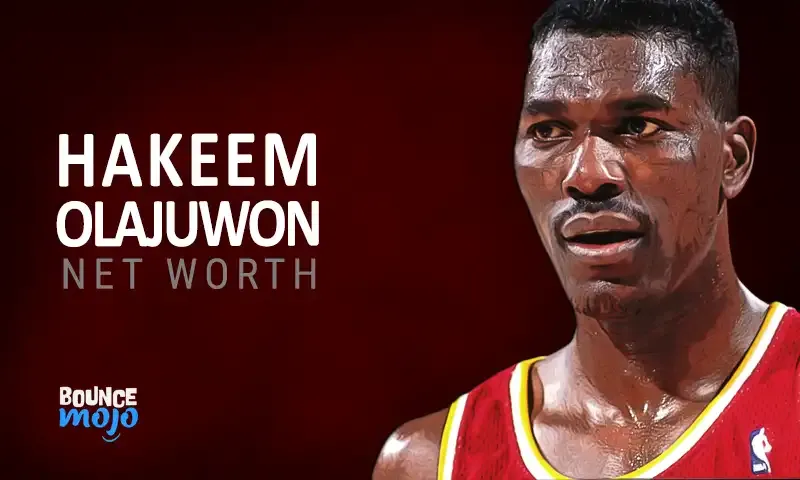
By the mid-1990s Hakeem Olajuwon was widely called the most skilled center in NBA history: a player who could face up, drop-step, spin and finish with either hand from any angle. Shaquille O’Neal, Patrick Ewing, David Robinson, all of them had size. None of them had his feet.
He did not inherit any of it. He assembled it, deliberately, piece by piece, and it is possible to name most of the pieces. Here they are, roughly in the order he acquired them.
Piece One: Two Sports With No Rim in Them
Olajuwon was born Hakeem Abdul Olajuwon on January 21, 1963, into a middle-class Yoruba family in Lagos. His parents, Salaam and Abike, ran a cement business. There were six children, and the household ran on the values you would expect from Muslim, entrepreneurial parents: discipline, respect, faith, hard work. Nobody was handed anything.
This was a Nigeria still finding its footing as a young nation, a place where soccer was king and basketball barely existed. American sports were a distant rumor. The idea that a boy from Lagos might one day rule the NBA was not a dream anyone was chasing, because nobody there had ever seen the road that led to it.
So he played goalkeeper, and he played team handball. Both demanded quick feet, sharp reactions, and control of a fast-moving ball in tight space. Nobody knew it yet, but those two games were teaching him the exact skills that would one day break Hall of Fame defenders.
Piece Two: Being Genuinely Bad at Fifteen
He did not fall in love with basketball. He fell into it. He was tall, he was athletic, and at around 15 a coach pointed him toward the game almost as a matter of logistics.
He was terrible at first. Genuinely. He fouled out of games, misjudged the ball, did not understand goaltending, and looked nothing like a future legend. Coaches were not lining up to recruit a raw project from a country with no basketball pipeline.
What he had was the discipline his parents had drilled into him. If he was going to do this, he was going to do it seriously. He improved fast because he practiced obsessively and because the handball and soccer instincts transferred: footwork that felt natural on a pitch felt natural on the block. Within a couple of years he was good enough to catch the eye of people who could change his life.
That two-year gap is the most instructive stretch of his career. A late start is not a death sentence. Obsessive, deliberate practice is a great equalizer.
Piece Three: Guy Lewis Took the Gamble
A recommendation reached the University of Houston, and head coach Guy Lewis bet on a raw import who had barely played the sport. Olajuwon flew to Texas in 1980, a 17-year-old landing in a foreign country to learn a game he had only just started. That single leap of faith is the reason any of the rest happened.
He did not merely adapt. He exploded. At Houston he joined the legendary teams nicknamed “Phi Slama Jama,” a run-and-dunk powerhouse featuring future stars like Clyde Drexler. Olajuwon anchored the middle. The Cougars reached three consecutive Final Fours from 1982 to 1984, and Hakeem grew from a clumsy freshman into the most dominant college big man in the country, blocking shots, rebounding everything, and building the low-post game that would soon terrify professionals.
Piece Four: Losing the 1983 Title Game
There was a wound in the middle of all that success.
In the 1983 national championship game, top-ranked Houston lost to a heavy underdog on a last-second putback that became one of the most famous plays in college history. The best player on the floor went home without the trophy.
Getting your heart broken in public is survivable. He took that wound and burned it as fuel for a decade, and it is a reasonable argument that the loss did more for him than the win would have.
Piece Five: Moses Malone Beat Him Up All Summer
Long before Hakeem was famous, Moses Malone, the veteran NBA center who lived in Houston, would play pickup with him and school him relentlessly.
Getting bullied by a future Hall of Famer in the offseason taught him more about post play than any drill could. He has credited Malone as a mentor who showed him what real toughness looked like.
1994: MVP, Defensive Player of the Year, Finals MVP
By the early 1990s Olajuwon was a superstar without a ring, and people had started to overlook him. Going into that season the MVP conversation had a favorite, and it was not him.
He answered by putting together one of the greatest single seasons in league history. In 1994 he won the NBA MVP, the Defensive Player of the Year, and the Finals MVP, all in the same year. No player before or since has swept all three in a single season. He carried the Houston Rockets to their first championship, and he did it with a move so unstoppable it earned its own name: the Dream Shake, a blur of pump fakes, spins and pivots born from those Lagos handball and soccer days, which left the best defenders in the world grabbing at air.
Then he did it again. In 1995 the Rockets, seeded sixth, won a second straight title, with Olajuwon torching a young David Robinson in the Western Conference Finals right after Robinson had won the MVP over him. There was a sweeter subplot too: Clyde Drexler, his old Phi Slama Jama teammate, had been traded to the Rockets midseason and got his ring alongside him. The Houston boys got their title after all, just a decade late.
One asterisk follows both championships honestly: the Rockets won in the two seasons Michael Jordan was away from the NBA. Some use it to shrink the rings. It is a fair thing to note and a lazy thing to lean on, because Hakeem beat a murderer’s row of Hall of Fame centers, Patrick Ewing, David Robinson and Shaquille O’Neal among them, to get there.
The Part That Was Not Assembled, but Recovered
Olajuwon was not a saint, and he has never pretended to be.
He arrived in America as a nominal Muslim who had drifted from his faith, and by his own account he spent his early NBA years the way a lot of young stars do: chasing status, distracted, disconnected from the values he was raised on. He had temper issues on the court and a competitive edge that sometimes boiled over. He was fined and suspended at points for on-court altercations. In the early 1990s he felt underpaid and undervalued by Houston, and the friction got ugly enough that he asked to be traded. Critics in that stretch questioned his attitude. The gentle, philosophical elder statesman fans know today was, in his twenties, a harder and more restless man.
The change came when he recommitted to Islam in the late 1980s. He stopped drinking, deepened his study of the faith, and reorganized his entire life around it. He legally corrected the spelling of his name from “Akeem” to “Hakeem,” its proper Arabic form.
And he made a decision that stunned the sports world: he would fast through Ramadan, from sunrise to sunset, even during the NBA season. No food, no water during daylight, then 40 minutes against 300-pound centers at night. Most athletes would collapse. Olajuwon played some of his best basketball while fasting, and in 1995 he was named a Player of the Month during Ramadan.
The choice drew quiet doubt from people who could not understand it. Some wondered whether a fasting player was cheating his team, whether he could really give full effort on an empty stomach. He answered on the floor. His faith did not weaken him. It focused him.
What the Career Cost, and What It Bought
Eighteen seasons put miles on him: knees, back, the endless grind of guarding the biggest men alive night after night. He suffered a blood clot early in his career that could have been fatal. The Houston loyalty that defined his legend also meant contract disputes and, eventually, a quiet, less-than-storybook final season in Toronto.
What the discipline bought him lasted longer than the body did. The same self-control that let him fast and still dominate is the self-control that made him wealthy afterward. He refuses debt for religious reasons and buys real estate in cash, turning a finite salary into a portfolio worth roughly three times his career earnings. The numbers live in his full net worth breakdown, and they place him among the richest NBA players of all time.
That is the reframing that explains everything else. Olajuwon never treated faith and discipline as things that slowed him down. He treated them as the engine.
Read It in His Own Words
He is the NBA’s all-time leader in blocked shots, a two-time champion, a two-time Finals MVP, and the only man to sweep MVP, Defensive Player of the Year and Finals MVP in a single season. But the number that defines him is not points or blocks. It is that he became the best version of himself on purpose, one deliberate choice at a time, then quietly went back to teaching his footwork to the next generation of big men.
For that story from the source, read his 1996 autobiography, Living the Dream: My Life and Basketball, written with Peter Knobler. It is the honest account of a man who arrived in America chasing status, lost himself, found his faith, and used it to become unbeatable. Anyone who cares about basketball will enjoy it. Anyone who cares about how discipline actually works should study it.
The Lagos kid who could barely dribble at 15 ended up teaching the game its own footwork. That is the Dream, and it was never an accident.
Shop Hakeem Olajuwon on Amazon
Books, audiobooks, merch and more, handpicked for fans.
As an Amazon Associate we earn from qualifying purchases.
Frequently Asked Questions
How old was Hakeem Olajuwon when he started playing basketball?+
He was about 15 when he first played organized basketball, remarkably late for someone who became one of the greatest centers ever.
Where did Hakeem Olajuwon grow up?+
Hakeem grew up in Lagos, Nigeria, one of six children in a middle-class family that ran a cement business. He played soccer and team handball long before he ever touched a basketball.
Did Hakeem Olajuwon really fast during the NBA season?+
Yes. A devout Muslim, Hakeem fasted from sunrise to sunset through Ramadan even during the season, and played some of his best basketball while doing it.
How many championships did Hakeem Olajuwon win?+
Two. He led the Houston Rockets to back-to-back NBA titles in 1994 and 1995, winning Finals MVP both years.
Want the money side of the story?
Read Hakeem Olajuwon's Full Net Worth Breakdown →Shop Hakeem Olajuwon on Amazon
Books, audiobooks, merch and more, handpicked for fans.
As an Amazon Associate we earn from qualifying purchases.