Dikembe Mutombo Biography: The Doctor Who Became a Wall
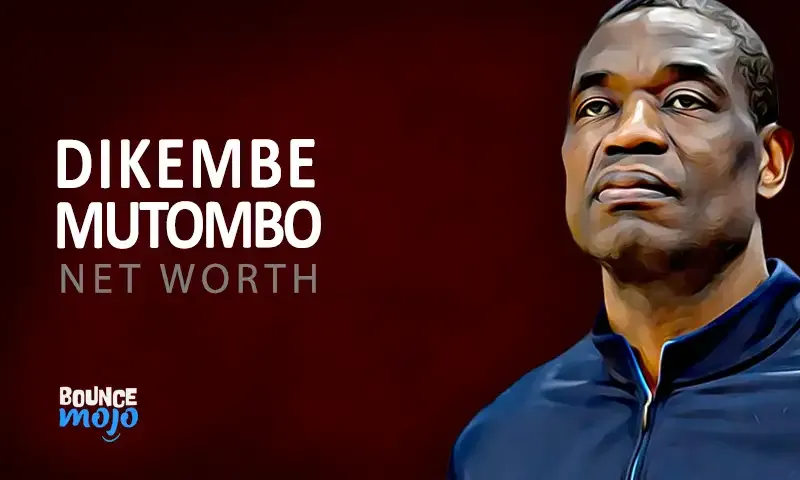
You remember Dikembe Mutombo as the finger-wagging giant, the “not in my house” guy from the Geico ads.
Here’s what most people miss: that cartoon hid one of the most serious people the NBA has ever produced. He came to America to be a doctor and ended up healing his country a different way.
The Myth vs. The Reality
The myth is the cartoon version. A 7-foot-2 tower with a booming voice, wagging that long finger after swatting a shot into the seats, growling “not in my house” in a Geico ad. Fun. Cuddly. A little bit of a punchline.
Here’s the truth: that cartoon hid one of the most serious people the NBA has ever produced.
Mutombo came to the United States to become a physician. He spoke nine languages. He graduated from Georgetown with degrees in linguistics and diplomacy. And when he had money, he did not buy a fleet of supercars and a nightclub. He built a hospital. He wrote checks in the tens of millions for a country most Americans could not find on a map.
Now: the finger wag was real, and so was the joy behind it. But treating Mutombo as a novelty giant misses everything that made him remarkable. He was a shot-blocker, yes. He was also a man who buried his mother and then spent the rest of his life making sure other people’s mothers would not die the same way.
So how does a kid from Kinshasa who barely spoke English end up as one of the most decorated defenders in basketball history? That story starts in a country that no longer exists by the name he was born into.
The World That Made Dikembe
Mutombo was born in June 1966 in Kinshasa, the sprawling capital of a nation then called Zaire. Today it is the Democratic Republic of the Congo. The name changes tell you something about the instability he grew up around: coups, dictatorship, and an economy that never matched the country’s staggering mineral wealth.
Congo sits on some of the richest deposits on earth. Copper, cobalt, diamonds. Yet the people who lived above those minerals often lived without basics, and that included medicine. A city of millions could go decades without a modern hospital opening. Think about it: a place with everything under the ground and almost nothing above it for the sick.
Mutombo grew up in a big family, one of ten children, with a father who worked as a school administrator. Education was not optional in that house. It was the whole point. Basketball, at first, was not even on the radar.
Here’s the deal: American kids who grow up to be NBA giants usually grow up on playgrounds and in gyms. Mutombo grew up in classrooms, aiming at medical school, in a country where becoming a doctor was one of the few reliable ladders up. That difference shaped everything that came later. He never saw basketball as his identity. He saw it as a vehicle.
That mindset, the sense that the game was a means and not the meaning, would define his money and his legacy. But first he had to actually learn the game, and he learned it late, in a foreign country, in a language he could barely speak.
The Crucible: A Scholar Who Became a Giant
The environment that shaped him
Mutombo did not fall in love with basketball as a boy. He played some soccer. He grew fast and tall, but tall in Kinshasa meant awkward, not marketable. What he had instead was a serious student’s discipline and a family that treated grades like currency.
He attended Boboto College, one of the more demanding schools in Kinshasa, precisely because the coursework was harder there and would prepare him for medicine. In his senior year he won an international science competition. That achievement, not a jump shot, is what opened the door to America.
Want to know the best part? The scholarship that changed his life had nothing to do with sports. In 1987, at age 21, Mutombo earned a USAID academic scholarship to Georgetown University in Washington. He crossed an ocean to study medicine, planning to go home and practice.
He arrived speaking almost no English. He sat in ESL classes learning the language from scratch. Imagine the loneliness of that: a giant in a strange country, a serious young man far from a huge family, trying to translate lectures word by word while towering over everyone in the room.
The catalyst
Then John Thompson found him.
Thompson was the legendary Georgetown coach, a former NBA center himself, a man with a gift for spotting and shaping big men. He had already sent Patrick Ewing to the pros. He looked at this pre-med student who was 7-foot-2 and thought the obvious thing: this young man could be a wall.
Here’s the kicker: Mutombo did not want to play at first. Basketball was a distraction from medicine, and he took his studies seriously. Thompson had to convince him, and even then Mutombo insisted on finishing his degree. He would go on to graduate with a double major in linguistics and diplomacy, the same negotiating and language instincts that later served him in boardrooms and refugee camps.
On the court, the transformation was fast and brutal. Under Thompson, Mutombo learned to guard the rim like a man defending a doorway. He blocked shots, grabbed rebounds, and altered everything an opponent tried near the basket. By the time he left Georgetown, the pre-med student was a projected lottery pick.
The Denver Nuggets took him fourth overall in the 1991 draft. He made the All-Star team as a rookie. A man who had picked up the game only a few years earlier was suddenly one of the best defenders in the world. But the moment that made him a legend was still three years away, and it involved the biggest upset the playoffs had ever seen.
The Key Players
No one shaped Mutombo more than John Thompson. Thompson did not just make him a basketball player. He gave him a template for what a serious Black man of enormous stature could be in America: educated, dignified, unafraid, and generous. Mutombo carried that everywhere.
At Georgetown he overlapped with a tradition of dominant centers. He is often linked with Patrick Ewing, the Hoya who came before him and set the standard, and with Alonzo Mourning, the younger center who arrived as Mutombo was leaving. The two of them formed a fearsome front line for a season, the Georgetown “twin towers,” two future NBA stars guarding the same rim.
Now: the most important person in his life never touched a basketball. Her name was Biamba Marie, his mother. She was the quiet center of that big Kinshasa family, and Mutombo adored her. He also met his future wife, Rose, during a visit home to Kinshasa in 1995. Together they would raise a large family, three biological children and four more adopted from Rose’s late brothers. His nephew Mfiondu Kabengele, the son of his sister, would go on to play in the NBA himself.
Here’s the truth: Mutombo was surrounded by strong people who expected a lot from him, and he expected even more from himself. That web of family and mentors is why fame never really changed him.
His career hit its peak in the late 1990s, four Defensive Player of the Year awards, All-Star nods, deep playoff runs. But the turning point that mattered most did not happen on a court at all. It happened on a phone call from home.
The Turning Point
The pinnacle
Let’s give the basketball its due, because it was genuinely great.
In 1994, in only his third full season, Mutombo’s eighth-seeded Nuggets faced the mighty Seattle SuperSonics, a 63-win juggernaut and the top seed in the West. No eighth seed had ever beaten a top seed in a best-of-five series. Denver lost the first two games. Then they won three straight.
When the final buzzer sounded in Game 5, Mutombo grabbed the last rebound, collapsed to the floor, and held the ball above his head with tears in his eyes. That image, a giant on his back, weeping with joy, is one of the most iconic in playoff history. His 31 blocks in that series remain a five-game record.
From there the honors piled up. He won Defensive Player of the Year four times, in 1995, 1997, 1998, and 2001, tying the record for the most ever. He made eight All-Star teams. He signed huge free-agent deals with the Atlanta Hawks and later the Philadelphia 76ers, and finished his career in Hakeem Olajuwon’s old home, Houston. Over 18 seasons he pulled down more than 12,000 rebounds and blocked nearly 3,300 shots, second-most in league history.
And through it all, the finger. After a big block, Mutombo would turn to the crowd and wag that long index finger side to side, as if to say no, not today, not here. The league fined him for it. Fans loved it. It became his signature.
The price
But here’s the kicker: while he was winning all those awards, his mother was 6,000 miles away in a city that could not care for her.
In 1997, Biamba Marie Mutombo died in Kinshasa after a stroke. Getting her to a hospital in time proved almost impossible. There simply were not adequate facilities in the area. Her son, one of the highest-paid defenders in the NBA, could not buy his own mother the medical care she needed, because it did not exist where she lived.
That was the price of the world he came from. All the money in the world meant nothing if there was no hospital to spend it at.
It gets deeper, though. Most athletes would have grieved and moved on. Mutombo did the opposite. He decided the gap that killed his mother would become his life’s work. And that decision reveals the part of him the finger wag always hid.
The Unvarnished Truth
Mutombo was not a saint, and pretending otherwise would insult a real man.
He could be stubborn and proud. He carried himself with a formality that some teammates found stiff. The finger wag, charming as it was, was also a taunt, and it got him fined and occasionally started fights. He was a fierce competitor who talked plenty and did not back down.
He was also, by his own admission, not a scorer. For most of his career he was a specialist, a defender and rebounder who was sometimes a liability at the offensive end. Critics used that to argue he was overrated, that a man who could not create his own shot did not deserve the money or the Hall of Fame talk.
Here’s the truth: he did deserve it, and the numbers eventually proved the doubters wrong. But the criticism stung, and it followed him for years.
There is one more human detail worth sitting with. Mutombo spent much of his life away from a homeland he loved, watching from a distance as Congo suffered through war and poverty. That distance was a wound. He had made it out, and he never stopped feeling the weight of the people who had not. Some men would have buried that guilt. Mutombo aimed it.
That aim produced the most impressive thing he ever did, and also drew the sharpest questions about how one man could possibly fix a broken country.
Controversies and Criticisms
The knock on Mutombo the player was simple: no offense, so how great could he really be? For years, some voters and pundits treated his four Defensive Player awards as a nice trophy shelf rather than a Hall of Fame case. Advanced statistics later shredded that view. His impact on team defense was enormous, and by the time he was inducted into the Basketball Hall of Fame in 2015, the argument was basically over.
Off the court, the criticism was more complicated, and more fair to raise.
Mutombo’s ventures in Congo put him in one of the world’s most fraught economies. He chaired a firm that announced plans to invest heavily in Congolese copper and cobalt, the minerals behind electric-car batteries, with public promises to keep the supply chain conflict-free and free of child labor. Skeptics asked the obvious question: could any single investor, even a beloved native son, really guarantee clean mining in a place with that history?
You might be wondering whether his hospital had the same complications. It did. Running a modern hospital in Kinshasa is not a one-time gift, it is a permanent, expensive fight against funding gaps, staffing shortages, and instability.
Here’s the deal: none of that diminishes what he attempted. Mutombo waded into the hardest problems in the hardest place, knowing full well he could not solve them alone. That is not a controversy so much as a measure of ambition.
And the centerpiece of that ambition still stands in Kinshasa, carrying his mother’s name.
What We Can Learn From Dikembe Mutombo
Navigating hard times
Mutombo lost his mother to a broken system, and it would have been easy to let that harden into bitterness. Instead he turned grief into a blueprint.
In 1997, the same year Biamba Marie died, he founded the Dikembe Mutombo Foundation, dedicated to health, education, and quality of life in Congo. Ten years later, in 2007, the Biamba Marie Mutombo Hospital opened in Kinshasa. It was the first modern hospital built in the area in decades. Mutombo put in roughly $15 million of his own money, and the facility has since treated hundreds of thousands of patients, regardless of their ability to pay.
The lesson is blunt: pain is not the end of a story unless you let it be. He took the worst day of his life and made it the foundation of his best work.
The success blueprint
Mutombo’s basketball career is a masterclass in a specific kind of success, the kind built on doing one thing better than anyone alive.
He was never going to out-score Michael Jordan or out-dazzle a highlight guard. So he did not try. He became the best in the world at protecting the rim, and he did it for 18 seasons through sheer discipline and repetition. In other words, he found his edge and he sharpened it relentlessly instead of chasing skills he did not have.
That same focus carried into his fortune. He protected his salary, he invested where he had a genuine advantage, in the Africa he understood better than any other American athlete, and he built a post-career platform as the NBA’s first Global Ambassador. He turned a niche talent into a lasting career, on the court and off it. You can read the full financial story in his net worth breakdown, and you can see where he ranks among the game’s wealthiest on our richest NBA players list.
The takeaway is one Mutombo lived his whole life: you do not have to be the flashiest person in the room to build something that outlasts you. You just have to be relentless about the thing you are actually good at, and clear about who it is for.
Final Verdict
Dikembe Mutombo died on September 30, 2024, at age 58, from brain cancer, after a two-year fight his family had disclosed publicly. The tributes that poured in told you everything about how he was seen. Almost none of them led with the finger wag.
They led with the hospital. The foundation. The nine languages. The USAID scholarship kid who came to be a doctor and, in a way, became a better one than the degree would have allowed. Mutombo once said he was glad he never finished medical school, because as a foundation builder he could help more people than any single doctor ever could.
Here’s the truth: he was right. One physician treats the patients in front of him. Mutombo built the room those patients walk into, and named it for his mother.
So remember the block, the wag, the booming laugh, the “not in my house.” Those were the fun parts, and he loved them. But remember the fuller man too. The one who carried Kinshasa with him to Denver, Atlanta, Philadelphia, and Houston, and then carried a hospital back home. He treated basketball as a means to an end, and the end he chose was other people’s lives. That is a rare way to spend a fortune, and a rarer way to spend a life.
Rest easy, big fella. You earned every bit of the finger wag.
Shop Dikembe Mutombo on Amazon
Books, audiobooks, merch and more, handpicked for fans.
As an Amazon Associate we earn from qualifying purchases.
Frequently Asked Questions
Where was Dikembe Mutombo born?+
He was born on June 25, 1966, in Kinshasa, the capital of the Democratic Republic of the Congo, which was then called Zaire. He grew up in a large family and attended the demanding Boboto College high school with plans to become a doctor.
How did Dikembe Mutombo end up at Georgetown?+
He won an international science competition in high school and earned a USAID scholarship to Georgetown University in 1987, arriving to study medicine. He spoke almost no English at first. Coach John Thompson later recruited the 7-foot-2 student to play basketball.
How many Defensive Player of the Year awards did Dikembe Mutombo win?+
He won the NBA Defensive Player of the Year award four times (1995, 1997, 1998, 2001), tied for the most in league history, and made eight All-Star teams across an 18-season career.
What was the Biamba Marie Mutombo Hospital?+
It was a modern hospital Mutombo built in Kinshasa, named for his late mother, Biamba Marie, who died in 1997 partly because the city lacked adequate medical care. He contributed roughly $15 million of his own money, and the facility opened in 2007.
How did Dikembe Mutombo die?+
Mutombo died on September 30, 2024, at age 58, from brain cancer. His family had disclosed in 2022 that he was being treated for a brain tumor in Atlanta. He was remembered as much for his humanitarian work as for his defense.
Want the money side of the story?
Read Dikembe Mutombo's Full Net Worth Breakdown →Shop Dikembe Mutombo on Amazon
Books, audiobooks, merch and more, handpicked for fans.
As an Amazon Associate we earn from qualifying purchases.