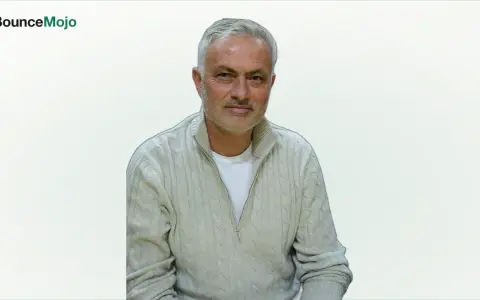
Diego Simeone Biography: El Cholo, the Football Warrior

Most people know Diego Simeone from the touchline: the black suit, the fist pumps, the sprint down the sideline like a man possessed. Almost nobody remembers that the fury is a strategy, not a temper.
Here’s what most people miss: the same combative fire that made Simeone a snarling midfielder is the exact thing he bottled, weaponized, and sold to a club that had forgotten how to win.
The Myth vs. The Reality
The myth is pure aggression. Diego Simeone: the raging touchline general, all snarl and passion, a coach who wins by sheer force of will and intimidation. A man ruled by emotion.
That version is real. It’s also wildly incomplete.
Here’s the truth: the “pure fury” story erases the calculating mind underneath. Simeone is one of the shrewdest tacticians and man-managers in the game, a coach who engineered an entire identity, defensive discipline, collective sacrifice, relentless pressing, and then dressed it in emotion to make players run through walls for him. The rage isn’t a flaw he can’t control. It’s a tool he deploys on purpose.
Think about it. We love the image of the hot-blooded Argentine because it makes his success look like temperament rather than intelligence. But Atletico Madrid didn’t beat Barcelona and Real Madrid to titles because their coach shouted loudest. They did it because he out-organized, out-prepared, and out-fought clubs with three times the money.
Now, that method didn’t come from nowhere. It was forged in a specific country, a specific football culture, and a specific playing career built on the same intensity. Which raises the question: what world makes a man this driven, this combative, and this smart all at once?
The World That Made Diego Simeone
To understand Simeone, you have to understand the Argentine football he was raised inside.
He was born on April 28, 1970, in Buenos Aires, into a nation where football is close to religion and where a particular ideal reigns: garra, a word for grit, guts, and never-say-die aggression. Argentine football prized the cunning, combative competitor over the pretty stylist. A boy who wanted to make it learned early that will and street-smarts mattered as much as talent.
Simeone came through the youth ranks at Vélez Sarsfield, and even as a young player he stood out for exactly the qualities that would define him: aggression, tactical awareness, and a refusal to lose. Somewhere along the way he inherited the nickname “El Cholo,” passed down because his snarling style echoed an earlier Argentine footballer of the same surname. The name fit so well it stuck for life.
Here’s the deal: that culture was the seed of everything. The intensity, the win-at-all-costs edge, the belief that organization and heart can beat superior talent, all of it traces back to the Argentine game that raised him.
But before he could coach that philosophy, he had to live it, for two decades, as one of the most combative midfielders in Europe.
The Crucible: Early Life and the Climb
The environment that shaped him
Simeone’s playing career was his coaching apprenticeship in disguise.
He moved to Europe and became a world-class defensive midfielder, hard-running, tactically ferocious, and endlessly competitive. He played for Pisa and Sevilla, then joined Atletico Madrid, where in 1996 he captained the club to a stunning La Liga and Copa del Rey double. He later starred at Inter Milan, winning the UEFA Cup, and at Lazio, winning a Serie A title. For Argentina, he won over 100 caps and lifted the Copa América.
He was the kind of player opponents hated to face and coaches loved to have, a competitor who understood the game’s dark arts and its finest details in equal measure. That deep, lived understanding of how matches are actually won became the foundation of everything he’d later teach.
The catalyst
The catalyst was the club that felt like home.
When his playing days ended in 2006, Simeone went straight into management in Argentina, winning a league title with Estudiantes and coaching River Plate, Racing Club, and Catania in Italy. He was building a reputation as an intense, effective young manager. But the defining moment came in December 2011, when Atletico Madrid, the club he had captained, came calling.
Here’s the kicker: he didn’t just take a job. He took over a piece of his own history. Simeone loved Atletico, understood its wounded, underdog soul, and knew exactly what it needed, an identity to believe in. He gave it his own.
Within months he had the club winning again. The combative midfielder was about to become one of the greatest managers of his era. But the very intensity that powered the rise would also define its limits.
The Key Players
No career like this is a solo act, and Simeone was shaped by the people and forces around him.
Start with Argentine football itself, and the tradition of grit that raised him. The bilardismo pragmatism of coaches like Carlos Bilardo, results-first, ruthlessly organized, runs straight through Simeone’s methods. He is, in many ways, that philosophy made flesh.
Then there’s Atletico Madrid’s hierarchy, the executives who kept faith in him through more than a decade, an act of loyalty almost unheard of in modern football. That stability let him build something no short-term manager ever could.
There’s his family, a football bloodline in its own right. His son Giovanni Simeone became a professional striker, carrying the name into the next generation and reflecting the game’s central place in the Simeone household.
And there’s Real Madrid, the ghost. The richer, grander crosstown giant became both Simeone’s greatest measuring stick and his most painful obstacle, the club he beat to a league title and lost to in two Champions League finals.
Now: absorb a nation’s grit, earn a club’s rare loyalty, and chase the right rival, and you can build something historic. Simeone did exactly that. But triumph came with a recurring heartbreak.
The Turning Point
The pinnacle
The pinnacle was the 2013-14 season, and it broke football’s most entrenched order.
For years, La Liga had been a two-horse race between Barcelona and Real Madrid, clubs with enormous budgets and the best players on earth. Simeone’s Atletico, running on a fraction of that money, refused to accept the hierarchy. In 2014 they won La Liga, snatching the title on the final day, and reached the Champions League final the same season. It was a stunning act of overachievement, and it announced Simeone as a genuinely great manager.
Across his reign he added a second La Liga title in 2021, two Europa Leagues, a Copa del Rey, and two UEFA Super Cups, and made Atletico one of the most feared, hardest-to-beat teams in Europe. His full net worth breakdown traces how that sustained success turned into the biggest salary in management.
The price
Here’s the kicker: the one trophy he wanted most kept slipping away, and always to the same enemy.
Twice Simeone took Atletico to the Champions League final, in 2014 and 2016, and twice he lost to Real Madrid. In 2014, his team led deep into the match before conceding late and collapsing in extra time. In 2016, the final went to a penalty shootout, and again Madrid won. Those two nights are the great “what if” of his career, the ceiling his intensity couldn’t quite break through.
There was a personal price, too. The same all-consuming fire that drove his teams also burned Simeone. His touchline conduct earned bans and fines. His demand for total commitment made him magnetic to some players and exhausting to others. Living every match at that emotional pitch, for well over a decade, is a toll few could sustain.
He’d built one of the great modern football projects. He’d just never quite reached the summit of it.
The Unvarnished Truth
Simeone is not the simple firebrand the cameras suggest, and pretending otherwise flattens him.
His football has drawn genuine criticism. Atletico under Simeone were often accused of being overly defensive, of “parking the bus” and grinding out results at the expense of attacking flair. Purists argued his pragmatism, however effective, made his teams hard to love. Simeone never much cared, results were the point, but the debate is a fair one.
There’s also the volatility. Simeone has crossed lines, most infamously making a crude gesture toward the crowd while celebrating a win over Juventus, an act that drew a fine and criticism. His intensity, so productive on a good day, can spill into something uglier when a match turns against him.
Here’s what’s easy to miss: his greatest strength and his greatest limitation are the same trait. The siege-mentality intensity that made Atletico overachieve is the same instinct that, at the highest level, sometimes made them too cautious to win the very biggest prize. The fire built the project and, arguably, capped it.
None of that erases the trophies or the transformation. But it does explain why Simeone is more complicated, and more interesting, than the shouting man on the sideline.
Controversies and Criticisms
Simeone’s career carried real friction, and it’s worth being honest about it.
The defensive-football debate. Critics have long argued that Simeone’s pragmatic, defensive approach, brilliant at frustrating better-funded rivals, sacrificed entertainment and, at times, ambition. Supporters counter that it was the only realistic way to compete with Barcelona and Real Madrid.
Touchline conduct. Simeone has been sent to the stands, banned, and fined over the years for his heated behavior, including the notorious celebratory gesture against Juventus that drew a UEFA sanction.
The Champions League ceiling. Two finals, two defeats to Real Madrid. Detractors point to those losses as evidence that his cautious instincts betrayed him on the biggest stage. It remains the central knock on an otherwise glittering record.
The salary question. As the highest-paid manager in the world at a club forever fighting financial constraints, Simeone’s wage has occasionally drawn scrutiny, a striking sum for a team that must sell to buy.
So what does a life like this actually teach the rest of us? More than the touchline theater suggests.
What We Can Learn From Diego Simeone
Navigating hard times
Simeone’s real lesson is about competing when you’re outgunned.
Atletico will almost never have the budget of their two great rivals. Simeone’s answer was to stop apologizing for it and build an identity out of it: work harder, defend better, sacrifice more, and take the giants down one match at a time. His mantra, partido a partido, game by game, is a way of shrinking an impossible task into a series of winnable ones.
In other words: you don’t have to be the richest or the most talented. You have to be the most organized and the most relentless. That’s a tool anyone facing a bigger opponent can borrow.
The success blueprint
The blueprint here is about turning identity into an advantage.
Simeone didn’t inherit a superclub. He took a wounded, underachieving Atletico and gave it a soul, a way of playing and competing so distinct it got its own name, “Cholismo.” He made the players believe that being harder to beat than anyone else was itself a form of greatness. That identity is why he became one of the wealthiest and most respected figures on our richest coaches list.
That’s transferable. The lesson is that a clear, relentless identity can beat superior resources, especially when everyone else is coasting on talent. Simeone proved that culture and conviction are a competitive weapon.
Becoming better
The deepest lesson is about the cost of your own fire.
Simeone’s intensity is his engine and, at moments, his brake. It won him titles and lost him composure. It made his teams fearsome and, on the biggest nights, sometimes too fearful. The challenge he embodies isn’t to extinguish that fire, it’s to keep it from choosing the worst possible moment to burn.
In other words, passion is a superpower until it stops you adapting. Simeone’s story shows both the extraordinary heights that intensity can reach and the ceiling that rigidity can impose. The goal is to keep the fire while staying flexible enough to change.
Final Verdict
Diego Simeone is one of the most influential managers of his generation, and one of its most misunderstood. He is remembered as a snarling touchline warrior, but the truth is richer: a shrewd, obsessive builder who took a second-tier club and made it a genuine threat to the two richest teams in the world for more than a decade.
Here’s the bottom line: the fury made him famous, but the football brain made him great. By fusing intensity with intelligence, he turned Atletico Madrid into “Cholismo” made flesh, and himself into the highest-paid, longest-serving manager in the game.
He never lifted the Champions League, and that near-miss will always shadow his record. But he changed what an underdog is allowed to believe, and he proved that heart and organization can drag a smaller club to the very edge of the summit. His fortune, detailed in his net worth breakdown, rewards that rare, relentless reign. And in the long run, the identity he built may matter more than the one trophy that got away.
Shop Diego Simeone on Amazon
Books, audiobooks, merch and more, handpicked for fans.
As an Amazon Associate we earn from qualifying purchases.
Frequently Asked Questions
Where was Diego Simeone born?+
Simeone was born on April 28, 1970, in Buenos Aires, Argentina, and came up through the youth system at Vélez Sarsfield before moving to Europe as a player.
Why is Diego Simeone called 'El Cholo'?+
The nickname 'El Cholo' was passed to him because his combative, streetwise playing style recalled an earlier Argentine footballer, Carmelo 'Cholo' Simeone, to whom he was not directly related.
Did Diego Simeone play for Atletico Madrid?+
Yes. Simeone played for Atletico as a midfielder and captained the club to the 1996 La Liga and Copa del Rey double, and also starred for Inter Milan, Lazio, Sevilla, and Argentina before returning as manager.
What is 'Cholismo'?+
'Cholismo' is the football philosophy associated with Simeone: intensity, defensive solidity, collective effort, and a game-by-game (partido a partido) mentality that turned Atletico into a relentless, hard-to-beat team.
Has Diego Simeone won the Champions League?+
No. As a manager Simeone has reached two Champions League finals, in 2014 and 2016, and lost both to Real Madrid, the great near-miss of his otherwise trophy-laden Atletico reign.
Want the money side of the story?
Read Diego Simeone's Full Net Worth Breakdown →Shop Diego Simeone on Amazon
Books, audiobooks, merch and more, handpicked for fans.
As an Amazon Associate we earn from qualifying purchases.