Coco Gauff Biography: The Teen Prodigy Who Grew Into a Champion
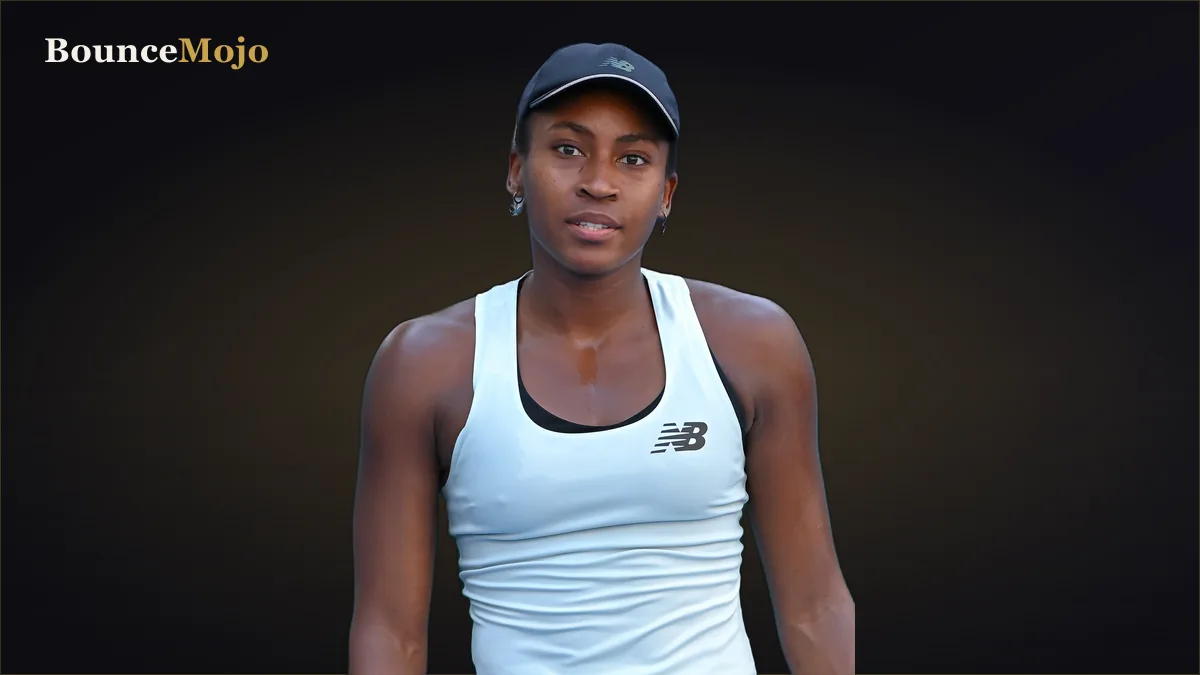
Most people met Coco Gauff as the 15-year-old who cried after beating Venus Williams at Wimbledon. That moment made her famous. It also nearly buried the harder truth underneath.
Here’s what most people miss: Gauff wasn’t an overnight miracle. She was the product of a decade-long family gamble, two parents who quit their careers and bet everything on a little girl’s forehand.
The Myth vs. The Reality
The myth is a fairy tale. Coco Gauff: the teenage prodigy who arrived fully formed at Wimbledon, beat a legend, and cruised to stardom. Effortless. Destined.
The reality is grittier.
Here’s the deal: Gauff’s rise looked sudden to the world, but it was built over years of relentless work and enormous family sacrifice. Before the Wimbledon moment, there were countless early mornings, a cross-country relocation, and parents who walked away from stable careers to coach and homeschool their daughter.
Think about it: the “overnight sensation” had been training for this since she was a small child. The world just wasn’t watching until 2019.
And the fairy tale skips the hard middle. After the fame came pressure, expectation, and the brutal challenge of turning teenage promise into actual Grand Slam trophies, a leap that has broken many prodigies before her.
You might be wondering: how does a kid from Delray Beach end up carrying the weight of “the next Serena” at 15? To understand that, you have to understand the family that made her.
The World That Made Coco Gauff
Gauff was born in 2004 into an America still shaped by the Williams sisters’ revolution.
Serena and Venus Williams had spent two decades redefining what was possible for Black women in tennis, and in a sense, changing what was possible for kids like Coco. She grew up watching them dominate, dreaming not of playing tennis in general, but of becoming what they were.
Now: that backdrop matters. Gauff didn’t just inherit a sport. She inherited a blueprint, a vision of a Black girl from an American family conquering a historically white, exclusive game. The Williams sisters had kicked the door open. Gauff walked through it.
Her family understood the stakes. Her parents were athletes themselves, and they saw both the opportunity and the enormous investment required to chase it.
But before the dream took shape, there were two college athletes deciding to bet their lives on their daughter.
The Crucible: Early Life and the Climb
The Environment That Shaped Her
Cori “Coco” Gauff was born in Atlanta to Corey and Candi Gauff, both standout collegiate athletes. Her father played basketball at Georgia State. Her mother competed in track and field at Florida State.
Here’s the truth: they saw something in Coco early, and they went all in. The family moved back to Delray Beach, Florida, to give her access to elite tennis training. Corey left his job to become her coach. Candi took charge of homeschooling. This was not a casual hobby. It was a full-family commitment to a single, uncertain dream.
Gauff responded. She became one of the most promising juniors in the world, winning major junior titles and drawing the attention of brands like New Balance, which signed her at just 14.
The Catalyst
Then came the moment that changed everything.
Wimbledon, 2019. At 15, Gauff became the youngest player ever to qualify for the main draw in the Open Era. In the first round, she drew Venus Williams, one of her idols. And she won. The image of a teenage Gauff embracing her hero, then advancing to the fourth round, made her a household name overnight.
The endorsements exploded, the beginnings of the fortune traced in her net worth story. The pressure exploded too.
It gets better, and harder. That instant fame set up years of expectation she would have to grow into. But the people around her kept her steady.
The Key Players
No one climbs alone, and Gauff’s story is anchored by family.
Corey Gauff. Her father and longtime primary coach, the man who left his career to build hers. He guided her from a small child through her breakthrough years, a constant presence in her corner.
Candi Gauff. Her mother, who oversaw her homeschooling and off-court development, keeping her grounded and protecting her childhood amid the chaos of fame.
Serena and Venus Williams. Her idols and inspirations. Serena Williams and Venus Williams were the blueprint Gauff followed, and beating Venus at Wimbledon in 2019 was an emotional full-circle moment that connected her to the legacy she grew up worshipping.
Her professional coaching team. As she matured, Gauff added seasoned coaches to refine her game, especially her serve and forehand, the technical pieces she needed to convert teenage promise into major titles.
Think about it: every one of these relationships pointed toward one question, could the prodigy become a champion? For a while, the answer stayed frustratingly out of reach.
The Turning Point
The Pinnacle
Gauff’s mountaintop came in 2023, at the US Open.
Playing on home soil in New York, she won her first Grand Slam singles title, delivering on years of hype in front of an adoring American crowd. The teenager who beat Venus at Wimbledon had become a major champion. In 2025, she added a second, the French Open, proving the first was no fluke and that her game translated across surfaces.
Off the court, she reached another kind of summit, the world’s highest-paid female athlete, a title she has held for multiple consecutive years.
The Price
Here’s the kicker: the road to those titles ran through real doubt.
Between the 2019 fame and the 2023 breakthrough, Gauff endured slumps, technical struggles, especially with her serve and forehand, and the crushing weight of “next Serena” expectations placed on a teenager. Critics questioned whether she could ever win a major. Every early exit reopened the debate.
That is the price of early fame. Gauff had to grow up in public, absorbing criticism most adults never face, before she earned her reward. Which brings us to the parts of her story the highlight reels leave out.
The Unvarnished Truth
Gauff is young, and her “flaws” are mostly the growing pains of a prodigy under a microscope.
Her game had real technical vulnerabilities early on. Her serve was streaky, her forehand a target for opponents. She lost matches she was expected to win, and the gap between hype and results became a public storyline. For a while, it looked like she might become another cautionary tale of a teen who peaked too soon.
Now: none of that is a character flaw. It is the honest reality of developing in front of the entire world. Gauff has been remarkably candid about the mental toll, speaking openly about pressure, anxiety, and the challenge of living up to expectations set before she was old enough to drive.
The honest read on Gauff is this: her greatest challenge has never been talent. It has been managing the weight of being anointed a legend before she had the chance to simply be a developing player. That she has handled it with poise says as much as any trophy.
Controversies and Criticisms
Gauff’s career has been more admired than controversial, but scrutiny has followed her.
The “next Serena” burden. Critics and media relentlessly compared her to the greatest of all time, an unfair standard that pressured a teenager and set her up for “disappointment” whenever she lost.
Technical criticism. Her serve and forehand drew constant analysis and doubt during her developmental years, with pundits questioning whether the flaws would cap her ceiling.
Speaking out. Gauff has used her platform to speak on social issues, including a moving 2020 speech at a Black Lives Matter rally in her hometown. That activism drew admiration from many and criticism from those who prefer athletes stay silent, a familiar double standard.
The hype machine. Some argued the tennis and endorsement worlds monetized her too fast, too young, raising fair questions about the pressures placed on teenage stars.
What We Can Learn From Coco Gauff
Navigating Hard Times
The first lesson is about handling pressure young. Gauff was famous at 15 and expected to be a champion immediately. She didn’t crumble. She kept working, kept improving, and refused to let the label define her.
Here’s the truth: early success can be as dangerous as early failure. Gauff’s ability to absorb massive expectations, endure slumps, and stay grounded is a masterclass in emotional resilience under a spotlight most people never experience.
The Success Blueprint
If you want the replicable part, it is this: Gauff and her family bet everything on a clear vision and executed it with discipline. Two parents left careers, relocated, and committed fully to a long-term plan, then adjusted the plan as she grew.
That is transferable. The lesson isn’t “have athletic parents.” It’s “commit fully to a vision, then adapt relentlessly as you learn.” That disciplined family approach put Gauff among the sport’s wealthiest names on our richest tennis players ranking before she turned 23.
Becoming Better
The deepest lesson is about patience. Gauff’s story rejects the myth of the overnight success. Her Wimbledon moment took a decade of work, and her first major took four more years of struggle after that.
In other words, real breakthroughs are built on years of invisible effort, and the fairy tale always hides the grind. The full story of how Gauff turned teenage promise into a record-setting fortune lives in her net worth breakdown.
Final Verdict
Coco Gauff is one of the most important young figures in modern sports, and “important” is earning its place in that sentence. She didn’t just win two majors before 22. She carried the weight of a legacy, the Williams sisters’ revolution, into a new generation, and she did it with a poise that belied her age.
And here’s the twist that reframes her whole story: the fairy-tale prodigy is really a story about patience and sacrifice. The overnight sensation trained for a decade. The teen champion had to survive years of doubt before the trophies came. And the most remarkable part is that, at 22, her greatest achievements almost certainly still lie ahead.
If you follow tennis, remember Gauff not just as the kid who cried after beating Venus, but as the young champion who turned impossible expectations into fuel. Her career is a study in growing up under pressure, and a reminder that the biggest breakthroughs are always built on years of work no one sees.
Shop Coco Gauff on Amazon
Books, audiobooks, merch and more, handpicked for fans.
As an Amazon Associate we earn from qualifying purchases.
Frequently Asked Questions
Where did Coco Gauff grow up?+
Coco Gauff was born in Atlanta, Georgia, in 2004 and raised in Delray Beach, Florida, where her family moved to further her tennis training. Both her parents were accomplished collegiate athletes.
How did Coco Gauff become famous?+
Gauff shot to global fame at Wimbledon in 2019, aged 15, when she qualified for the main draw and beat her idol Venus Williams before reaching the fourth round, becoming an overnight sensation.
How many Grand Slams has Coco Gauff won?+
Gauff has won two Grand Slam singles titles: the 2023 US Open, her breakthrough major on home soil, and the 2025 French Open.
Who coached Coco Gauff?+
Gauff was coached primarily by her father, Corey Gauff, throughout her rise, with her mother Candi overseeing her homeschooling. She has since worked with additional professional coaches.
Who is Coco Gauff's idol?+
Gauff has cited Serena and Venus Williams as her heroes and inspirations. Beating Venus at Wimbledon in 2019 was an emotional full-circle moment early in her career.
Want the money side of the story?
Read Coco Gauff's Full Net Worth Breakdown →Shop Coco Gauff on Amazon
Books, audiobooks, merch and more, handpicked for fans.
As an Amazon Associate we earn from qualifying purchases.