Brock Pierce Biography: Child Actor, Gold Farmer, Crypto Founder
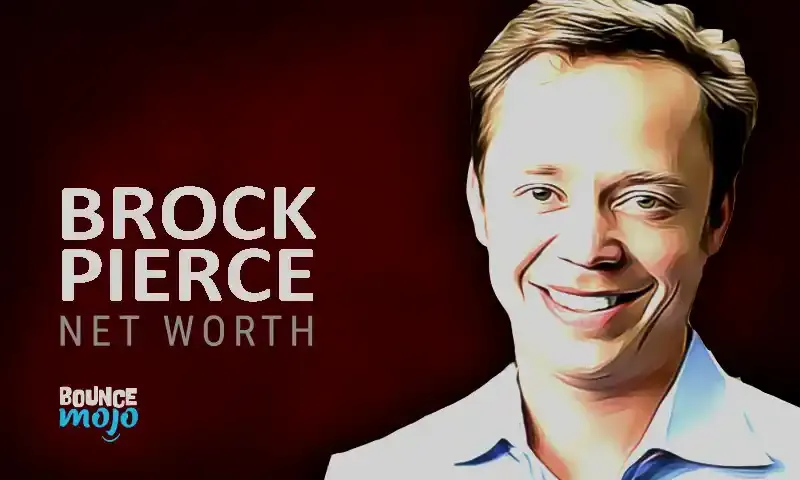
Brock Pierce has been early to four separate things — streaming video, virtual game economies, stablecoins, and token sales — and has ended up owning very little of any of them. That combination, precocious timing paired with a talent for exiting before the payday, is the most consistent pattern in his life.
Minnesota, and a Disney Casting Call
Pierce was born on 14 November 1980 and raised in Minnesota. He was cast young and worked steadily as a child: The Mighty Ducks in 1992, Little Big League in 1994, D2: The Mighty Ducks the same year, and in 1996 the lead child role in First Kid opposite Sinbad.
He left acting as a teenager. Almost every profile of him since has led with the Disney credit, which is understandable and also the least significant thing about him.
DEN: Streaming Video in 1999, and What Came With It
At seventeen he became an executive at the Digital Entertainment Network, a Los Angeles startup founded by Marc Collins-Rector and Chad Shackley that planned to produce short-form scripted video for the internet. The idea was correct and roughly a decade premature; DEN raised substantial money and filed for an IPO in 1999.
The IPO was withdrawn and the company collapsed after allegations against Collins-Rector became public. In July 2000, three plaintiffs sued Collins-Rector, Shackley and Pierce, alleging sexual abuse, assault and threats. The claims against Pierce were subsequently dropped, with a small payment recorded to one plaintiff’s counsel. The three men left the United States.
In May 2002 Spanish police detained them at a villa in Marbella, reporting the seizure of weapons and child pornography from the property. Pierce and Shackley were released relatively quickly. Collins-Rector was held, extradited to the United States in 2003, and pleaded guilty to charges involving transporting minors across state lines for sex.
Pierce was never charged with a sex offence and has consistently denied wrongdoing. He has also never fully escaped the association, and it resurfaced in force when he ran for president. Any honest account of his life has to carry both halves of that: the legal record, and the reason people keep raising it.
Selling Imaginary Gold: IGE
His comeback was built on something almost nobody outside gaming took seriously in 2001. Players of massively multiplayer games — EverQuest, then World of Warcraft — wanted in-game currency and equipment without grinding for it, and were willing to pay real dollars for it. Game publishers forbade the trade. It happened anyway.
Pierce founded Internet Gaming Entertainment to industrialise it: buy virtual gold from low-wage players, largely in Asia, and sell it to players in richer countries. At its peak IGE was a substantial business running an arbitrage between the value of time in different economies, several years before anyone used the phrase “digital asset.”
It brought in outside money and outside management, including Steve Bannon, years before Breitbart and the Trump campaign, who came in on the investment side and went on to run the company. Pierce departed in 2007. Publishers cracked down, and the business model that made IGE viable narrowed sharply.
What IGE actually taught him is the through-line of everything after. He had spent six years running a company whose entire product was a scarce digital token with a floating dollar price. When Bitcoin appeared, he already understood the shape of it.
Early Twice: Blockchain Capital, Tether, Block.one
He was an early Bitcoin buyer and, more consequentially, an early institutional one. Blockchain Capital, co-founded in 2013, was among the first venture funds dedicated to the sector, and in 2017 it raised part of a fund through a token sale — a structure with no precedent at the time.
In 2014 he co-founded Realcoin, which was renamed Tether. The concept was a token pegged one-to-one to the dollar so traders could move value between exchanges without converting back to fiat. Tether is now the largest stablecoin in the world and the plumbing under a substantial share of crypto trading. It has also spent a decade under scrutiny over its reserves, including a 2021 settlement with the New York Attorney General. Pierce says he ended his involvement in 2015, before either the scale or the controversy arrived.
Then Block.one, co-founded in 2017 to build the EOS blockchain. Its year-long token sale raised over $4 billion, the largest ever conducted, and the resulting network drew persistent criticism for underdelivering against the promises made during the offering. The SEC settled with Block.one over an unregistered securities offering in 2019. Pierce left in 2018.
Three foundational crypto institutions, three early exits. It is the reason estimates of his fortune vary so widely — the net worth breakdown walks through why the range runs from the high hundreds of millions to multiples of that, and why no ranking body has ever confirmed a figure. He appears on no Forbes billionaire list.
Old San Juan, and the Puerto Rico Argument
After Hurricane Maria devastated Puerto Rico in 2017, Pierce relocated to Old San Juan, taking over a former monastery as a base and becoming the public face of a crypto community drawn by the island’s tax incentives for new residents.
He framed it as reconstruction: capital, jobs and technology arriving where the mainland had failed to deliver. Local critics framed it as wealthy outsiders paying almost no tax on capital gains while housing costs rose around Puerto Ricans who had no such exemption, and the “Puertopia” branding of the early days did the project no favours at all. Both readings have real evidence behind them and the argument is still running on the island today.
A Presidential Campaign With a Serious Point and 0.03%
On 4 July 2020 he announced an independent run for president with running mate Karla Ballard, endorsed by venture capitalist Tim Draper and with Akon working as a campaign strategist. He finished with roughly 0.03% of the vote.
He never expected otherwise. The campaign was a platform for a specific argument — that digital assets, digital identity and blockchain-based voting should be national infrastructure — made four years before that position became broadly respectable in Washington. It also guaranteed that national reporters would go back through the DEN file, which they did.
Take the whole record together and the pattern is unmistakable. Pierce identifies a technology roughly five years before consensus, builds an institution around it, and is gone before it matters most. Whether that is the mark of a genuine futurist or of someone who cannot stay is a judgement the richest celebrities list will never settle. Both explanations fit the evidence equally well.
Shop Brock Pierce on Amazon
Books, audiobooks, merch and more, handpicked for fans.
As an Amazon Associate we earn from qualifying purchases.
Frequently Asked Questions
What movies was Brock Pierce in as a child?+
He appeared in Disney's The Mighty Ducks (1992) and D2: The Mighty Ducks (1994), played the young lead in First Kid (1996), and had a role in Little Big League (1994). He left acting in his teens.
Was Brock Pierce charged over the DEN scandal?+
No. Three plaintiffs sued him, Marc Collins-Rector and Chad Shackley in 2000 alleging abuse; the claims against Pierce were dropped. He was detained by Spanish police in 2002 alongside the others and released. Collins-Rector was later extradited and pleaded guilty to charges involving transporting minors; Pierce was never charged with a sex offence.
Did Brock Pierce found Tether?+
He was one of the co-founders of Realcoin in 2014, which was renamed Tether — now the largest dollar-pegged stablecoin. He has said he ended his involvement in 2015, long before Tether reached its current scale.
What was Block.one and EOS?+
Block.one built the EOS blockchain and ran what was for years the largest token sale ever, raising over $4 billion across a year-long offering ending in 2018. Pierce co-founded it and departed in 2018.
How much did Brock Pierce get in the 2020 presidential election?+
He ran as an independent with running mate Karla Ballard and finished with roughly 0.03% of the national vote. Tim Draper endorsed him and Akon worked on the campaign.
Want the money side of the story?
Read Brock Pierce's Full Net Worth Breakdown →Shop Brock Pierce on Amazon
Books, audiobooks, merch and more, handpicked for fans.
As an Amazon Associate we earn from qualifying purchases.