Blake Griffin Biography: From Dunk-Contest King to Comedian
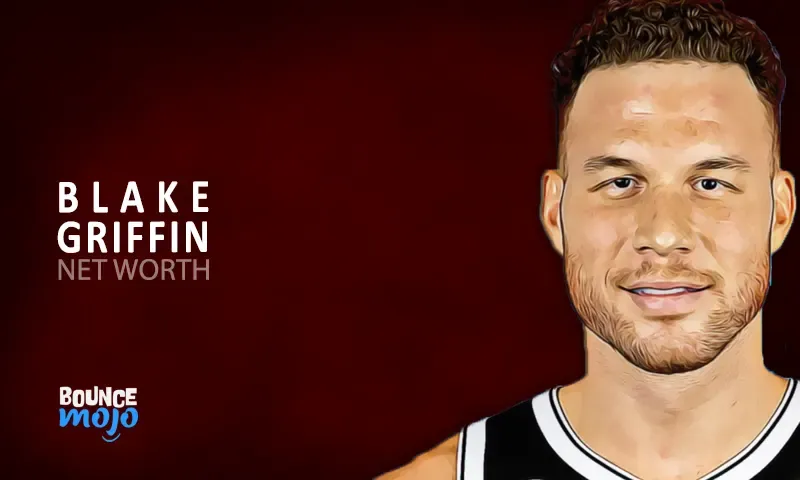
Everybody remembers Blake Griffin as the guy who dunked on people. That is maybe a third of who he actually is.
Here’s what most fans miss: the man who got famous jumping over a car spent the back half of his life making people laugh on purpose, and the road between the two runs straight through pain most players never come back from.
The Myth vs. The Reality
The myth is simple. Blake Griffin is the guy who dunks on people. The poster kid. The freak athlete who once leaped clean over the hood of a car and made grown men lose their minds on national television.
That version is fun. It’s also wildly incomplete.
Here’s the truth: Griffin was never just an athlete having a moment. He was a bookish, homeschooled kid from Oklahoma who read constantly, cracked jokes to defuse tension, and treated basketball less like a gift and more like a job he intended to master. The dunking made the headlines. The mind behind it made the fortune.
And that fortune is real. Blake Austin Griffin is worth an estimated $190 million, a number built on one of the smartest guaranteed-money situations the league has ever produced. But the money isn’t the interesting part of his life. The interesting part is how a player defined by his body ended up outrunning his own knees.
You might be wondering: how does a homeschooled preacher’s-town kid become the face of Los Angeles basketball?
The answer starts with a gym in Oklahoma City, and with a father who happened to be the coach.
The World That Made Blake Griffin
To understand Griffin, you have to understand the era he crashed into.
He arrived in the NBA in 2009, right at the moment the league was becoming a highlight-driven, social-media-fueled entertainment machine. YouTube was king. Vine was about to be born. A single dunk could travel around the world before the game even ended. Players weren’t just athletes anymore, they were content.
Griffin was built for that world in a way almost no one else was. He was 6-foot-10, 250 pounds of coiled violence, and he played above the rim with a cruelty that made every possession feel like it might end with someone’s dignity on the floor. In another decade he might have been a very good power forward known mostly to hardcore fans. In this decade, he became a phenomenon.
Now: Los Angeles amplified everything. The Clippers had been the punchline franchise of American sports for a generation, and Griffin landed in that mess like a lightning bolt. Suddenly the little brother team had the most electric young player alive, playing in the second-biggest media market on earth, in the golden age of the shareable clip.
But here’s the kicker: the same spotlight that made him famous also set a trap. When your entire brand is built on physical explosiveness, what happens when the body starts to break?
To see how Griffin answered that question, you have to go back to where the body was built.
The Crucible: Early Life and the Climb
The environment that shaped him
Blake Griffin was born on March 16, 1989, in Oklahoma City, the younger of two sons of Tommy and Gail Griffin. His father was a former college basketball and track standout. His mother was a former teacher. That combination shaped everything.
For years, the Griffin boys were schooled at home before they ever set foot in a traditional classroom. It was a disciplined, close-knit, faith-anchored household where achievement was expected and effort was non-negotiable. Blake and his older brother Taylor did everything together, including the thing that would define both their lives: basketball, taught relentlessly by their dad.
Think about it: most kids get a coach who happens to know their name. Griffin got a coach who tucked him in at night.
When the boys did enroll in school, they landed at Oklahoma Christian School, a small private school where Tommy Griffin was the head basketball coach. Playing for your father in a program that small could have been a soft launch. Instead it was a pressure cooker. Griffin won four straight state championships and the Saints ran up a 106-6 record across his four years. He wasn’t a big fish in a small pond. He was a shark who happened to swim in one.
The catalyst
The moment that changed the trajectory came at the University of Oklahoma.
As a freshman, Griffin was already dominant, and already banged up. He sprained the MCL in one knee, then tore cartilage in the other, foreshadowing a theme that would haunt his career. But it was his sophomore year, 2008-09, that turned a good college player into a legend.
That season Griffin was unstoppable. He swept nearly every national player of the year award there is, the Naismith, the Wooden, the Oscar Robertson Trophy, the Rupp, the AP honor, becoming the first Oklahoma player ever to do it. He bullied entire conferences by himself. NBA scouts stopped debating and started drooling.
Here’s the deal: by the time he declared for the draft, there was no suspense left. The Los Angeles Clippers held the No.1 pick in the 2009 NBA Draft, and everyone on earth knew what they’d do with it.
They took Blake Griffin. The Oklahoma kid was going to save the worst franchise in basketball.
And then, before he ever played a real NBA minute, it all nearly ended.
The Key Players
No story like this belongs to one man. Griffin’s arc was shaped by the people around him, some who lifted him, some who pushed back, and one whose memory he carried the rest of his life.
Start with his father, Tommy. As coach and parent, he installed the work ethic and the fundamentals that let Griffin’s athleticism actually mean something. Plenty of freakish jumpers wash out because nobody taught them the game. Griffin was taught the game before he could drive.
Then there was his brother Taylor, his first teammate, his first rival, and the person who made every backyard game feel like a war. Taylor made the NBA too, briefly, and the two remained tethered their whole lives.
The most important teammate of his professional life was a point guard. In late 2011, the Clippers traded for Chris Paul, and everything changed overnight. Paul was the maestro. Griffin was the finisher. Together with the sky-walking DeAndre Jordan, they formed the most viscerally exciting trio the Clippers had ever fielded. Griffin himself gave it a name. Told on media day that Paul was coming, he blurted out, “It’s going to be Lob City.” The nickname stuck to the franchise like a tattoo.
Now: not everyone remembers Lob City as pure joy. Reports of tension between the stars followed the team for years, and Griffin has spent a lot of time since insisting the “bad blood” was overblown. Whatever the truth, those Clippers made the playoffs six years running and never quite broke through. Brilliant, cursed, unforgettable.
But the person who may have shaped Griffin most never played a single NBA minute. His name was Wilson Holloway, a high school teammate and close friend who was diagnosed with Hodgkin’s lymphoma. Hold that name. It matters for what comes next.
Because the biggest night of Griffin’s early career was about to get tangled up with the saddest.
The Turning Point
The pinnacle
Griffin’s rise had a cruel prologue. In the final preseason game of 2009, he landed from a dunk and broke his left kneecap. A stress fracture. Surgery. And just like that, the No.1 pick, the savior of the Clippers, missed his entire first season without playing a game. He watched all of 2009-10 from the bench in a suit, a redshirt rookie in everything but name.
Then he came back and detonated.
In 2010-11, Griffin averaged 22.5 points and 12.1 rebounds, made the All-Star team as a rookie, and won Rookie of the Year unanimously. He was a nightly highlight machine, and the whole sport was watching.
The coronation came at the 2011 Slam Dunk Contest. Griffin had a Kia Optima wheeled onto the floor, a choir sang, and he jumped clean over the hood, caught a lob from Baron Davis through the sunroof, and slammed it home. The building exploded. The clip went nuclear. Overnight he became one of the most marketable athletes in America, and Kia, sensing gold, made him a pitchman for years.
Want to know the best part? The moment was even bigger than the dunk.
Griffin was given that Kia as a prize. He didn’t keep it. He auctioned it off and gave the money to Stand Up To Cancer, in honor of Wilson Holloway, the friend fighting Hodgkin’s lymphoma. Holloway died in 2011. The most famous prop in dunk-contest history became a memorial. That’s the part the highlight reels leave out.
The price
Now for the bill.
Griffin’s game was built on force, and force is expensive. Over the years the injuries piled up, knees, a hand he broke punching an equipment staffer, hamstrings, a back. Each surgery shaved a little off the explosion that made him famous. He remade himself as a stretch big who could pass and shoot threes, a genuinely impressive act of reinvention. But the poster-dunker slowly faded.
And then came the betrayal, or what felt like one.
In July 2017 the Clippers held a full press conference to retire Griffin’s jersey someday, told him he’d be a Clipper for life, and handed him a five-year max contract worth roughly $171 million. Six months later, in January 2018, they traded him to the Detroit Pistons. Griffin has called it the defining moment of his career, and not in a warm way. The city he was supposed to save had moved on.
Here’s the truth: it stung, and it also made him richer than staying ever could have.
Because that guaranteed contract is where the story gets complicated.
The Unvarnished Truth
Let’s be honest about Blake Griffin, because the whole man is more interesting than the poster.
He was, at times, a hothead. The broken hand from punching a team staffer in 2016 was ugly and self-inflicted, and it cost him and his team. He could be prickly with media. The Lob City tension, whatever its real temperature, was not nothing. Griffin was not a saint, and he’d probably be the first to tell you so, with a joke attached.
He was also self-aware in a way athletes rarely are. Griffin knew his body was a depreciating asset. He knew the dunks that made him famous were also grinding him down. Rather than deny it, he adapted, adding a three-point shot in Detroit, leaning into playmaking, buying himself years. When the athleticism finally left, he had a game underneath it.
But here’s the deal: the injuries eventually won the way they always do. By his final seasons, with the Brooklyn Nets and then the Boston Celtics, Griffin was a role player, a veteran presence taking charges and hitting corner threes off the bench. From national phenomenon to end-of-rotation glue guy. Most stars can’t handle that fall. Griffin took it with an oddly good sense of humor.
That humor wasn’t an accident. It was the tell of what came next.
Which brings us to the criticisms, and the one label he actually earned.
Controversies and Criticisms
The knock on Griffin was never about effort. It was about durability and, for a while, about hardware.
The loudest critique: for all the fame, Griffin never won a championship and never carried a team past the second round as its best player. In the ruthless accounting of NBA legacy, he sits in an odd spot, six-time All-Star, one of the most famous players of his era, and yet not a first-ballot Hall of Fame lock. Injuries capped what he might have been. We are, in some sense, mourning a career that got interrupted.
There’s also the “empty stats” crowd, who argued the early Clippers dunks were flashier than they were valuable, that Griffin’s game was built for the highlight algorithm more than for winning. That criticism softened as he added skill, but it followed him.
And then there was the punch. Griffin fracturing his hand on a team equipment manager during a night out in 2016 was a genuine black mark, the kind of headline that undercuts the affable image. He apologized, paid for it on the court, and moved on, but it’s part of the record.
You might be wondering: does any of that actually define him? Not really. Because the most interesting thing about Griffin is what he built on the side while the critics argued about his ceiling.
What We Can Learn From Blake Griffin
Navigating hard times
Griffin’s whole life is a clinic in adapting to a body that keeps letting you down.
He lost an entire rookie season before it started. He lost his explosiveness in slow motion over a decade. He lost the city that promised to love him forever. Any one of those could have broken a career. Griffin absorbed all three and kept finding a next version of himself, from dunker to shooter to sixth man to comedian.
The lesson isn’t “never get hurt.” Nobody controls that. The lesson is: build a second skill before the first one fails. Griffin started doing stand-up while he was still an All-Star, not after the checks stopped. He hosted the Just for Laughs festival in Montreal in 2016 and launched his own charity show, Comedy by Blake, all while playing NBA basketball. By the time his knees finally quit, he already had a whole other identity waiting.
The success blueprint
Here’s the money part, and it’s a genuine playbook.
Griffin’s fortune, the roughly $190 million we broke down in his net worth story, didn’t come from being the best player of his generation. It came from being paid like it at exactly the right moment. That $171 million max contract was fully guaranteed. When Detroit later parted ways with him, they used a stretch-waiver to keep paying his guaranteed money across future years, meaning he collected checks from the Pistons while earning fresh salary elsewhere. Getting paid by two teams at once is the closest thing pro sports has to a printing press.
The blueprint is brutal and clear: sign the guaranteed deal at your peak, before the body slows, then use the runway that money buys to build something you own. Griffin did exactly that with his production company, Mortal Media, taking equity in projects instead of one-off appearance fees. If you want to see how his number stacks up against the game’s wealthiest, our richest NBA players ranking lays it all out. Younger stars like Deandre Ayton are running a version of the same guaranteed-money strategy right now.
Becoming better
The deepest lesson is about identity.
Most athletes are terrified of the day the crowd stops cheering, because they’ve never been anything but the athlete. Griffin quietly refused that fate. He read books on the team plane, wrote comedy bits, and treated himself as a person who happened to play basketball rather than a basketball player who happened to be a person. When the game left, he didn’t fall into a hole. He walked into an open door.
That’s a rare thing. And it’s why his final act might outlast his first.
Final Verdict
So what do we make of Blake Griffin?
If you judge him purely as a player, he’s a fascinating near-miss, a six-time All-Star and one of the most electrifying dunkers ever, whose body robbed him of the legendary career his talent promised. No ring. No deep title runs as the man. A Hall of Fame case that will spark arguments for years.
But that scorecard misses the point. Griffin is one of the rare superstars who understood that the game was a chapter, not the whole book. He turned a dunk over a Kia into a global brand, a memorial for a lost friend, and a launchpad. He signed the right contract at the right time and turned an injury-shortened prime into a nine-figure fortune. Then he did the thing almost no one manages, he built a genuine second career, in stand-up comedy and film production, while the first one was still going.
Here’s the bottom line: Blake Griffin retired in April 2024 not as a cautionary tale of wasted potential, but as a case study in reinvention. The kid who was homeschooled in Oklahoma and coached by his dad grew up to be a man who could make an arena roar and, later, make a comedy club laugh.
The dunk over the car will always lead the highlight reel. But the smarter move was everything he built around it. For the full accounting of that fortune, the salary, the guaranteed money and the media empire, read our complete Blake Griffin net worth breakdown.
Shop Blake Griffin on Amazon
Books, audiobooks, merch and more, handpicked for fans.
As an Amazon Associate we earn from qualifying purchases.
Frequently Asked Questions
Where did Blake Griffin grow up?+
Griffin grew up in Oklahoma City, Oklahoma. He was educated at home for his early years, then attended Oklahoma Christian School, where he played for his father, head coach Tommy Griffin, and won four straight state titles.
Did Blake Griffin redshirt a year?+
Yes, but not in college. Griffin broke his left kneecap in the final 2009 preseason game and missed his entire first NBA season (2009-10). He returned in 2010-11 and won Rookie of the Year.
What was 'Lob City'?+
'Lob City' was the nickname for the Los Angeles Clippers built around Griffin, Chris Paul and DeAndre Jordan from 2011 onward. Griffin himself coined the phrase on media day when he heard the Clippers had landed Paul.
Why did Blake Griffin jump over a Kia?+
At the 2011 Slam Dunk Contest, Griffin leaped over the hood of a Kia Optima, caught a lob through the sunroof from Baron Davis, and threw it down to win. The moment made him a national star and led to a long Kia endorsement.
What is Blake Griffin doing after basketball?+
Since retiring in 2024, Griffin has focused on stand-up comedy and his production company, Mortal Media, which has credits including the White Men Can't Jump remake and Apple TV+'s Hello Tomorrow!
Want the money side of the story?
Read Blake Griffin's Full Net Worth Breakdown →Shop Blake Griffin on Amazon
Books, audiobooks, merch and more, handpicked for fans.
As an Amazon Associate we earn from qualifying purchases.