Bjorn Borg Biography: The Ice Man Who Walked Away at His Peak
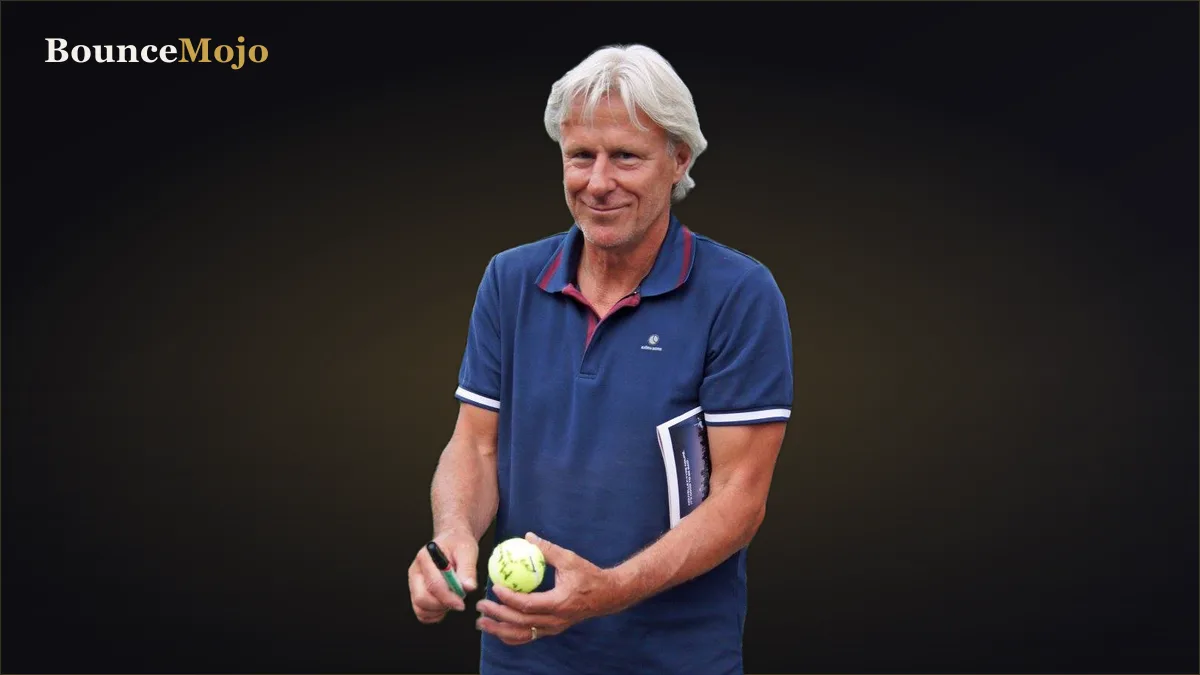
Most people know Bjorn Borg as the calm, long-haired legend who won everything and then vanished. That image is real, and it hides the storm underneath.
Here’s what most people miss: the coolest man in tennis was so consumed by the pressure of his own greatness that he walked away from the sport at 26, at the very top.
The Myth vs. The Reality
The myth is smooth. Bjorn Borg: the serene “Ice Man,” expressionless and unbeatable, a machine who won 11 majors without breaking a sweat, then walked off into the sunset a legend.
The reality runs hotter.
Here’s the deal: the calm was a mask, not the whole man. Teammates and rivals described a competitor whose insides churned even as his face stayed blank. That famous composure wasn’t the absence of pressure. It was a lid clamped down hard on an enormous one.
And the “walked off into the sunset” part sugarcoats a sadder truth. Borg didn’t retire in triumph. He retired burned out, hollowed by the grind and the rivalries, at an age when most champions are just hitting their prime. The exit that looked graceful was really a man who couldn’t take it anymore.
You might be wondering: how does someone that dominant get that depleted that young? To understand it, you have to understand where he came from and what the tour did to him.
The World That Made Bjorn Borg
Borg came out of a Sweden that didn’t produce tennis gods, until he became the first one.
He was born in 1956 in Sodertalje, a manufacturing town about half an hour from Stockholm. His first love was ice hockey, and he was a talented junior player. Then, when Borg was around nine, his father won a tennis racket as a prize in a table-tennis tournament and handed it to his son. That single racket redirected a life.
Now: tennis in the early 1970s was shifting from a genteel amateur pastime into the professional, televised, globally marketed sport we know. Borg arrived right at that hinge. Young, blond, cool, and devastatingly effective, he became the first true superstar of the TV age, mobbed by teenage fans like a rock star, “Borgmania” sweeping across arenas.
That collision, an emerging global media sport meeting a photogenic Swedish prodigy, is the backdrop for everything. Borg didn’t just win. He turned tennis into pop culture and monetized fame in ways the sport hadn’t seen. But the machine that made him also wore him down.
Before the fame and the burnout, though, there was a kid teaching himself an unorthodox game on Swedish courts.
The Crucible: Early Life and the Climb
The Environment That Shaped Him
Borg wasn’t coached into a textbook game. He built a strange, revolutionary one.
Largely self-taught in his early years, he developed a heavy, whippy topspin off both wings, a style that looked odd at the time and later became the blueprint for modern tennis. His two-handed backhand and looping forehand baffled traditionalists. It shouldn’t have worked. It worked spectacularly.
He was also fiercely disciplined and, beneath the calm, ferociously competitive. As a junior he had a temper, and the story goes that his parents once confiscated his racket to teach him to control it. Whether legend or fact, the result was real: Borg learned to bury his emotions completely, and the “Ice Man” was born.
Here’s the truth: that suppressed intensity was rocket fuel. He channeled everything inward, into relentless consistency and physical endurance that ground opponents into dust over five sets.
The Catalyst
Borg’s breakout came fast and young. He won his first French Open at 18 in 1974, then defended it, announcing a clay-court dominance that would define his career.
But the real launch was Wimbledon. Winning on grass, a surface that supposedly didn’t suit his topspin baseline game, proved he could conquer anything. He took his first Wimbledon in 1976 and then never lost there for five straight years, an almost unthinkable run of dominance on tennis’s biggest stage.
It gets more dramatic from here. Because as Borg reached the summit, a brash young American was climbing toward him, and their collision would become the defining rivalry of the era, and maybe the thing that broke him.
The Key Players
No dynasty stands alone, and Borg’s story is shaped by rivals and figures who pushed him to his limits.
John McEnroe. The great foil. Where Borg was ice, McEnroe was fire, and their contrast made for the most compelling rivalry in tennis. Their battles, especially at Wimbledon, are the stuff of legend, and the intensity of that rivalry is often cited as a factor in Borg’s early exit. As McEnroe’s own story shows, the two took opposite paths long after the rivalry ended.
Jimmy Connors. The other American antagonist of the 1970s, a fierce competitor Borg battled across major finals. Together, Connors and McEnroe gave Borg no room to breathe at the top.
Lennart Bergelin. Borg’s longtime coach and constant companion, the steadying presence who guided his career and managed the machine of Borgmania around him.
Mariana Simionescu. The Romanian tennis player who became his first wife, sharing the whirlwind of his peak years and the fame that came with them.
In other words, Borg’s life at the top was defined by relentless rivals and a small circle trying to shield him from the pressure. That pressure crested at Wimbledon in 1980, in a match people still talk about.
The Turning Point
The Pinnacle
The 1980 Wimbledon final against McEnroe is Borg’s mountaintop, and it’s routinely called the greatest match ever played.
Borg was chasing a fifth straight Wimbledon. McEnroe pushed him to the brink, winning an epic fourth-set tiebreak 18 to 16 after Borg had championship points. A lesser champion would have folded. Borg didn’t. He steadied himself, won the fifth set, and lifted the trophy again, the ultimate display of his ice-cold nerve under unbearable pressure.
By the time he was done, he had 11 Grand Slam titles, six French Opens and five Wimbledons, all before his 26th birthday, and a global fame few athletes ever reach. The fortune that fame eventually produced is detailed in his net worth story.
The Price
Here’s the kicker: the ice had a cost, and the bill came due fast.
In 1981, McEnroe finally beat Borg at Wimbledon and again at the US Open, a major Borg never won despite four final appearances. Something broke. The relentless pressure, the endless travel, the emotional toll of clamping down on all that intensity for years, it emptied him out. In 1983, at just 26, Borg retired, stunning the sports world.
He tried a comeback in the early 1990s, even using a wooden racket in a modern power era, and failed to win a set. The Ice Man had paid the ultimate price for his greatness: he’d burned out before he was 30. Which brings us to the harder chapters of his life.
The Unvarnished Truth
Borg’s post-tennis life was far messier than his pristine on-court image suggested.
After retirement, he struggled. There were failed business ventures, serious financial difficulties, and reports of personal turmoil, including a widely covered health scare in the late 1980s. The disciplined machine who never showed a flicker of emotion on court found the unstructured life after tennis genuinely hard to navigate.
Now: none of this diminishes what he achieved. If anything, it humanizes a figure the public had turned into a myth. The same total commitment that made him unbeatable left him without an easy off-ramp when the tennis stopped.
The most honest thing about Borg is that his greatest strength and his greatest vulnerability were the same thing: his all-consuming intensity. It made him a champion. It also made walking away, and staying away, the only relief he could find, and it made rebuilding a life afterward a struggle he didn’t hide from.
Controversies and Criticisms
Borg’s controversies were quieter than McEnroe’s, but they were real.
The sudden retirement. Many felt Borg owed the sport more, that quitting at 26 robbed fans of years of greatness and left his rivalry with McEnroe unfinished. His refusal to play certain events near the end, over scheduling disputes with the tour, added to the sense of a champion walking away on his own uncompromising terms.
The failed comeback. His early-’90s return with a wooden racket struck some as quixotic, even sad, a legend unable to accept that the era had passed him by. Others saw it as brave. Either way, it dented the pristine myth.
The financial and personal struggles. His post-career money troubles and personal difficulties played out partly in public, a jarring contrast to the flawless image of his playing days. He faced them without much of the media polish modern stars enjoy.
The unwon US Open. Critics note the one hole in his resume: four US Open finals, zero titles. It’s a footnote against 11 majors, but it’s the argument that keeps him just short of some all-time-greatest lists.
What We Can Learn From Bjorn Borg
Navigating Hard Times
The first lesson is a hard one: being the best has a price, and ignoring it can break you. Borg gave everything to tennis and had nothing left in reserve when it ended. His burnout is a warning about the cost of total obsession without balance.
But here’s the truth underneath: knowing when to walk away is its own form of wisdom, even when it looks like surrender. Borg chose his own peace over more trophies, and while it stunned the world, it may have saved him.
The Success Blueprint
If you want the replicable part, it’s this: Borg turned his fame into a lasting asset. Long after his last title, the brand carrying his name became a business worth far more than his prize money ever was. That’s transferable, and it’s exactly the move that lands him high on our richest tennis players ranking. Your reputation, productized, can outlast your career.
Becoming Better
The deepest lesson is about identity. Borg was so completely a tennis player that life without it nearly capsized him. His struggle to rebuild is a reminder that no one should let a single role become their entire self.
In other words, greatness in one arena can leave you dangerously unprepared for the rest of life, and building an identity beyond your craft is its own quiet victory. That reckoning is the thread running through his whole second act.
Final Verdict
Bjorn Borg is one of the greatest and most fascinating figures in tennis history, and “fascinating” earns its place next to “great.” He was the first global superstar of the modern game, a stylistic revolutionary whose topspin blueprint the whole sport eventually copied, and the coolest competitor anyone had ever seen.
But the fuller story is more human than the myth. The ice concealed a fire that burned him out at 26. The graceful exit was really an escape. And the disciplined champion had to survive real hardship before the brand bearing his name rebuilt his fortune.
His playing legacy, 11 majors, five straight Wimbledons, a rivalry for the ages, is untouchable. The business empire that followed is laid out in his net worth breakdown. For where he ranks among the sport’s wealthiest, see our richest tennis players list. The Ice Man conquered tennis, then spent decades learning to live outside it, and that second story is every bit as compelling as the first.
Shop Bjorn Borg on Amazon
Books, audiobooks, merch and more, handpicked for fans.
As an Amazon Associate we earn from qualifying purchases.
Frequently Asked Questions
Where did Bjorn Borg grow up?+
Bjorn Borg was born on June 6, 1956, in Sodertalje, Sweden, a manufacturing town near Stockholm. He got his first racket at nine after his father won it as a prize in a table-tennis tournament and gave it to him.
Why is Bjorn Borg called 'Ice Borg'?+
The nickname 'Ice Borg' (or the Ice Man) came from his calm, expressionless demeanor on court. No matter the pressure, Borg rarely showed emotion, a stark contrast to fiery rivals like John McEnroe and Jimmy Connors.
How many Grand Slam titles did Bjorn Borg win?+
Borg won 11 Grand Slam singles titles: six French Opens and five consecutive Wimbledon titles. He achieved all of it before retiring at just 26, one of the most dominant runs in tennis history.
Why did Bjorn Borg retire at 26?+
Borg retired in 1983 at age 26, worn down by the relentless pressure, travel, and intensity of the tour and his rivalries. His sudden exit shocked the tennis world, and a brief 1990s comeback with a wooden racket failed to win a set.
What was the Borg vs McEnroe rivalry?+
It was one of sport's greatest rivalries, the icy Borg against the volcanic John McEnroe. Their 1980 Wimbledon final, and its legendary fourth-set tiebreak, is considered one of the finest tennis matches ever played.
Want the money side of the story?
Read Bjorn Borg's Full Net Worth Breakdown →Shop Bjorn Borg on Amazon
Books, audiobooks, merch and more, handpicked for fans.
As an Amazon Associate we earn from qualifying purchases.