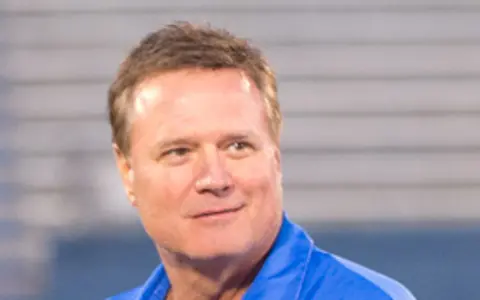
Ben Simmons Biography: The Rise and Fall of a No. 1 Pick

You already know Ben Simmons as the most talked-about No. 1 pick of his era, and probably as a punchline.
Here’s what most people miss: the player once compared to Magic Johnson would one day be too frozen to shoot a wide-open ball, and the reason has nothing to do with talent.
The Myth vs. The Reality
The myth of Ben Simmons is a punchline. A 6-foot-10 point guard who couldn’t, or wouldn’t, shoot. A max-contract player who ran from the fight. The internet flattened him into a single joke, and the joke stuck.
The reality is messier and far more human than that.
Here’s the truth: before he was a cautionary tale, Simmons was one of the most gifted teenagers on the planet. Scouts didn’t compare him to nobodies. They compared him to LeBron James and Magic Johnson, and they weren’t being generous. A player his size who could see the floor like a maestro and defend all five positions comes along maybe once a decade.
So how did that prospect become a symbol of unrealized talent? The answer isn’t laziness, and it isn’t cowardice. It’s a story about pressure, a hometown on the other side of the world, a father’s dream, and a mind that eventually said enough.
Think about it: the same confidence that let him dominate as a rookie is the thing that shattered under the lights. Understanding that contradiction means going back to where it started. And where it started is a country that doesn’t produce players like this.
The World That Made Ben Simmons
To understand Simmons, you have to understand that Australia is not a basketball country. It’s a cricket country, a rugby country, a country where Australian rules football fills the stadiums. Basketball is a niche.
Now: that matters more than it sounds.
When Simmons was born in Melbourne on July 20, 1996, the NBA was a distant thing beamed in at odd hours. Australian kids who wanted to make it had to leave. There was no local pipeline to the league, no army of AAU coaches, no grassroots machine feeding talent to American colleges. If you were serious, you got on a plane.
That’s the world Simmons entered. And it shaped a specific kind of ambition, the kind that requires a family willing to bet everything on a move across the ocean. It also created isolation. He grew up as an outlier in his own country, a basketball obsessive in a place that barely watched the sport, groomed for a stage 10,000 miles away.
But here’s the kicker: the man who put him on that path had already made the same journey in reverse. Ben Simmons didn’t fall into basketball. He was born into a very particular basketball household, built by a father with a story of his own.
The Crucible: Early Life and the Climb
The environment that shaped him
Dave Simmons was an American. Born in the Bronx, he played college ball and then took his game overseas, landing in Australia’s National Basketball League in the late 1980s. He became a genuine star there, a bruising forward who stayed, married, and built a life in Melbourne. He blended families, and Ben arrived as the youngest of six.
So basketball wasn’t a hobby in that house. It was the family business.
Here’s the deal: Ben was around the professional game before he could tie his shoes. He rebounded for his dad. He sat in gyms. He absorbed the rhythm of the sport the way other kids absorb a native language. By the time he was a teenager, he was already dominating Australian youth basketball and it was obvious the local competition couldn’t hold him.
That’s when the plan kicked in. At 15, Simmons left home for the United States, enrolling at Montverde Academy in Florida, the powerhouse prep school that has churned out NBA talent. He was thousands of miles from his mother, from Melbourne, from everything familiar, chasing a future his father had mapped out.
He didn’t just survive there. He took over. Montverde won national titles with Simmons as the centerpiece, and by his senior year he was widely rated the No. 1 high school player in America.
The catalyst
The next stop was Louisiana State University, and the choice raised eyebrows. LSU was not a blue-blood basketball program. Part of the reason he landed there tied back to a family connection, a godfather figure on the coaching staff. It was personal as much as strategic.
On the court, the one season at LSU was a statistical monster. Simmons averaged roughly 19 points and 11 rebounds a game, a walking triple-threat who made everything look easy.
But something was already off.
The team missed the NCAA Tournament entirely, an almost unthinkable outcome for a roster with the projected No. 1 pick. Critics started whispering about his motor, his shot, his willingness to take over when it mattered most. The talent was undeniable. The results, somehow, were not.
You might be wondering: if the warning signs were there in college, why did an NBA team still make him the top pick? The answer is that potential like his is nearly impossible to pass up. And in 2016, the Philadelphia 76ers didn’t even hesitate.
The Key Players
Every chapter of Simmons’ story runs through a handful of people.
His father, Dave, was the architect. He built the foundation, made the sport the family religion, and pushed his son toward a stage no Australian kid had reached in quite that way. Dave Simmons died in 2019, before the hardest years of his son’s career. Ben has spoken about how much that loss weighed on him.
In Philadelphia, the central figure became Joel Embiid. The two were supposed to be the future, a devastating inside-out duo. For a while, they were. But the pairing was always a fit problem waiting to happen, one dominant post scorer and one guard who wouldn’t shoot, and the tension grew as the losses in big moments piled up.
Then there was the front office and coach Doc Rivers, whose honesty after a crushing 2021 playoff loss would light a fuse. And later, in Brooklyn, teammates like Kyrie Irving and Kevin Durant, stars who arrived expecting a third piece and instead got a player fighting his own body and mind.
Here’s the truth: no player exists in a vacuum. Simmons was surrounded by expectations, by co-stars who needed more from him, by a city that demands everything from its athletes. Philadelphia doesn’t do patience.
And that combination, a fragile shooter, a pressure-cooker market, and a partnership that never quite clicked, was building toward a single night that would define him forever. The turning point was coming, and it was brutal.
The Turning Point
The pinnacle
First, the good years. They were real, and they were very good.
After sitting out his entire first NBA season with a foot injury, Simmons debuted in 2017-18 and immediately looked like a star. He won Rookie of the Year. He made the All-Star team three years running. He anchored elite defenses, made All-Defensive teams, and quarterbacked a Philadelphia squad that kept climbing the Eastern Conference.
He was, by any honest measure, a very good NBA player. Twice an All-Defensive selection. A do-everything force who could grab a rebound and go coast-to-coast in three dribbles.
Want to know the best part? He got paid like the cornerstone he appeared to be. In 2019, after just three seasons, the 76ers handed him a five-year designated rookie max extension worth roughly $177 million. He wasn’t yet 23. Generational security, locked in.
That contract, and everything that flowed from it, is the backbone of the money story. If you want the full financial breakdown, the salary, the Nike deal, and the exact figure, here’s Ben Simmons’ net worth.
The price
Now: the flaw that never went away.
For all his gifts, Simmons almost never shot the ball outside the paint. No mid-range. No threes. Defenses learned to ignore him past the free-throw line, sagging off and clogging the floor for his teammates. In a league increasingly built on spacing, a star who wouldn’t shoot was a growing liability.
It all detonated in the 2021 playoffs.
Facing the Atlanta Hawks in the second round, Simmons became passive, then invisible. His free-throw shooting collapsed under pressure. And in the deciding stretch of a season-ending Game 7, he caught the ball wide open under the basket, a clear path to a dunk, and instead passed it back out. In a close game. On the biggest stage of his career.
The image went everywhere. Afterward, Embiid called it the turning point of the loss. Coach Doc Rivers, asked whether Simmons could be a championship point guard, gave a devastatingly non-committal answer. His own MVP-candidate teammate and his own coach had, in public, declined to defend him.
Something inside him broke that summer. But the real story wasn’t the missed dunk. It was what he did next, and what he finally revealed about why.
The Unvarnished Truth
Simmons refused to return to Philadelphia. He asked out. When training camp opened for the 2021-22 season, he didn’t play, and the standoff turned ugly, with the team fining him and withholding money.
The easy narrative was that he was pouting. A max-contract star sulking over criticism.
Then he said something that reframed everything: he wasn’t mentally ready to play.
It gets deeper than a contract dispute. Simmons disclosed that he was struggling with his mental health, that the pressure and the public humiliation had left him in a place where he simply could not perform. It was met with skepticism by some, sympathy by others, and it forced an uncomfortable conversation the sport doesn’t always want to have.
Here’s the truth: it’s easy to mock an athlete for not fixing a jump shot. It’s a lot harder to sit with the reality that a young man, worshipped and then ridiculed on a global scale, reached a breaking point. The shooting yips and the mental strain were tangled together. The confidence that once made him fearless had curdled into something closer to dread.
Whatever anyone thinks of how it played out, the human cost was real. And it isn’t the only part of his story that resists a simple verdict.
Controversies and Criticisms
The criticisms of Simmons are worth laying out plainly, because they’re the reason his name became a punchline.
The biggest is the obvious one. A player of his size and skill who refused to develop a jump shot, year after year, is a genuine failure of will or nerve, depending on who you ask. The tools were there. The results, in the game’s most important moments, often weren’t.
Then there’s the holdout itself. Even people sympathetic to his mental-health struggle noted the awkward timing, the disclosure arriving amid a bitter financial fight. Skeptics questioned whether the two were being blurred together. It’s a fair, if uncomfortable, thing to sit with.
There’s also the matter of accountability. Some observers felt Simmons too often looked outward, at coaches, at teammates, at the media, rather than at the one adjustment he could control.
But here’s the other side of it. He was a very young man carrying an enormous contract, a fanbase’s title hopes, and a level of scrutiny few can imagine, all while grieving the loss of his father. The mockery was often cruel and personal. Reducing a person to a meme is easy. Living inside that meme is not.
The truth sits somewhere between the two extremes. And figuring out what to actually take from all of it is where his story becomes useful to the rest of us.
What We Can Learn From Ben Simmons
Navigating hard times
The first lesson is uncomfortable but important: talent is not armor.
Simmons had everything the world tells us guarantees happiness. Money. Fame. Elite ability. And it wasn’t enough to protect his mind. His willingness, eventually, to name what he was going through, rather than fake his way through it, was its own kind of courage, whatever you think of the circumstances.
Think about it: how many people stay in a role that’s crushing them because walking away looks like weakness? Simmons walked. It cost him publicly. It may also have been the honest thing.
The success blueprint
There’s a builder’s lesson buried in here too.
Simmons’ rise, from a niche-sport country to the No. 1 pick, is a masterclass in commitment. The family bet, the move at 15, the years of grinding far from home. That path worked. It got him to the top.
But the fall carries the counter-lesson: you cannot skip the uncomfortable work. Simmons rode his God-given gifts to stardom, and then refused, or was unable, to add the one skill that would have made him complete. The shot was the uncomfortable work. He never did it. And the gap he left open eventually swallowed his prime.
In other words, get to the top on talent, but you stay there by fixing the thing you’d rather ignore.
The final piece is about grace. It’s easy to laugh at someone else’s collapse from the cheap seats. It’s harder, and more honest, to remember there’s a person in there.
So what’s the final verdict on Ben Simmons?
Final Verdict
Ben Simmons is one of the saddest what-ifs of his basketball generation, and one of its most misunderstood figures.
Here’s the deal: he was never a fraud. He was a genuinely elite athlete, a Rookie of the Year, a three-time All-Star, an All-Defensive standout who, on his best nights, looked like a franchise pillar. The mockery erased all of that, which was never fair.
But he was also a player undone by a combination he couldn’t beat: a technical flaw he wouldn’t fix, a market that showed no mercy, and a mind that eventually buckled under the weight. The back injuries that slowed his Brooklyn years, requiring surgery and stealing his explosiveness, only closed the door that the mental toll had already started shutting.
His fortune survived it all, built on that guaranteed $177 million and detailed in full in his net worth breakdown. But the career is a lesson in how much talent alone can carry you, and exactly where it stops.
You can see his story echoed, in fragments, across the league’s biggest names, the pressure that trailed James Harden through a nomadic late career, the polarizing brilliance of Kyrie Irving. For the full landscape of the game’s wealth and the players who built it, our list of the richest NBA players is the place to look.
In the end, Ben Simmons matters not because of what he became, but because of what he showed us. That the distance between generational promise and a cautionary tale can be a single wide-open shot, and the courage, or the fear, to take it.
Shop Ben Simmons on Amazon
Books, audiobooks, merch and more, handpicked for fans.
As an Amazon Associate we earn from qualifying purchases.
Frequently Asked Questions
Where did Ben Simmons grow up?+
Simmons grew up in Melbourne, Australia, in a basketball family. His father, Dave Simmons, was an American who played professionally in Australia's National Basketball League, and Ben was the youngest of six children in a blended household.
Why did Ben Simmons sit out the 2021-22 season?+
After a rough 2021 playoff series and a public fallout with the Philadelphia 76ers, Simmons refused to report. He later disclosed he was dealing with his mental health, and he sat out the season before being traded to the Brooklyn Nets.
Did Ben Simmons play college basketball?+
Yes. He spent one season at LSU in 2015-16, averaging around 19 points and 11 rebounds, before declaring for the draft as a classic one-and-done prospect.
Why is Ben Simmons known for not shooting?+
Despite his size and passing gifts, Simmons rarely attempted jump shots or three-pointers. The reluctance became a defining criticism, and it reached a breaking point during the 2021 playoffs when he passed up an open dunk in a close game.
What happened to Ben Simmons in Brooklyn?+
Traded to the Nets in February 2022, Simmons was slowed by a back injury that required surgery and never regained his All-Star form. Persistent back problems limited his time on the court through his Brooklyn tenure.
Want the money side of the story?
Read Ben Simmons's Full Net Worth Breakdown →Shop Ben Simmons on Amazon
Books, audiobooks, merch and more, handpicked for fans.
As an Amazon Associate we earn from qualifying purchases.