Roberto Mancini Biography: The Stylish Winner in Italy and England
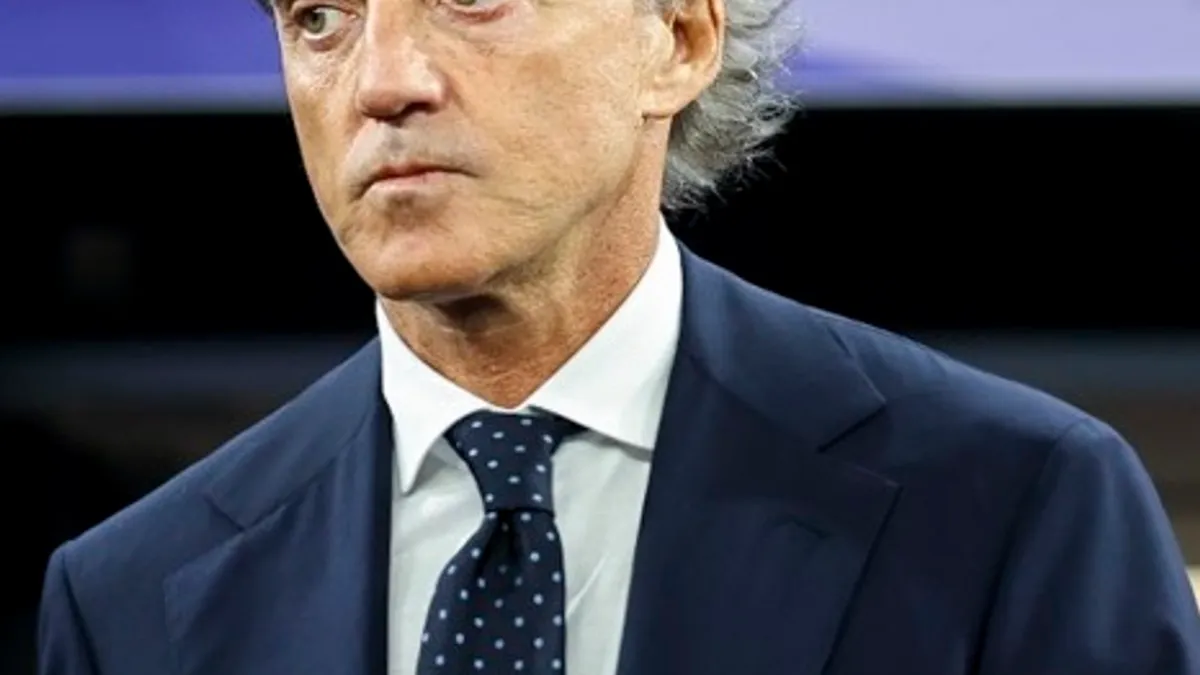
Everybody remembers the stoppage-time title, the Euro 2020 celebration, the impeccable suits. Almost nobody remembers the teenage prodigy who had to grow up far from home to chase the game.
Here’s what most people miss: the poise that makes Roberto Mancini look effortless was built by a lifetime of pressure, as a boy wonder, a big-money striker, and a manager expected to win everywhere he went.
The Myth vs. The Reality
The myth is a glamorous one. Roberto Mancini, the elegant maestro, gliding through football in perfect tailoring, winning titles in Italy and England and a European Championship with barely a hair out of place. The stylish man who always seems to end up holding the trophy.
That version is real. It’s also wildly incomplete.
Here’s the truth: the “effortless class” story hides how much pressure Mancini carried his whole life. He was a prodigy shipped away from home as a teenager, a striker weighed down by huge expectations, and a manager repeatedly hired to deliver instant success or be dismissed. The calm elegance was a shield, built over decades of being expected to win.
Think about it. We love a story of natural style because it looks like grace under no pressure at all. But Mancini’s poise was forged under enormous pressure, from the moment he was labeled a future star as a boy. The elegance wasn’t the absence of struggle. It was how he mastered it.
Now, that composure didn’t appear from nowhere. It was shaped by a specific journey, from a central Italian town to the biggest stages in the game. Which raises the question: what turns a small-town prodigy into a winner this composed?
The World That Made Roberto Mancini
To understand Mancini, you have to understand the journey that pulled him away from home so young.
He was born on November 27, 1964, in Jesi, in the Marche region of central Italy, and spent part of his childhood in Roccadaspide in the south. Football marked him out early as something special, and like many gifted Italian boys of his generation, his talent became a ticket out, first to Bologna as a teenager, then to Sampdoria, where he would truly arrive.
But the era mattered too. Mancini came of age as Italian football was becoming the richest and most competitive league in the world. Serie A in the 1980s and 1990s was where the game’s best players gathered, and a young forward with vision and technique could become a national icon, and learn, up close, from the finest coaches and teammates alive.
Here’s the deal: Mancini was never just a goalscorer. He was a creator, a second striker who saw passes others didn’t, the kind of intelligent player who was, in effect, thinking like a coach long before he became one. That footballing brain is the through-line of his entire life.
But before he lifted trophies as a manager, he became a legend at one club that shaped everything. And that story is where the real one starts.
The Crucible: Early Life and the Climb
The environment that shaped him
Two things defined the young Mancini: precocious talent and the weight of expectation.
The talent was obvious from boyhood. By his late teens he was already a star at Sampdoria, a club he would define for the next fifteen years. But being labeled a prodigy so young brought its own pressure, the constant demand to prove that the hype was justified, season after season.
That experience taught him to carry expectation with composure, a skill that would define both his playing and his coaching.
You might be wondering: how does an elegant, creative forward become a hard-nosed winning manager? The answer is that Mancini always understood the whole game, not just his own role. As a player he read matches like a strategist, and he formed a legendary partnership with Gianluca Vialli that carried Sampdoria to the greatest era in its history. He was learning to orchestrate a team long before he had a whistle.
By the end of his playing days, he had a Serie A title, a European Cup Winners’ Cup, multiple Coppa Italia trophies and 36 Italy caps. The prodigy had become a genuine great.
The catalyst
The catalyst was the coaching he absorbed, especially under Sven-Göran Eriksson.
At Sampdoria and later Lazio, Mancini played under Eriksson, the Swedish coach who trusted him and, eventually, mentored his transition into management. When Mancini hung up his boots, he moved almost seamlessly into the dugout, taking the tactical intelligence he’d shown as a player and applying it as a coach.
Here’s the kicker: Mancini didn’t drift into management. He was built for it. His entire playing career had been a study of how teams win, and he stepped into coaching with a fully formed sense of how to organize, motivate and win. That instinct would carry him from Fiorentina and Lazio to the biggest jobs in the sport.
He won the Coppa Italia early in his managerial career, then took over Inter Milan and delivered three straight Serie A titles. The stylish striker was becoming a serial-winning coach.
The Key Players
No career this big is a solo act, and Mancini was shaped by people who bent his path.
Start with Gianluca Vialli, his strike partner and lifelong friend at Sampdoria. Together they formed one of the great forward pairings in Italian football, and their bond lasted far beyond their playing days, a friendship at the heart of Mancini’s story.
Then there’s Sven-Göran Eriksson, the coach who trusted Mancini as a player and guided his path into management. Eriksson’s influence helped turn a brilliant footballer into a brilliant coach.
And there’s Sheikh Mansour, the Manchester City owner whose investment gave Mancini the resources to end the club’s decades-long wait for a title. That partnership produced the most dramatic championship in English football history.
There were also the great teams he built and led, the Inter side that dominated Serie A and the Italy squad he revived from failure to European champions. Those players carried his ideas onto the pitch.
Now: surround yourself with the right people and read the game better than everyone else, and you can win almost anywhere. Mancini did exactly that. But the pursuit of ever-bigger stages carried its own costs.
The Turning Point
The pinnacle
The pinnacle actually came twice, once in England and once with his country.
The first was in May 2012. Mancini’s Manchester City, chasing their first league title in 44 years, needed a win on the final day and were losing deep into stoppage time, before scoring twice in the dying moments to snatch the championship. It remains one of the most dramatic conclusions in football history.
The second, and arguably greater, came in 2021. Mancini had taken over an Italy national team that had failed to even qualify for the previous World Cup, and rebuilt it into European champions, winning Euro 2020 and setting a national record 37-match unbeaten run along the way.
Here’s the truth: he became a champion in club and international football alike, and did it with a composure that made the hardest wins look graceful.
The price
Because chasing the biggest stages meant a restless, often turbulent career.
Mancini’s tenures frequently ended in friction or upheaval. He clashed with hierarchies, moved from country to country, and even his triumphant Manchester City spell ended in dismissal the season after he won the title. Success rarely bought him stability.
The most bittersweet turn came at the end of his Italy story. Having reached the summit with Euro 2020, he resigned in 2023 and took a hugely lucrative offer to coach Saudi Arabia, a move that surprised many and drew criticism at home. That chapter ended in 2024 after a difficult World Cup qualifying campaign, a rare stumble for a manager used to winning.
He’d spent his life chasing the next big stage. That ambition brought glory, but it also meant he rarely stayed still long enough to settle.
The Unvarnished Truth
Mancini is not a serene, untroubled winner, and pretending otherwise misses what makes him interesting.
His career has been marked by restlessness and the occasional bitter exit. He has been sacked at the height of success, fallen out with clubs, and made choices, like the Saudi move, that divided opinion among the fans who once adored him. The elegant exterior has covered plenty of turbulence.
There’s also the honest question of legacy versus loyalty. Some critics felt his decision to leave the Italy job for a Saudi payday undercut the goodwill he’d earned by winning the Euros. He would likely point out that a manager’s career is short and the opportunities, when they come, must be taken.
Here’s what’s easy to miss: his greatest strength and his restlessness are linked. The ambition that pushed him to win in Italy, England and international football is the same ambition that kept him moving, never quite content, always chasing the next challenge.
None of that erases the trophies. But it does explain why his career reads as a series of bold, ambitious chapters rather than one settled reign.
Controversies and Criticisms
Mancini’s career has carried its share of debate, and it’s worth being honest about it.
His departure from the Italy job in 2023, walking away from the national team he’d led to European glory, to take a reportedly enormous Saudi contract, drew sharp criticism from Italian fans and media who felt let down. It was a decision that put earning power ahead of sentiment.
There’s also the pattern of turbulent exits throughout his career, the clashes with owners and boards that often cut short even his most successful spells. His defenders argue that top-level management is inherently unstable, and that his trophy haul across multiple countries speaks louder than the fallings-out.
So what does a career like this actually teach the rest of us? More than the highlight reel suggests.
What We Can Learn From Roberto Mancini
Navigating hard times
Mancini’s real lesson is about reinvention.
When his club career hit turbulence, he reinvented himself as an international manager and reached a height, Euro 2020, that surpassed almost everything he’d done before. He took a national team that had hit rock bottom and rebuilt it into champions. When one door closed, he found a bigger one.
In other words: the trophies were the visible part. The willingness to reinvent himself after setbacks, that was the quieter engine behind them.
The success blueprint
The blueprint here is about carrying pressure with composure.
Mancini was labeled a star as a boy and spent his whole life meeting sky-high expectations, first as a player, then as a manager hired to deliver instantly. He learned to make winning under pressure look almost graceful. Want the fuller picture of how that translated into wealth? The full net worth breakdown shows how a career of elite salaries became a $50 million fortune. And to see how he ranks among the game’s biggest earners, the richest coaches list puts it in context.
The deeper takeaway is about ambition and its trade-offs. Mancini proved that boldly chasing the biggest opportunities can take you to the very top, but that same restlessness can cost you stability and, sometimes, goodwill. The balance between ambition and loyalty is one everyone eventually has to strike.
Which brings us to the final reckoning on the man.
Final Verdict
Roberto Mancini is going to be remembered for two dramatic moments, a stoppage-time title and a European Championship, and both are exactly right.
But the smarter way to remember him is as the small-town prodigy who carried expectation his entire life and turned it into one of the most versatile careers in the game. A Sampdoria legend who became a serial-winning coach, ended a 44-year drought in England, and revived a broken Italy into champions of Europe.
Here’s the bottom line: the trophies made him famous, but the reinvention behind them is the real story, a reminder that ambition, and the willingness to keep chasing bigger stages, can carry you further than talent alone. That restlessness won him glory, and occasionally cost him, and both are part of the man.
He is one of the most decorated Italian managers of his era. He is also living proof that composure under pressure is a skill you build, not a gift you’re born with. And that fuller story, the human one behind the perfect suits, is the version worth remembering.
Shop Roberto Mancini on Amazon
Books, audiobooks, merch and more, handpicked for fans.
As an Amazon Associate we earn from qualifying purchases.
Frequently Asked Questions
Where did Roberto Mancini grow up?+
Mancini was born on November 27, 1964, in Jesi, in the Marche region of central Italy, and grew up largely in Roccadaspide before his football talent took him north as a teenager.
Was Roberto Mancini a good player?+
Yes. Mancini was one of Italy's finest forwards, an elegant playmaker-striker who starred for Sampdoria and Lazio, winning Serie A, the Cup Winners' Cup and multiple Coppa Italia titles, and earning 36 caps for Italy.
Did Roberto Mancini win the Premier League?+
Yes. Mancini managed Manchester City to the 2011-12 Premier League title, the club's first league championship in 44 years, sealed by a dramatic stoppage-time winner on the final day.
Did Roberto Mancini win a trophy with Italy?+
Yes. Mancini guided Italy to the Euro 2020 title in 2021, masterminding a national-team revival that included a record 37-match unbeaten run, his crowning achievement as a coach.
Which clubs and teams has Roberto Mancini managed?+
Mancini has managed Fiorentina, Lazio, Inter Milan, Manchester City, Galatasaray and Zenit Saint Petersburg, as well as the Italy and Saudi Arabia national teams.
Want the money side of the story?
Read Roberto Mancini's Full Net Worth Breakdown →Shop Roberto Mancini on Amazon
Books, audiobooks, merch and more, handpicked for fans.
As an Amazon Associate we earn from qualifying purchases.