The Most Expensive Houses Ever Sold, and Which Prices Are Real
On This Page
You are often told that the prices of the world’s most expensive houses cannot be checked, because the rich buy property through companies and keep the numbers out of the public record.
That is not true, and the case usually cited to prove it disproves it.
2-8a Rutland Gate, Knightsbridge, appears in HM Land Registry’s free public data at £210,000,000. Freehold, registered 21 April 2020, category B. The figure the newspapers printed and the figure in the register match to the pound, and anyone can look it up in about a minute.
What is actually going on is more interesting, and it is not concealment. It is that three completely different kinds of number get put in one column and called a ranking.
Three kinds of number
| Property | Cited at | What it actually is |
|---|---|---|
| 2-8a Rutland Gate, Knightsbridge | £210m, 2020 | Registry-verified sale |
| 220 Central Park South, New York | $238m, 2019 | Deed-verified, and the deed says $239,958,219 |
| Malibu, Paradise Cove | $177m, 2021 | Property records, first reported by the Wall Street Journal |
| Port Royal, Naples | $225m, 2025 | Deed-verified, but three parcels added together by a reporter |
| Tarpon Island, Palm Beach | $150m, 2024 | Deed-verified price, buyer is a Delaware company |
| Chartwell, Beverly Hills | $150m, 2019 | Deed-verified. The $350m widely quoted was the asking price |
| Providence House, Chelsea | £265m / £270m / £275m, 2026 | Press only. Three different figures, no register entry |
| The One, Bel Air | $500m | Never a price. Sold at bankruptcy auction for $126m |
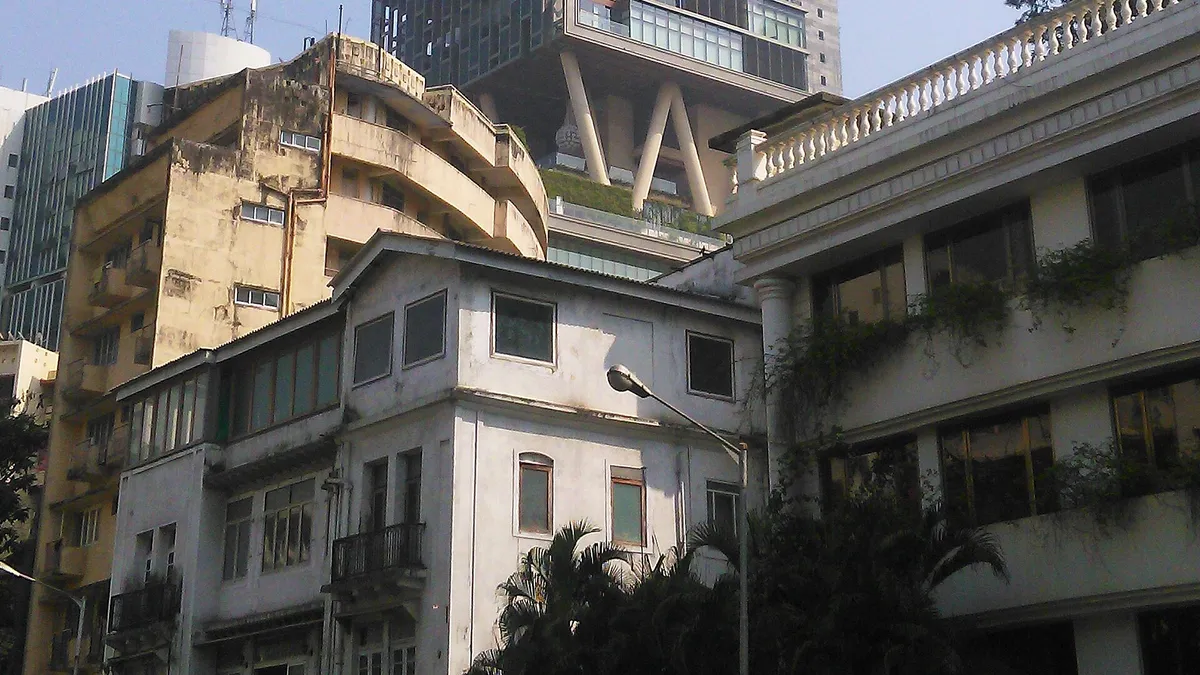
| Antilia, Mumbai | $1bn to $2bn | Estimated build cost. Never sold |
| Buckingham Palace | about $5bn | Notional valuation. Cannot be sold |
Only the top six are transactions. The bottom four are a newspaper’s figure, a developer’s ambition, a construction estimate and a valuation of a building that is not for sale.
What the register does and does not cover
Price Paid Data covers, in the Land Registry’s own words, all residential property sales in England and Wales that are sold for value and are lodged for registration.
The exclusions are specific and they are not about companies:
- sales that have not been lodged with HM Land Registry
- sales that were not for value
- right to buy sales at a discount
- transfers of a share in a property, for example between parties on divorce
- gifts, compulsory purchases, court orders, transfers to trustees
Corporate purchases are explicitly included. Category B is defined as covering transfers to non-private individuals, along with repossessions, buy-to-lets and properties classed as “Other”. It has been separately flagged since October 2013. Rutland Gate is a category B record: a corporate transfer, published, with the price attached.
The gap that does exist
Here is the mechanism that actually keeps a price off the register, and it is narrower than the folklore.
Price Paid Data records a price when a transfer of land is lodged for registration. If a house is held by a company, a buyer can instead purchase the shares in that company. The land never moves. The registered proprietor stays the same, because it is still the same company that owns the house. Nothing is lodged, and no price is created.
The register is not withholding anything. It was never given a number to record.
That is a real limitation and it is worth understanding, but it is a different claim from “you cannot check London prices”, which is false.
Providence House, and three numbers for one sale
The best current illustration is a Chelsea house reported in 2026 as the most expensive ever sold in Britain.
Press coverage has carried £265 million, £270 million and £275 million for what is described as the same transaction. As of 8 September 2026 no matching entry appears in Price Paid Data. The property is held through a limited liability partnership.
It may still register: the data lags completion by weeks or months, and an April 2026 sale could yet surface. Or the transaction may have been an interest transfer, in which case it never will.
Either way, at the moment, every published figure for the most expensive house ever sold in Britain traces to a newspaper, and the newspapers do not agree with each other by ten million pounds.
There is a footnote worth having on Rutland Gate too. The price held up perfectly. The buyer did not: reported in 2020 as one Chinese businessman, and in October 2022 as ultimately having been purchased on behalf of another. The register records what was paid, not who benefits.
The record that is more precise than the reporting
My favourite detail in this whole subject.
Ken Griffin’s penthouse at 220 Central Park South is universally reported as $238 million. The recorded deed figure is $239,958,219.
The public record is more exact than every publication describing it, by nearly two million dollars, and the rounding runs downwards. The usual assumption about property reporting, that the official number is the vague one, is backwards here.
American county deeds and documentary transfer taxes make the top of that market genuinely checkable. With two caveats. Furnishings are routinely bought in a separate, unrecorded contract, and recorded prices exclude commissions, so a deed can understate what the buyer actually spent.
And aggregation creeps in. The $225 million Naples record is three contiguous parcels added together. The largest single recorded parcel in that sale was $133 million.
Asking prices that became records
Two houses on most lists were never sold for the figures attached to them.
The One, in Bel Air, was promoted at $500 million, then listed at $295 million, then sold at a bankruptcy auction for $126 million, around $141 million with fees. It still appears on rankings at the half-billion figure, which nobody ever paid.
Chartwell in Beverly Hills asked $350 million and sold for $150 million.
The gap between an asking price and a sale is the same error that runs through the Beanie Baby market at a smaller scale, and through superyacht listings at a larger one. An asking price is a hope with a number on it.
What I make of it
I came to this expecting to write that the top of the property market is unverifiable, and the evidence says otherwise. The largest London sale in history is a free public record you can query in a browser. The largest American one is a deed that is more precise than the press coverage of it.
What the lists get wrong is not access. It is category. A registered transfer, a newspaper’s figure for a deal that may never register, a developer’s aspiration, a construction estimate and a valuation of a palace all end up in the same table, sorted by size, as though they were the same kind of fact.
My read is that the honest version of this ranking is short and boring and considerably more useful. Rutland Gate at £210 million and 220 Central Park South at $239,958,219 are things that provably happened. Almost everything above them on a typical list is something else wearing a price tag.
For more record prices, see the most expensive things ever sold.
🏆 Top Takeaways to Success
- 1
London's £210 million Rutland Gate sale is in HM Land Registry's public data at exactly that figure. The idea that top-end London prices are unknowable is wrong.
- 2
The gap is narrower and stranger: if a buyer acquires the company that owns a house rather than the house, no land changes hands and no price is ever registered.
- 3
220 Central Park South is recorded at $239,958,219. Almost every publication rounds it to $238 million.
- 4
Several entries on these lists were never sold at any price. Antilia was never on the market and Buckingham Palace cannot be.
Frequently Asked Questions
What is the most expensive house ever sold?+
It depends what counts as verified. The highest price recorded in a public register is £210,000,000 for 2-8a Rutland Gate in Knightsbridge, lodged with HM Land Registry on 21 April 2020. In the United States the highest deed-verified sale is $239,958,219 for a penthouse at 220 Central Park South in 2019. Higher figures circulate, but they come from newspapers rather than registers.
Can you look up what a house sold for in the UK?+
Usually yes. HM Land Registry publishes Price Paid Data free, covering residential sales in England and Wales lodged for registration. Contrary to a common claim, it does include purchases by companies: those are flagged as category B, which covers transfers to non-private individuals. Rutland Gate is a category B record.
So why do some big sales never appear?+
Because no land changes hands. If a house is owned by a company, a buyer can purchase the shares in that company instead of the property. The registered proprietor never changes, nothing is lodged with the registry, and no price is ever recorded. The register is not hiding the price. It was never given one.
Was there really a £275 million house sale in Chelsea?+
A sale was reported. The figure was not consistent: press coverage has carried £265 million, £270 million and £275 million for the same transaction, and no matching entry appears in Price Paid Data as of September 2026. It may yet register, since the data lags by weeks or months. For now the only source for any of those numbers is a newspaper.
Is Antilia the most expensive house in the world?+
It has never been sold, so it has no price. The $1 to $2 billion figure is an estimate of construction cost published by Forbes in 2014, and the New York Times reported $50 to $70 million in 2008. Buckingham Palace appears on the same lists at around $5 billion and cannot be sold at all.
Sources
- About the Price Paid Data, including what it excludes (GOV.UK)
- HM Land Registry Price Paid Data search service
- Ken Griffin pays a US record for the 220 Central Park South penthouse (The Real Deal)
- The One sells for $126m at auction after being hyped as America's priciest home (Inman)
- Chartwell breaks California records after asking $350m (Forbes)