Monty Williams Biography: Faith, Loss and Making an NBA Leader
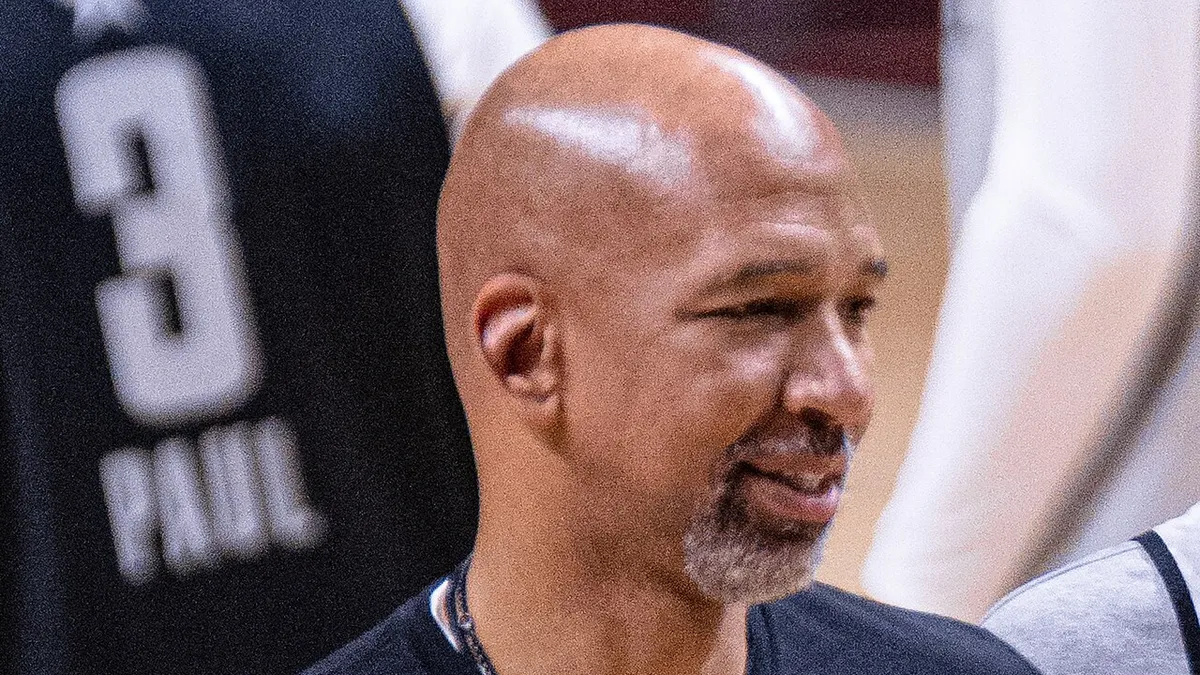
Everybody remembers the record contract and the Coach of the Year trophy. Almost nobody remembers the 19-year-old who was told his heart might not let him play at all.
Here’s what most people miss: the thing that nearly ended Monty Williams’ career before it started is the exact thing that made him the kind of leader players would run through a wall for.
The Myth vs. The Reality
The myth is tidy. Monty Williams, the calm, faith-driven leader, the coach franchises hand nine figures to, the man who says the right thing at the hardest moment. A steady hand engineered for the sideline.
That version is real. It’s also wildly incomplete.
Here’s the truth: Williams’ composure wasn’t handed to him. It was forged by a heart scare that nearly ended his playing days, a modest career spent mostly as a role player, and a personal tragedy so severe that most people would never recover from it. The unshakable calm everyone praises is the residue of surviving things that should have broken him.
Think about it. We love a story of natural-born leadership because it feels clean. If Williams was simply built to lead, then his grace under pressure is a gift, not a choice. But that’s not what happened. He became who he is by walking through fire more than once and deciding, each time, how to come out the other side.
Now, that steadiness didn’t appear from nowhere. It was shaped by a specific upbringing, a specific mentor, and a specific faith. Which raises the question: what makes a man this composed in a business this volatile?
The World That Made Monty Williams
To understand Williams, you have to understand where he started and the values that traveled with him.
He was born on October 8, 1971, in Fredericksburg, Virginia, and grew up around the Washington, D.C. area. He became a standout high-school basketball player and earned a scholarship to the University of Notre Dame, a school as known for its tradition and discipline as for its athletics. That environment, structured and rooted in faith, matched something already in him.
But the era mattered too. Williams came into the NBA in the mid-1990s, a physical, hard-nosed period of pro basketball where role players earned their keep with defense, toughness and professionalism rather than highlight reels. It was a league that rewarded exactly the traits he had in abundance.
Here’s the deal: Williams was never the biggest star in any room. From early on, his value was in how he carried himself, how he treated teammates, how he handled adversity. That reputation, more than any single skill, is what would eventually make him a coach.
But before any of the coaching, his own body nearly ended everything. And that crisis is where the real story starts.
The Crucible: Early Life and the Climb
The environment that shaped him
At Notre Dame, Williams got news that stops a young athlete cold: he had a heart condition.
Doctors sidelined him, and he sat out two full seasons, unsure whether he would ever play competitive basketball again. For a young man whose identity was wrapped in the game, that’s a brutal test: told the thing you love might be the thing that hurts you, then forced to wait and wonder.
Eventually he was cleared to return, and he came back to have a strong college career. But the scare changed him. He has spoken about how faith carried him through the uncertainty, and that period gave him a perspective most 20-year-old athletes never develop: an understanding that the game is a gift, not a guarantee.
You might be wondering: how does a player who lost two years to a heart scare last nearly a decade in the NBA? The answer is that Williams played the way survivors play, with gratitude and professionalism rather than entitlement. He wasn’t the most talented man on the floor. He was often the most reliable.
By the time his playing career wound down in 2003, after stops with the Knicks, Spurs, Nuggets, Magic and 76ers, he had spent years absorbing how great organizations were run. The role player was quietly becoming a coach.
The catalyst
The catalyst had a name: Gregg Popovich.
Williams played for Popovich in San Antonio, inside one of the most respected cultures in professional sports. He watched how the Spurs built trust, demanded accountability and treated players as whole people. That model became his blueprint. When Williams moved into coaching, first as an assistant in Portland, then as head coach of the New Orleans franchise at just 38, he carried the Popovich DNA with him.
Here’s the kicker: the same qualities that made Williams a marginal scorer made him an exceptional leader. Players trusted him because he had been in their shoes, and organizations trusted him because he was steady. That combination is rare, and it set him on a path from role player to one of the most sought-after coaches in the league.
The climb was steady. But the hardest chapter of his life was still ahead.
The Key Players
No life this meaningful is a solo act, and Williams was surrounded by people who shaped his path.
Start with Ingrid Williams, his first wife and the center of his family life. Together they raised five children, and she was, by every account, the foundation of his world away from basketball. Her presence, and later her loss, defines much of who Williams became publicly.
Then there’s Gregg Popovich, the coach and mentor whose culture Williams absorbed and carried into his own leadership. Their bond shows up in how Williams runs a locker room to this day.
There’s also Chris Paul, the star point guard who anchored Williams’ Phoenix Suns team. Their partnership drove the Suns to the 2021 NBA Finals and turned Williams into a coach the whole league wanted.
And there is Williams’ faith itself, which he has described as the throughline of his life, the thing that carried him through the heart scare, the tragedy and the professional turbulence alike.
Now: surround yourself with the right people and the right anchor, and you can survive almost anything. Williams was about to have that tested in the worst way imaginable.
The Turning Point
The pinnacle
The professional pinnacle came in Phoenix.
After years as an assistant and a front-office executive, Williams took over the Suns in 2019 and rebuilt a losing team into a contender. In 2021 he led them to the NBA Finals. The next season the Suns won a franchise-record 64 games, and Williams was named NBA Coach of the Year by a unanimous vote, the ultimate peer-and-media endorsement of his work.
That run made him the hottest name in coaching. When the Suns moved on from him in 2023, the Detroit Pistons handed him a record contract, the largest for a coach in NBA history at the time. On paper, he had reached the summit of his profession.
Here’s the truth: even that wasn’t the defining moment of his life. Because years earlier, he had faced something no trophy could touch.
The price
In 2016, Williams’ wife Ingrid was killed in a car crash.
At her memorial service, in front of a stunned public, Williams stood up and spoke not of anger but of forgiveness, asking people to pray for the family of the driver who had died in the same accident. The eulogy went around the world. In the darkest moment of his life, he modeled a grace almost no one could imagine summoning.
That is the price and the proof of who Williams is. The steadiness the NBA pays a premium for was earned in a hospital, a courtroom of grief, and a church. He carried on, kept coaching, eventually remarried and rebuilt his family, but he never pretended the loss didn’t reshape everything.
He had learned, the hardest way possible, that the job is never the point. The people are.
The Unvarnished Truth
Williams is widely admired, but honesty means acknowledging the professional bruises too.
His final head-coaching job, in Detroit, was a disaster on the court. The Pistons lost 68 games and endured a 28-game losing streak, one of the worst stretches in modern NBA history, and Williams was let go after a single season. Critics fairly asked whether the record contract had been a misjudgment by the franchise, and whether even a respected leader can overcome a roster that isn’t ready.
There’s also the honest question of ceiling. Williams’ teams have often been praised more for culture than for tactical innovation, and some observers argue his greatest strength, connection with players, hasn’t always translated into deep, sustained playoff success outside of that one Phoenix run.
Here’s what’s easy to miss: none of that undercuts the core of the man. The Detroit season was a bad fit, not a character flaw. Williams’ value was never really about a single win total. It was about the kind of environment he builds and the kind of person he is inside it.
So what does a life like this actually teach the rest of us? More than any trophy could.
What We Can Learn From Monty Williams
Navigating hard times
Williams’ real lesson isn’t about basketball. It’s about how to carry loss without letting it harden you.
He faced a career-threatening health scare as a young man, then the death of his wife at the height of his career, then a public professional failure, and through all of it he kept choosing grace over bitterness. He leaned on faith, he leaned on family, and he kept showing up for the people who depended on him.
In other words: the resilience wasn’t a personality trait he was lucky to have. It was a series of decisions he made under pressure most of us will never face.
The success blueprint
The blueprint here is about leading from character rather than credentials.
Williams was never the best player in the gym, but he became one of the most trusted men in his sport by being consistent, honest and steady when it counted. He turned a modest playing career into a coaching one by mastering the human side of the game.
Want the fuller picture of how that translated into wealth? The full net worth breakdown shows how a Coach of the Year run and a record Detroit deal built a $30 million fortune. And to see how he ranks among the sport’s biggest sideline earners, the richest coaches list puts it in context.
The deeper takeaway is about perspective. Williams proved that the way you handle your worst day matters more than the way you celebrate your best. If your identity is anchored in something bigger than results, you can survive losing the results.
Which brings us to the final reckoning on the man.
Final Verdict
Monty Williams is going to be remembered for the wrong number.
Most people will file him under “$78.5 million,” the record contract, the coach Detroit paid and fired. A smaller, smarter group will remember something harder and more valuable: a young man who nearly lost basketball to his own heart, built a career on character over talent, stood up at his wife’s memorial and spoke of forgiveness, and kept leading with grace through triumph and disaster alike.
Here’s the bottom line: the contracts made him wealthy. The way he carried loss made him respected. By modeling composure in moments that would flatten most people, he showed what leadership actually looks like when the cameras catch you at your lowest.
He is one of the most respected coaches of his era. He is also living proof that the trophies and the paychecks were never the measure of the man. And in the long run, that second story, the human one, is the version worth remembering.
Shop Monty Williams on Amazon
Books, audiobooks, merch and more, handpicked for fans.
As an Amazon Associate we earn from qualifying purchases.
Frequently Asked Questions
Where is Monty Williams from?+
Williams was born on October 8, 1971, in Fredericksburg, Virginia, and grew up in the Washington, D.C. area before starring in basketball and earning a scholarship to the University of Notre Dame.
Why did Monty Williams almost stop playing basketball?+
At Notre Dame, Williams was diagnosed with a heart condition and sat out two seasons before being cleared to return, a scare that reshaped how he viewed the game and his life.
What happened to Monty Williams' wife?+
His first wife, Ingrid Williams, was killed in a car crash in 2016. Williams' eulogy, in which he spoke about forgiveness, was widely shared and became one of the most remembered moments of his public life.
What has Monty Williams won as a coach?+
Williams was named NBA Coach of the Year in 2022 by a unanimous vote after leading the Phoenix Suns to a franchise-record 64 wins, a year after guiding them to the 2021 NBA Finals.
Did Monty Williams coach the Detroit Pistons?+
Yes. Williams was hired by the Detroit Pistons in 2023 on a record contract but was let go after a single, losing season, an ending that never dimmed his standing as a respected leader.
Want the money side of the story?
Read Monty Williams's Full Net Worth Breakdown →Shop Monty Williams on Amazon
Books, audiobooks, merch and more, handpicked for fans.
As an Amazon Associate we earn from qualifying purchases.