Mauricio Pochettino Biography: The Bielsa Disciple Chasing a Trophy
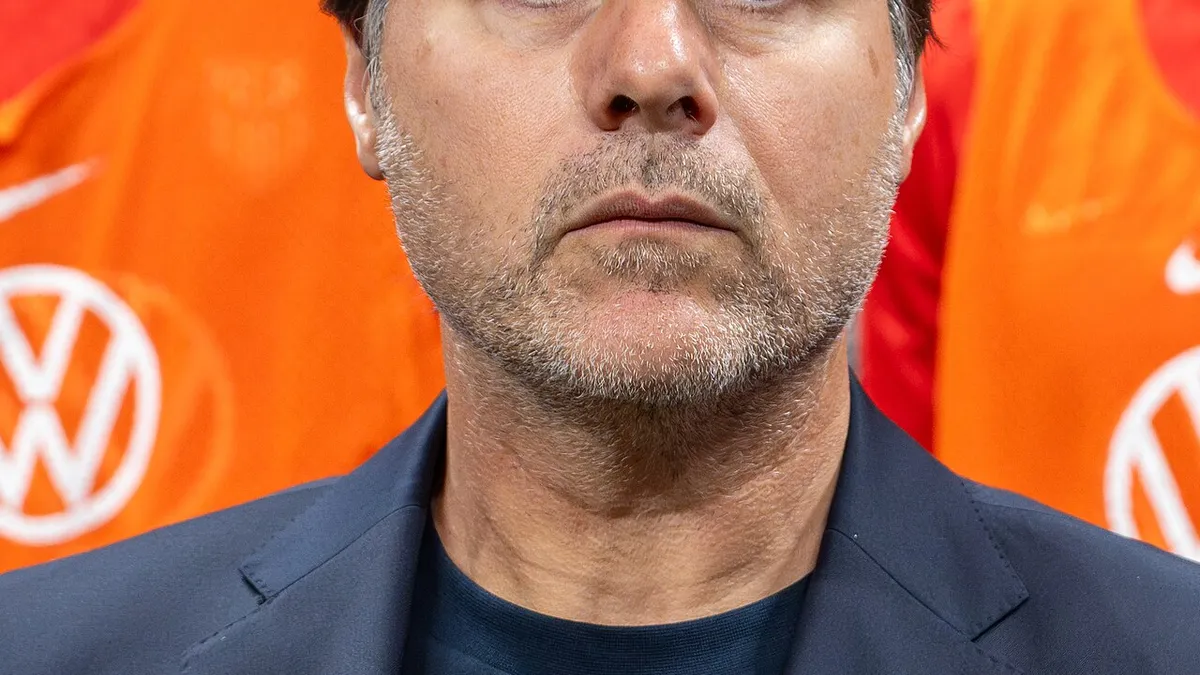
Everybody remembers the Champions League final and the beautiful Tottenham teams. Almost nobody remembers the farm boy in rural Argentina who was spotted, legend has it, by a coach knocking on his family’s door at night.
Here’s what most people miss: the thing that makes Mauricio Pochettino a great manager, an almost religious devotion to a way of playing, was planted in him as a teenager and has never once let go.
The Myth vs. The Reality
The myth is romantic. Mauricio Pochettino, the charismatic man-manager, the coach who builds beautiful, hard-running teams and turns boys into stars, beloved wherever he goes. A born leader of men.
That version is real. It’s also wildly incomplete.
Here’s the truth: for all the admiration, Pochettino’s career carries a stubborn asterisk. He has managed some of the biggest clubs in the world, reached a Champions League final, and developed elite talent, yet he has never won a major league title as a manager. The beloved coach is also, by the cold logic of the trophy room, a man still chasing his first great prize.
Think about it. We love a story of the noble overachiever because it feels pure, football played the right way, results be damned. And Pochettino genuinely is that. But the fuller truth is more complicated: he is a manager whose reputation has, at times, run ahead of his silverware, which makes both his enduring appeal and his critics easy to understand.
Now, that philosophy-first identity didn’t come from nowhere. It was planted by a specific mentor, in a specific country, in a specific young man hungry to escape a hard rural life. Which raises the question: what turns a farm boy into a disciple of one of football’s great thinkers?
The World That Made Mauricio Pochettino
To understand Pochettino, you have to understand the Argentina that raised him and the mentor who claimed him.
He was born on March 2, 1972, in Murphy, a tiny farming town in the Santa Fe province. His was a working, rural upbringing, and he has spoken about laboring on the land as a boy. Football was the escape, the dream that could carry a kid out of a small town and into a bigger life.
But one relationship mattered above all. As a teenager, he was scouted by Newell’s Old Boys, and there he fell under the spell of Marcelo Bielsa, the intense, philosophical coach whose ideas about pressing, intensity and total commitment would shape a whole generation of managers. For Pochettino, Bielsa wasn’t just a coach. He became a lifelong compass.
Here’s the deal: Bielsa’s influence gave Pochettino something many players never develop, a complete footballing worldview. He didn’t just learn to defend. He learned a philosophy of how the game should be played, and he carried it into every job he would ever hold.
But before management, he had a full playing career to live. And that career, spanning continents, is where his story widens.
The Crucible: Early Life and the Climb
The environment that shaped him
The making of Pochettino began with escape and with Bielsa.
Leaving a farming town for professional football is its own kind of crucible, and the young Pochettino grabbed the chance. Under Bielsa at Newell’s, he absorbed a demanding, all-consuming approach to the game, one that treated football as something close to a moral discipline. That intensity became part of him.
He grew into a tough, reliable central defender, the kind who wins with commitment and organization as much as talent. His ability took him abroad, first to Espanyol in Spain, where he became a beloved figure, then to Paris Saint-Germain in France, among other stops. He even represented Argentina at the 2002 World Cup, reaching the top of the sport as a player.
You might be wondering: how does a defender from a farm town end up managing PSG and Chelsea? The answer is that Pochettino was always a student of the game, absorbing Bielsa’s lessons and adding his own gift for connecting with people. The player was quietly preparing to become a coach.
By the time his playing days ended, he had a philosophy, a network across multiple countries, and a growing certainty about how he wanted his teams to play.
The catalyst
The catalyst was Espanyol, and then Southampton.
Pochettino began his management career back at Espanyol, the club where he’d been adored as a player, steadying a side in trouble. That earned him a move to England and Southampton, where his energetic, attacking football and his talent for improving young players made him one of the most talked-about young coaches in the Premier League.
Here’s the kicker: Pochettino’s real gift revealed itself in those years, the ability to take unheralded players and make them significantly better. He didn’t need superstars. He made them. That reputation, more than any trophy, is what would define his career and attract the biggest clubs.
From Southampton, the move that changed everything was waiting just up the road, in North London.
The Key Players
No career this influential is a solo act, and Pochettino’s path was shaped by a handful of key figures.
Start with Marcelo Bielsa, the mentor whose philosophy became Pochettino’s foundation. Almost everything about how a Pochettino team plays traces back to those formative years under Bielsa at Newell’s.
Then there’s Daniel Levy, the Tottenham chairman who backed Pochettino through five years of building, giving him the time and trust to construct one of the most admired teams in Europe. Their partnership defined the best chapter of his career.
There’s also Harry Kane, the striker Pochettino helped develop into a world-class goalscorer, the human proof of his gift for elevating talent. Kane’s rise is inseparable from Pochettino’s Tottenham story.
And there is the shadow of the trophy itself, the prize that has eluded him, a presence in his career precisely because it’s absent, shaping how the football world judges everything he’s built.
Now: absorb a great philosophy, earn the trust of the right people, and develop world-class talent, and you can become one of the most respected coaches alive. Pochettino did all of it. The one thing missing would define the debate around him.
The Turning Point
The pinnacle
The pinnacle came at Tottenham Hotspur, and it peaked in 2019.
Over five years, Pochettino transformed Spurs from a club stuck in the pack into a genuine European power. His teams pressed, ran and played with a fearlessness that thrilled neutrals, and he did it while developing young players and operating on a tighter budget than his rivals. In 2019 he led Tottenham all the way to the Champions League final, the biggest match in club football.
It was the fullest expression of everything Bielsa had planted in him decades earlier. For a manager who prized how the game is played, reaching a European final with an overachieving, home-grown team was a kind of vindication.
Here’s the truth: they lost that final, and it pointed straight at the gap that would follow him everywhere.
The price
Because for all the beautiful football, the trophies never came.
Pochettino’s Tottenham lost the 2019 final and, across five years, never won a major title. He was dismissed later that year. He then took charge of Paris Saint-Germain, a club stacked with superstars, and won domestic honors but not the Champions League the ownership craved. A single season at Chelsea followed, again without a defining trophy.
The pattern became the story. Pochettino is a manager the biggest clubs want, and yet the ultimate prizes keep slipping away. Critics point to it as the missing line on an otherwise glittering résumé, and it’s a fair, if incomplete, criticism.
He had built beauty and reputation and development, everything but the silverware that history remembers most.
The Unvarnished Truth
Pochettino is deeply admired, but honesty means naming the gap too.
The absence of a major league title is real. For a coach entrusted with clubs as ambitious as PSG and Chelsea, delivering style and progress but not trophies invites legitimate questions about whether he can get a squad over the final line. His defenders argue he has often worked with unbalanced or transitional squads. His critics counter that great managers win anyway.
There’s also the recurring pattern of relatively short tenures at the biggest clubs after his long Tottenham stay. A single season at Chelsea, a brief spell at PSG, these raise fair questions about fit and finish at the very top, even as his reputation as a builder and developer stays intact.
Here’s what’s easy to miss: the missing trophy doesn’t erase the influence. Pochettino has shaped players, styles and clubs in ways that outlast any single cup. His fingerprints are on a generation of talent.
So what does a career like this actually teach the rest of us? More than the empty spot in the trophy cabinet suggests.
What We Can Learn From Mauricio Pochettino
Navigating hard times
Pochettino’s real lesson is about worth that isn’t measured in trophies.
He has spent a career being told, in effect, that he hasn’t won the big one, and he has kept building, kept developing players, kept earning the trust of enormous clubs and now a World Cup host nation. He didn’t let the missing prize define his sense of his own work.
In other words: the scoreboard isn’t the only measure of value. Sometimes the impact you have on the people you lead outlasts the medals you didn’t win.
The success blueprint
The blueprint here is about mastering a craft and making people better.
Pochettino took Bielsa’s philosophy and his own gift for man-management and turned unheralded players into stars, again and again. That skill, developing talent and building belief, made him one of the most coveted coaches in the world even without silverware to point to.
Want the fuller picture of how that translated into wealth? The full net worth breakdown shows how a playing career and a run of elite jobs built a $30 million fortune. And to see how he ranks among the game’s biggest earners in the dugout, the richest coaches list puts it in context.
The deeper takeaway is about legacy. Pochettino proves that you can leave a profound mark on your field without collecting every prize, and that the people you develop can become a legacy more lasting than any trophy.
Which brings us to the final reckoning on the man.
Final Verdict
Mauricio Pochettino is going to be remembered for the wrong absence.
Most people will file him under “never won the big one,” the brilliant coach with the empty trophy cabinet. A smaller, smarter group will remember something harder and more valuable: a farm boy from rural Argentina who absorbed a great football philosophy, built beautiful and fearless teams, developed world-class stars, and earned the trust of the biggest clubs and a World Cup host without ever leaning on silverware to prove his worth.
Here’s the bottom line: the trophies never came, and it almost doesn’t matter. By making players and teams better wherever he went, Pochettino built a reputation that keeps putting him in the game’s most important seats, right up to leading the United States on home soil.
He is one of the most respected managers of his generation. He is also living proof that influence and development can outweigh a bare trophy cabinet. And in the long run, that second story, the builder’s one, is the version worth remembering.
Shop Mauricio Pochettino on Amazon
Books, audiobooks, merch and more, handpicked for fans.
As an Amazon Associate we earn from qualifying purchases.
Frequently Asked Questions
Where is Mauricio Pochettino from?+
Pochettino was born on March 2, 1972, in Murphy, a small farming town in Argentina's Santa Fe province, and grew up working the land before football took him to Newell's Old Boys.
Who discovered Mauricio Pochettino?+
As a teenager he was scouted for Newell's Old Boys, where he came under the influence of Marcelo Bielsa, the coach who shaped his football philosophy for life.
What is Mauricio Pochettino best known for?+
He is best known for his five transformative years at Tottenham Hotspur, where he developed young stars and reached the 2019 Champions League final, becoming one of the most admired managers in the game.
Which clubs has Mauricio Pochettino managed?+
Pochettino has managed Espanyol, Southampton, Tottenham Hotspur, Paris Saint-Germain and Chelsea, before taking charge of the United States men's national team.
Is Mauricio Pochettino the USMNT coach?+
Yes. Pochettino became head coach of the United States men's national team in 2024, tasked with leading the host nation into the 2026 World Cup as the best-paid coach in the program's history.
Want the money side of the story?
Read Mauricio Pochettino's Full Net Worth Breakdown →Shop Mauricio Pochettino on Amazon
Books, audiobooks, merch and more, handpicked for fans.
As an Amazon Associate we earn from qualifying purchases.