Martina Navratilova Biography: The Defector Who Rewired Tennis
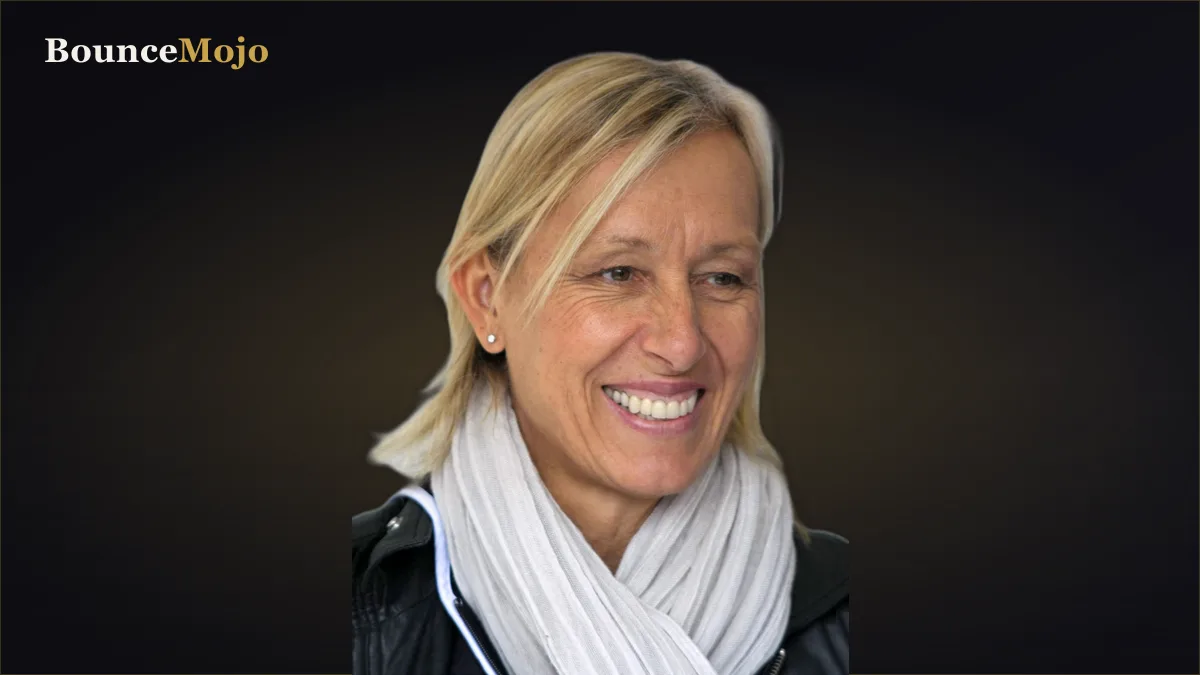
Most people remember Martina Navratilova as one of the greatest players who ever lived. Fewer remember that she was once an 18-year-old walking away from her entire country with nothing guaranteed on the other side.
Here’s what most fans miss: the thing that made her a legend on court was the same thing that made her a target off it, and she refused to hide either one.
The Myth vs. The Reality
The myth is that Martina Navratilova was simply a gifted athlete who won a lot of matches.
Here’s the truth: she was an immigrant, a defector, and an outsider who beat an entire establishment while living openly at a time when that alone could end a career.
She did not just win 18 Grand Slam singles titles. She rebuilt what a female tennis player was supposed to be, treating fitness, nutrition, and strength training as serious weapons decades before it became standard. The public saw a champion. The reality was a woman fighting on several fronts at once, and winning on nearly all of them.
You might be wondering: what kind of world produced someone that stubborn?
The World That Made Martina Navratilova
Navratilova grew up behind the Iron Curtain, in a Czechoslovakia controlled by a communist government that watched, restricted, and rewarded conformity.
Sport was one of the few routes out. The state saw athletes as assets, and talented players trained inside a system that offered opportunity but demanded obedience. For a fiercely independent girl with an American-style game and American dreams, that tension was always going to snap.
Now: the tennis world she was entering was also changing. Billie Jean King and a wave of pioneers were fighting for equal pay and respect in a sport still run largely by men. Navratilova arrived just as women’s tennis was becoming a real business and a real battleground.
That collision of a controlling homeland and a rising sport set the stage for the boldest decision of her young life.
The Crucible: Early Life and the Climb
The Environment That Shaped Her
She was born Martina Subertova in Prague in 1956 and raised in the town of Revnice. Her parents divorced when she was young, and her mother remarried Miroslav Navratil, whose surname she took in its feminine form.
Here’s the deal: her stepfather was also her first coach. He drilled her on a court near their home and saw something rare, a left-hander with power, instinct, and an appetite for the net game. By her teens she was Czechoslovakia’s brightest tennis prospect.
But the more she traveled to Western tournaments, the more she saw a different life. Freedom to eat, train, and compete on her own terms. Freedom to speak, to be herself, to chase greatness without a government looking over her shoulder. The gap between what she wanted and what her country allowed grew impossible to ignore.
You might be wondering: how does a teenager even weigh a choice that big? For Navratilova, tennis was the door. Her stepfather had built her into a champion, but the system that produced her also tried to control her. Every trip abroad made the cage feel smaller. By 1975 she had decided that a life of freedom was worth losing everything else, even her homeland and her family.
The Catalyst
In 1975, at just 18, Navratilova defected during the US Open in New York.
Think about it: a teenager walked into US immigration offices and asked for asylum, cutting herself off from her homeland and, for years, from her family. There was no safety net and no guarantee she would ever be a champion.
The Czech government stripped her citizenship and treated her as a traitor. She could not go home. She could not see her family. She was suddenly free and completely alone in a foreign country, an 18-year-old carrying the weight of a decision most adults would never dare make.
Here’s the deal: freedom came with a price she paid in loneliness. For years she was cut off from the people she loved most, and she struggled early on with the pressures of American life, including her weight and her confidence. The homesick teenager had to grow up fast, in public, with a racket as her only reliable anchor. What she did next turned that gamble into history.
The Key Players
No story of Navratilova is complete without Chris Evert.
The two were opposites in every way. Evert was the cool, controlled baseliner and America’s sweetheart. Navratilova was the emotional, attacking immigrant who wore her intensity openly. They met 80 times over 16 years, and their rivalry became the heartbeat of women’s tennis.
Here’s the kicker: they also became genuine friends. Evert supported her through personal battles, and the two remained close for life, proof that the fiercest competition can build the deepest bonds.
Billie Jean King, meanwhile, served as a mentor and model, showing Navratilova how to use fame as a platform. King had already fought the battles for equal pay and equal respect, and she showed the young Czech that a tennis career could be a vehicle for something bigger than trophies.
There was also Nancy Lieberman, the basketball star who helped transform Navratilova’s training and mindset in the early 1980s, pushing her toward the extreme fitness regimen that made her nearly unbeatable. And her longtime doubles partner Pam Shriver helped her build one of the most dominant doubles records the sport has ever seen, including a run of 109 consecutive match wins that remains one of the great streaks in the sport.
Those relationships shaped her. But the triumph they helped fuel came at a real cost.
The Turning Point
The Pinnacle
The early 1980s were Navratilova at her absolute peak. She reworked her body and her game with trainers and nutritionists, and the results were staggering. In 1983 she lost only one match all year. In 1984 she reeled off a record 74-match winning streak.
She won Wimbledon nine times, a tournament record. Across singles, doubles, and mixed, she collected 59 major titles, a haul that still ranks among the greatest in tennis history. For a stretch, she was simply unbeatable.
Here’s the truth about that dominance: it was manufactured through effort as much as talent. She partnered with basketball star Nancy Lieberman to overhaul her fitness, hired specialists to sharpen every part of her game, and treated her body like a professional project years before that was normal. The result was a level of athletic preparation the women’s tour had never seen, and it turned an already great player into a force of nature. Opponents were not just beaten. They were outworked before the match even began.
The Price
But here’s what it cost. She was an outsider who won, and that made her a lightning rod. Crowds often favored Evert. Some fans and sponsors kept their distance from the intense, openly gay champion who did not fit the marketable mold of the era.
She won the matches and lost some of the love, and she carried that quietly while dominating anyway.
The Unvarnished Truth
Navratilova was never smooth or packaged. She was emotional on court, outspoken off it, and unwilling to soften herself for comfort.
She struggled early with her weight and her nerves before turning her fitness into a strength. Her personal life played out publicly in a way few athletes had ever allowed. She made mistakes, spoke bluntly, and sometimes drew criticism for it.
Now: that refusal to hide is exactly what made her matter. In an era of careful public images, she was messily, defiantly herself. And that honesty would soon put her at the center of bigger fights than tennis.
Controversies and Criticisms
Coming out as gay in 1981 was a defining and costly act. She reportedly lost endorsement opportunities that a champion of her stature should have commanded, sponsors wary of associating with an openly gay athlete in that climate.
In later years, her outspoken political and social commentary drew fierce debate. Her views on issues within sport and society sometimes put her at odds with old allies and new audiences alike.
You might be wondering: did she regret speaking up? By every account, no. She accepted the cost of honesty as the price of living freely, the same trade she made when she walked away from her country. That through line is what her whole story teaches.
Words That Reveal Her
Navratilova’s own words cut straight to who she is.
“The moment of victory is much too short to live for that and nothing else,” she once said. Read it again. This is a woman with 59 Grand Slam titles telling you that the trophies were never really the point. The winning mattered, but the pursuit, the discipline, and the life around it mattered more.
Then there is her defiance: “Labels are for filing. Labels are for clothing. Labels are not for people.” That line captures her entire off-court fight. She refused to let anyone, a government, a sponsor, or a critic, reduce her to a category. She insisted on being seen whole.
Here’s the truth in one more line: “I’m going to be someone that people can look up to.” She said it early, and she spent decades making it real, not by hiding her flaws but by owning her choices in public. Her words, like her game, were direct, fearless, and impossible to ignore. That honesty is exactly what her story hands the rest of us.
What We Can Learn From Martina Navratilova
Navigating Hard Times
She lost her country, her citizenship, and for years her family, and she built a life anyway. The lesson is durability. When the ground gives way, you keep moving toward the life you actually want.
She also turned her outsider status into fuel. Being underestimated and unwelcomed did not shrink her. It sharpened her. Crowds often cheered for Evert. Some sponsors kept their distance. Navratilova answered by getting better, fitter, and more dominant, letting her results speak where the applause would not.
Later in life, she faced a different kind of hard time. She was diagnosed with breast cancer in 2010 and treated it publicly, using her own scare to push others toward early screening. She turned a frightening diagnosis into advocacy, the same instinct that had defined her whole life.
The Success Blueprint
Here’s the blueprint: she out-worked her era. Navratilova treated tennis like a full athletic profession, strength, diet, recovery, and strategy, when rivals still treated it as pure talent. She invented an edge, then used it for a decade.
She also built for the long game, moving into broadcasting, writing, and advocacy so her income and influence would outlast her serve. She never let herself be defined by a single chapter. Even as a player, she kept reinventing, winning her final Grand Slam title, a mixed-doubles crown at the US Open, at the age of 49, decades after her first. That refusal to accept an expiration date is the heart of her blueprint.
The final lesson is the simplest and the hardest.
Final Verdict
Martina Navratilova is one of the greatest tennis players who ever lived, with a trophy case few will ever approach. But her real legacy is bigger than the game.
She showed that you can win at the highest level without hiding who you are, and that living honestly is worth whatever it costs. She changed how female athletes train, how they speak, and what they are allowed to be.
For anyone who wants the full picture of the courage behind the career, her 1985 autobiography Martina is the place to start, a candid account of defection, dominance, and the choice to live in the open. The champion won the matches. The woman won something larger.
Shop Martina Navratilova on Amazon
Books, audiobooks, merch and more, handpicked for fans.
As an Amazon Associate we earn from qualifying purchases.
Frequently Asked Questions
Where was Martina Navratilova born?+
She was born in Prague, Czechoslovakia, on October 18, 1956, and grew up in the town of Revnice, where her stepfather first coached her in tennis.
Why did Martina Navratilova defect to the United States?+
In 1975, at age 18, she defected during the US Open, seeking the freedom to train, travel, and compete without state control. She became a US citizen in 1981 and later reclaimed Czech citizenship as well.
What made Martina Navratilova so dominant?+
She revolutionized women's tennis with a serve-and-volley game backed by rigorous fitness, diet, and cross-training, an approach few female players had ever taken so seriously. She turned athletic conditioning into a competitive weapon.
What was her rivalry with Chris Evert like?+
The two met 80 times across 16 years, one of the greatest rivalries in sports. They pushed each other to greatness and, remarkably, became close friends off the court.
Did Martina Navratilova come out publicly?+
Yes. She came out as gay in 1981, one of the first major athletes to do so, and became a lifelong advocate for LGBTQ rights, a stance that cost her endorsements but defined her legacy.
Want the money side of the story?
Read Martina Navratilova's Full Net Worth Breakdown →Shop Martina Navratilova on Amazon
Books, audiobooks, merch and more, handpicked for fans.
As an Amazon Associate we earn from qualifying purchases.