Billie Jean King Biography: The Champion Who Changed the Money
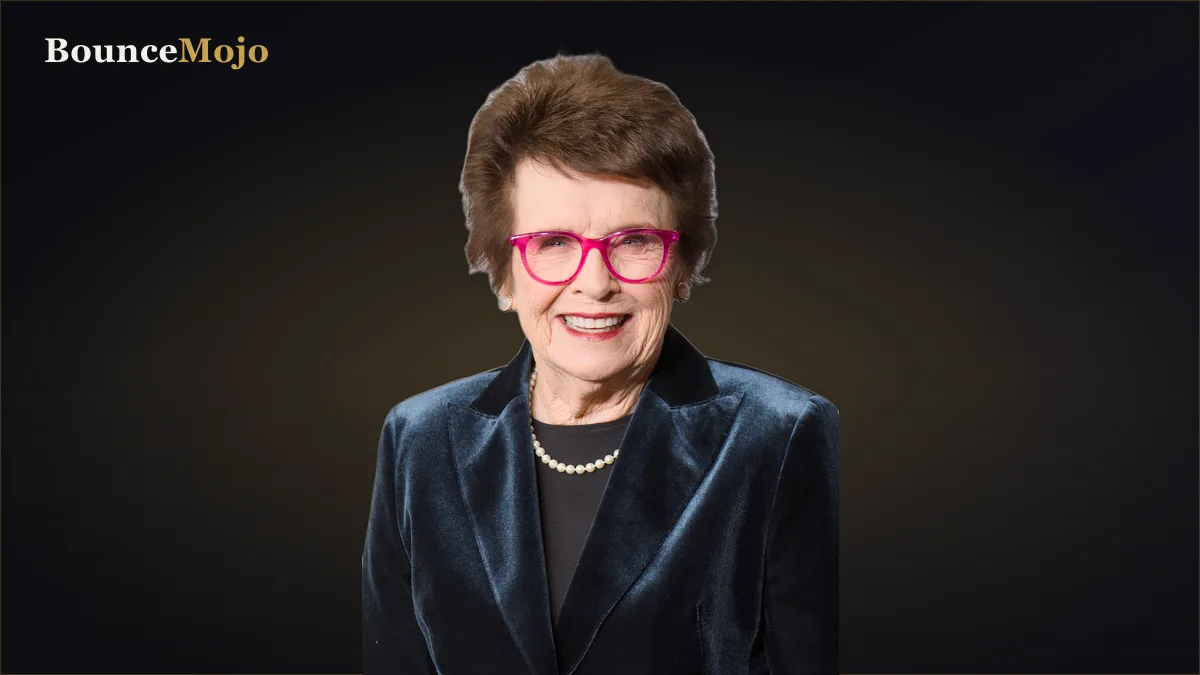
Most people remember Billie Jean King for one match against a 55-year-old man. The full story is far bigger than a single night of television.
Here’s what most people miss: the woman who won 39 Grand Slam titles spent her life fighting a battle that had nothing to do with trophies, and that fight is why women’s tennis pays what it pays today.
The Myth vs. The Reality
The myth is a single image: Billie Jean King beating Bobby Riggs in a circus of an exhibition. A fun piece of 1970s nostalgia, roll credits.
The reality is a revolution.
Here’s the deal: that one match was the smallest part of what King did. She was one of the greatest players of all time, with 39 major titles, but her real legacy was reshaping the economics and politics of an entire sport. She fought so that the women who came after her would be paid, respected, and taken seriously.
And the “just an exhibition” narrative? It misses that King risked her career and reputation on that court, knowing a loss would set women’s sports back years.
You might be wondering: how does a firefighter’s daughter from California end up changing a global game? To understand that, you have to understand where she came from.
The World That Made Billie Jean King
King was born Billie Jean Moffitt in 1943 in Long Beach, California, into a modest, athletic family.
Tennis in that era was a country-club sport, genteel, amateur in spirit, and deeply unequal. Women earned a fraction of what men did, sometimes a tenth, and the idea of professional women’s tennis was barely taken seriously.
Now: into that world walked a talented, working-class girl who could not afford the fancy clubs and quickly noticed that the whole system was tilted against players like her. She would grow up determined not just to win, but to change the rules.
Think about it: a sport built on privilege, entered by a girl with none of it, who decided the injustice itself was the real opponent. That collision is the backdrop for everything King became.
The Crucible: Early Life and the Climb
The Environment That Shaped Her
King came from a sporty, disciplined household. Her father was a firefighter, her mother sold cosmetics, and her younger brother, Randy Moffitt, went on to pitch in Major League Baseball. Money was tight, and King often mentioned how she had to save to afford a racket.
She learned tennis on public courts, not private clubs, and she felt the class divide early. One formative moment she has recounted came when she was excluded from a group photo for wearing shorts instead of a tennis skirt, a small snub that stuck with her.
Let that land. The awareness of unfairness was baked into her from the very start.
Here’s the truth: the activist and the athlete grew up together. King never separated winning from the fight for a fairer game.
The Catalyst
Her talent took her to the top of the amateur game and then into the professional era as it was just beginning. She won her first Wimbledon in the 1960s and rose to world No. 1, becoming one of the dominant players of her time.
But the money told a different story. As King kept winning, she saw that even champions among the women earned a pittance compared with the men.
It gets better, but only after a stand. In 1970, King and a group of players broke away to form their own tour, risking their standing to demand fair pay. That rebellion set the stage for the most famous match of her life.
The Key Players
No champion rises alone, and King’s story turns on a handful of crucial figures.
Bobby Riggs. The former champion and self-styled hustler who challenged King to the Battle of the Sexes in 1973, claiming a woman could never beat a man. He became the foil for her defining moment.
The Original Nine. The group of players who joined King in 1970 to launch a breakaway women’s tour, risking everything to build a professional future for the women’s game.
Ilana Kloss. The former professional player who became King’s life partner and long-term business partner, central to her ventures and ownership stakes.
Larry King. Her former husband, who supported and helped promote her early career and business efforts before their eventual divorce.
By the way, every one of these relationships points at the same theme: a woman who turned personal alliances into a movement. That movement crested on one September night in the Houston Astrodome.
The Turning Point
The Pinnacle
King’s peak was both athletic and cultural.
On the court, she piled up 39 Grand Slam titles across singles, doubles, and mixed doubles. Off it, her defining moment came in 1973, when she beat 55-year-old Bobby Riggs in straight sets in front of a crowd of 30,000 and an estimated 90 million television viewers worldwide. That same year, she pushed the US Open to become the first major to pay men and women equally, and she helped found the WTA. As her own net worth story explains, that equal-pay fight reshaped the money for everyone who followed.
Thirty-nine majors, a landmark victory, and a structural change that outlasted every trophy.
The Price
Here’s the kicker: her advocacy came at enormous personal cost.
King competed in an era of tiny prize money, so despite her dominance she never earned close to what modern players do. She spent time, money, and energy on the fight for equality that she could have spent purely on herself. And she carried a private struggle that the public spotlight would soon expose.
The pinnacle came with a heavy price. And what happened when her private life was forced into the open would test her more than any match.
The Unvarnished Truth
King’s most human chapter came not from the court but from a painful public reckoning.
In 1981, King was outed during a lawsuit, becoming one of the first prominent athletes publicly identified as gay. At the time, it cost her most of her endorsements almost overnight, and she later spoke about the fear and shame she carried in an era that was deeply hostile to LGBTQ people.
Now: none of that diminishes her. It reveals the courage it took to keep going. King eventually embraced her identity openly and became a leading advocate, but she has been honest that the journey was frightening and lonely.
The most honest thing about King is that she fought public battles for others while wrestling privately with fears she could not yet share. She was human, vulnerable, and brave all at once.
Controversies and Criticisms
King’s controversies were, in hindsight, mostly moments when she was ahead of her time.
The breakaway tour. When King helped lead the 1970 split to form a women’s tour, the tennis establishment saw it as a threat and pushed back hard. History proved her right.
The 1981 lawsuit. Being outed created a media firestorm and cost her sponsorships, an episode that reflected the prejudice of the era far more than any failing of hers.
Political outspokenness. King’s willingness to speak on equality, pay, and social issues drew criticism from those who felt athletes should stay quiet. She never did.
The Riggs spectacle. Some purists dismissed the Battle of the Sexes as a gimmick beneath a champion of her caliber. King understood its symbolic power better than the critics did.
What We Can Learn From Billie Jean King
Navigating Hard Times
The first lesson is about courage under pressure: you can be terrified and still do the right thing. King lost her endorsements and faced public hostility, yet she kept competing and advocating.
But here’s the truth her life makes plain: the fights that cost you the most in the moment can define your legacy for the better. King sacrificed short-term security for a cause, and history rewarded her for it.
The Success Blueprint
If you want the replicable part, it’s this: King won on the court and then used that platform to change the system around it. She did not just play the game, she rebuilt its economics.
That’s transferable. The lesson isn’t only “be excellent.” It’s “use your excellence as leverage to fix what’s broken.” That mindset made her an icon and, through ownership and advocacy, one of the most influential figures on our richest tennis players ranking, even though modern players earn far more.
Becoming Better
The deepest lesson is about legacy over ego. King measured success not by her own bank balance, which stayed modest by today’s standards, but by the doors she opened for others.
In other words, she understood that being a champion meant leaving the sport fairer than she found it. The equal prize money that today’s stars take for granted is, in large part, her gift.
Final Verdict
Billie Jean King is one of the most important figures in the history of sport, and “important” fits better than “great,” because greatness alone cannot capture what she did. She won 39 majors, beat Bobby Riggs before the world, and forced an entire industry to start paying women fairly.
And here’s the twist that reframes everything: the woman remembered for one exhibition match was, in truth, the architect of modern women’s tennis. The full picture of the fortune she built, through ownership and influence rather than prize money, lives in her net worth breakdown, and it fits her perfectly: a champion who earned less than she deserved on court, then spent her life making sure others would earn what they were owed.
For readers who want the story in her own words, her 2021 memoir All In lays it out with unflinching honesty. King never needed to be the richest player of her generation. She just needed to change the game for everyone who came after, which is exactly why her name still stands above the sport she helped remake.
Shop Billie Jean King on Amazon
Books, audiobooks, merch and more, handpicked for fans.
As an Amazon Associate we earn from qualifying purchases.
Frequently Asked Questions
Where did Billie Jean King grow up?+
King grew up in Long Beach, California, in a working-class family. Her father was a firefighter and her brother, Randy Moffitt, became a Major League Baseball pitcher.
What was the Battle of the Sexes?+
In 1973, King beat 55-year-old former champion Bobby Riggs in a nationally televised match watched by an estimated 90 million people, a landmark moment for women's sports.
How many Grand Slam titles did Billie Jean King win?+
King won 39 Grand Slam titles across singles, doubles, and mixed doubles, including 12 major singles titles.
What did Billie Jean King do for equal pay?+
King led the push for equal prize money and helped found the women's professional tour. In 1973 the US Open became the first major to pay men and women equally, largely thanks to her efforts.
Is Billie Jean King married?+
Yes. King is married to Ilana Kloss, a former professional tennis player and her longtime business partner. King publicly came out as gay in 1981.
Want the money side of the story?
Read Billie Jean King's Full Net Worth Breakdown →Shop Billie Jean King on Amazon
Books, audiobooks, merch and more, handpicked for fans.
As an Amazon Associate we earn from qualifying purchases.