Bill Parcells Biography: The Big Tuna Who Rebuilt the NFL's Losers
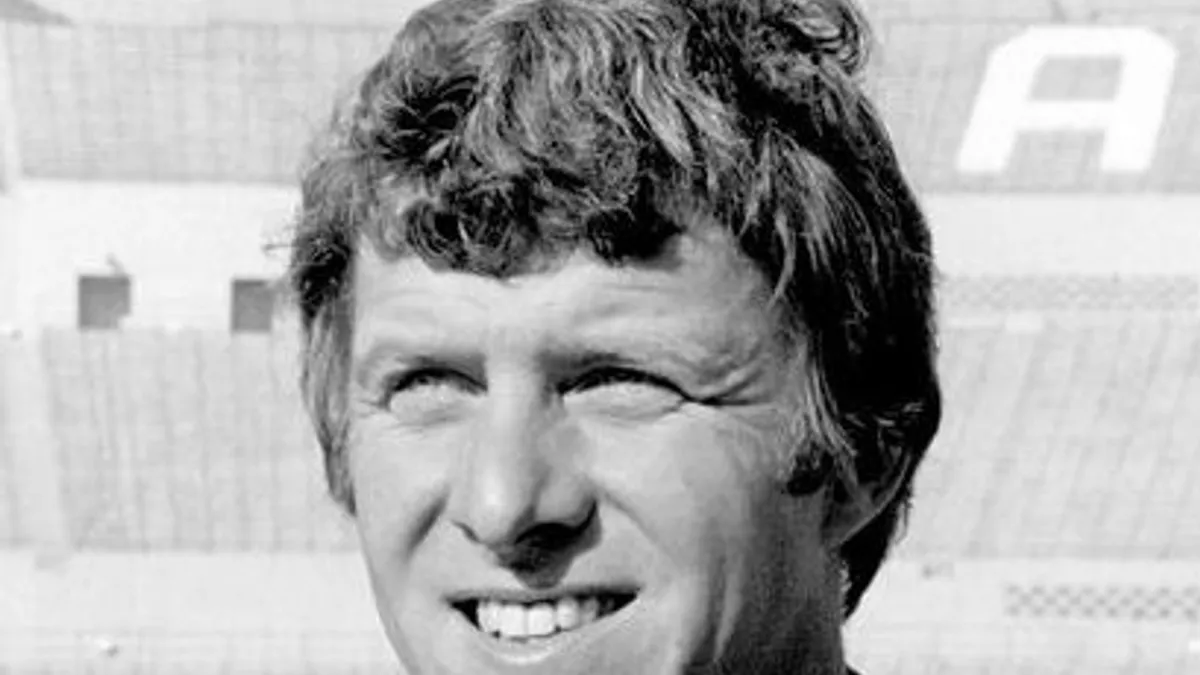
Everybody remembers the two Lombardi Trophies. Almost nobody remembers that Bill Parcells nearly quit coaching for good before he ever won a thing.
Here’s what most people miss: the man who became the NFL’s greatest fixer once walked away from the profession entirely, convinced it wasn’t worth the toll on his family.
The Myth vs. The Reality
The myth is a monument. Bill Parcells, the gruff genius, the man who could walk into any losing locker room and, through sheer force of will and blistering honesty, turn it into a winner. Two Super Bowls. Four franchises revived. A Hall of Fame bust and a coaching tree that reshaped the league.
That version is real. It’s also missing the doubt underneath it.
Here’s the truth: the “born leader” story skips the part where Parcells nearly gave up. Before he was a champion, he was an unknown assistant who quit coaching for a business job because the constant moving and the strain on his family had worn him down. The unshakable “Big Tuna” was, for a moment, a man who thought he was finished.
Think about it. We love a story of destined greatness because it makes success look inevitable. But Parcells’ path was full of doubt and near-misses. He wasn’t handed a legend’s career. He clawed his way to it after almost throwing it away.
Now, the personality that eventually made him great was forged long before the NFL. It came from a specific place, a specific family, and a specific hard-nosed corner of New Jersey. Which raises the question: what made a man this blunt and this driven?
The World That Made Bill Parcells
To understand Parcells, you have to understand the tough, working New Jersey world he came from.
He was born Duane Charles Parcells on August 22, 1941, in Englewood and raised in the northern New Jersey suburbs, in the shadow of New York City. His father was a lawyer and former college athlete; his mother was a formidable, quick-tongued woman from whom Parcells inherited much of his sharp, sarcastic edge. On paper, a solid, competitive household.
But the environment mattered too. This was a region and an era that prized toughness, straight talk and accountability. Parcells grew up around people who said what they meant and expected you to handle it, and that blunt culture became the core of how he would one day lead men.
Here’s the deal: young Parcells was a gifted all-around athlete, good enough to play college football as a linebacker at Wichita State and even get drafted by the Detroit Lions. But he never played a down in the NFL. His future was never going to be as a player. It was going to be as the man in charge.
But the road to that role nearly ended before it began. And that near-miss is where the real story starts.
The Crucible: Early Life and the Climb
The environment that shaped him
Two things defined the young coaching Parcells: a talent for leadership and a punishing lifestyle.
He started at the bottom, grinding through college assistant jobs at places like Hastings, Wichita State, Army, Florida State, Vanderbilt and Texas Tech. Each stop meant another move, another uprooting of his wife and three daughters, another year of long hours for modest pay. He was building a reputation as a brilliant defensive mind, but the cost was mounting.
By the late 1970s, the strain reached a breaking point. Parcells actually left coaching to take a job in the business world, in real estate. He had a family to think about, and the nomadic grind of the profession seemed like too much to ask of them.
You might be wondering: how does a man who quit the sport become a two-time champion? The answer is that he couldn’t stay away. The business job left him miserable and restless. Coaching was in his blood, and after a short exile, he returned, this time determined to reach the top.
That return led him, in 1979, toward the New York Giants. The comeback was about to change football history.
The catalyst
The catalyst was the New York Giants, and a huge risk they took on him.
Parcells joined the Giants as defensive coordinator in 1981 and built one of the most fearsome defenses in football, anchored by a young, otherworldly linebacker named Lawrence Taylor. When the head-coaching job opened in 1983, the Giants handed it to Parcells.
Here’s the kicker: his first season was a disaster. The Giants went 3-12-1, and Parcells nearly lost the job before he’d really started. But the organization stuck with him, and he rebuilt. Within a few years, the Giants were a powerhouse, and Parcells had found the calling that had almost slipped away.
The unknown coordinator who once quit the sport was about to win it all. And the people who doubted him were about to eat their words.
The Key Players
No career this big is a solo act, and Parcells was surrounded by people who shaped his path.
Start with Lawrence Taylor, the transcendent linebacker who was the engine of Parcells’ first great teams. Managing and motivating the brilliant, volatile Taylor was one of Parcells’ defining challenges and triumphs, and their partnership powered two Super Bowl runs.
Then there’s Bill Belichick, his defensive coordinator with the Giants, who became the most important branch of the Parcells coaching tree. Their long, complicated relationship, mentor and protégé, then rivals, is one of the great sagas in NFL history.
And there’s Jerry Jones, the Dallas Cowboys owner who, years later, brought Parcells out of retirement to rebuild his franchise, a marriage of two strong personalities that briefly returned the Cowboys to relevance.
There was also his family, his wife Judy and their three daughters, whose sacrifices through decades of moves were the quiet, personal cost behind every public triumph.
Now: surround yourself with great talent and a franchise willing to be patient, and you can build something historic. Parcells did exactly that. But the winning brought a restlessness he could never quite settle.
The Turning Point
The pinnacle
The pinnacle came in the swirling winds of the Meadowlands, twice.
Parcells built the Giants into a hard-nosed, physical machine, and in the 1986 season it all came together. The Giants went 14-2 and rolled to victory in Super Bowl XXI, giving Parcells his first title and establishing him as an elite coach. Four years later, against enormous odds, he did it again, upsetting the high-powered Buffalo Bills in Super Bowl XXV on a last-second missed field goal, one of the most dramatic finishes in the game’s history.
Two championships in five years. From a coach who nearly quit the profession to the top of the mountain, Parcells had built one of the great runs of his era.
But at the height of it, something unusual happened. Parcells stepped away.
The price
Because the intensity that fueled the winning also burned him out, again and again.
Health problems, including heart trouble that required surgery, and the sheer emotional cost of his all-consuming style led Parcells to walk away from the Giants after the 1990 title. It was the first of several retirements. He simply could not do the job at anything less than full throttle, and full throttle had a price.
Yet he kept coming back, drawn by the challenge of fixing broken teams. He rebuilt the Patriots and took them to Super Bowl XXXI, then jumped to the Jets, then later the Cowboys. Each return reignited the same cycle: intense rebuild, real progress, and eventual exhaustion.
He’d mastered the art of turning losers into winners. What he never mastered was how to do it without draining himself completely. That was the price of his particular genius.
The Unvarnished Truth
Parcells is not a simple hero, and pretending otherwise flattens his story.
His restlessness left a trail of hard feelings. His abrupt departure from the Patriots for the Jets triggered a bitter dispute and a famous line about wanting to “shop for the groceries” if he was going to cook the dinner, a demand for control that not every owner appreciated. He could be caustic and cutting with players and staff, a leadership style that got results but also wounded.
There’s also the loneliness of his kind of intensity. Parcells poured so much of himself into each rebuild that little was left over, and the constant moving strained his personal life for decades. His marriage ended in divorce after four decades together, a quiet casualty of a life given almost entirely to football.
Here’s what’s easy to miss: his greatest strength and his greatest flaw were the same trait. The all-consuming drive that let him resurrect franchise after franchise also made him restless, combustible, and unable to sustain any one job for long. The gift was the curse.
None of that erases two Super Bowls. But it does explain why his career reads as a series of intense, brilliant, finite chapters rather than one long reign.
Controversies and Criticisms
Parcells’ career carried real friction, and it’s worth being honest about it.
His franchise-hopping drew heavy criticism. Leaving the Patriots for the Jets sparked accusations of disloyalty and a tampering fight that had to be settled with draft-pick compensation. To some, he was a mercenary who took the money and moved on.
His coaching style was another lightning rod. Parcells believed in confrontation and pressure, riding players hard to toughen them up. It worked for many, but critics argued it crossed lines and wasn’t for everyone.
There was also the inability to stay put. His repeated retirements and comebacks left several fan bases feeling used, uncertain whether he was truly committed or simply passing through on his way to the next challenge.
So what does a career like this actually teach the rest of us? A lot, and not the lessons you’d expect.
What We Can Learn From Bill Parcells
Navigating hard times
Parcells’ real lesson is about the value of accountability, even when it’s uncomfortable.
He built his career on refusing to accept excuses, from his players or himself. When the Giants started 3-12-1, he didn’t blame circumstances. He looked in the mirror, rebuilt, and won. That willingness to own hard truths, rather than dodge them, was the foundation of every turnaround he ever engineered.
In other words: the trophies came from confronting problems directly, not from waiting for them to fix themselves.
The success blueprint
The blueprint here is about becoming indispensable at one difficult thing.
Parcells didn’t try to be everything. He became the best in the world at a single, valuable skill, taking broken teams and making them win, and he sold that skill over and over. His specialty made him irreplaceable and, ultimately, wealthy.
Want the fuller picture of how that translated into wealth? The full net worth breakdown shows how four turnarounds and a front-office career became a Hall of Fame fortune. And to see how he ranks among the game’s biggest earners, the richest coaches list puts it in context.
The deeper takeaway is about legacy. Parcells’ greatest achievement may not be his own trophies but his coaching tree, the Belichicks, Coughlins and Paytons who learned under him and went on to win their own championships. He built winners, and then he built men who built winners.
Which brings us to the final reckoning on the man.
Final Verdict
Bill Parcells is going to be remembered as the NFL’s great fixer.
Most people will file him under “two Super Bowls,” the gruff Hall of Famer with the sharp tongue. A smaller, smarter group will remember something more remarkable: a man who nearly quit coaching entirely, came back, and then rebuilt four different franchises through sheer force of personality, mentoring a generation of coaches along the way.
Here’s the bottom line: the championships made him famous, but his real fingerprint on football is everywhere, in every team he revived and every coach he shaped. Few men have influenced the modern NFL more.
He is a two-time champion and a Hall of Famer. He is also proof that greatness is rarely a straight line, and that the willingness to keep confronting hard problems, over and over, is its own kind of genius. In the long run, that turnaround story is the version worth remembering.
Shop Bill Parcells on Amazon
Books, audiobooks, merch and more, handpicked for fans.
As an Amazon Associate we earn from qualifying purchases.
Frequently Asked Questions
Where did Bill Parcells grow up?+
Parcells was born Duane Charles Parcells on August 22, 1941, in Englewood, New Jersey, and grew up in the New Jersey suburbs across the river from New York City, the son of a lawyer and a strong-willed mother.
How did Bill Parcells get the nickname 'The Big Tuna'?+
Parcells earned the nickname 'The Big Tuna' early in his career after teasing players about being gullible like the sailors in a Charlie the Tuna commercial, and the name stuck for the rest of his life.
How many Super Bowls did Bill Parcells win?+
Parcells won two Super Bowls as head coach of the New York Giants, following the 1986 and 1990 seasons, and led the New England Patriots to a third Super Bowl after the 1996 season, which they lost.
What teams did Bill Parcells coach?+
Parcells was head coach of the New York Giants, New England Patriots, New York Jets and Dallas Cowboys, and later ran football operations for the Miami Dolphins, becoming famous for turning struggling franchises around.
Is Bill Parcells in the Hall of Fame?+
Yes. Parcells was inducted into the Pro Football Hall of Fame in 2013, honored as one of the greatest coaches in NFL history and a mentor to a generation of successful coaches.
Want the money side of the story?
Read Bill Parcells's Full Net Worth Breakdown →Shop Bill Parcells on Amazon
Books, audiobooks, merch and more, handpicked for fans.
As an Amazon Associate we earn from qualifying purchases.