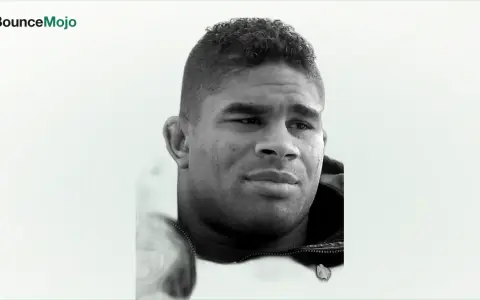
Antawn Jamison Biography: The Quiet Craftsman Who Outlasted Rivals

Antawn Jamison scored more than 20,000 points and somehow stayed anonymous doing it. That’s harder than it sounds.
Here’s what most people miss: the same trait that made scouts underrate him at every level is the exact reason he was still standing when the flashier names fell away.
The Myth vs. The Reality
The myth is that Antawn Jamison was a good complementary player who hung around a long time. Solid. Reliable. Forgettable.
The reality is stranger and better than that.
Here’s the truth: Jamison was, at his peak, one of the most efficient volume scorers of his era, a two-time 51-point scorer, a college player of the year, and a man who scored more than 20,000 career points in the NBA. He did it without a signature crossover, without a poster dunk reel, without a shoe named after him. He did it with an unblockable little runner, a knack for finding empty space, and a work ethic that never asked for a camera.
You might be wondering: how does a player that productive stay this anonymous?
The answer starts in Charlotte, in a gym where a kid who wanted to play quarterback found something he was even better at.
The World That Made Antawn Jamison
To understand Jamison, you have to understand the North Carolina basketball machine of the 1990s.
This was Tobacco Road at full volume. The University of North Carolina was a cathedral, Dean Smith was its high priest, and the Atlantic Coast Conference was the toughest league in the country. A blue-chip recruit who chose Chapel Hill wasn’t just picking a school. He was stepping into a lineage that ran through Michael Jordan, James Worthy and a dozen other legends.
Now: this was also the era when the NBA still valued the four-year college star, but the draft was starting to fall in love with raw upside. Teams began chasing potential over production. That shift matters, because Jamison was all production. He was the guy who did the thing, not the guy who might one day do the thing.
The 1990s NBA rewarded scorers, but it rewarded loud scorers. Iverson crossing you over. Kobe rising up. Jamison scored just as much, only he did it in the shadows, quietly, one soft floater at a time.
That contrast between substance and spectacle would define his entire career. It also nearly cost him his rightful spot in the pecking order on the biggest night of his young life.
The Crucible: Early Life and the Climb
The environment that shaped him
Antawn Cortez Jamison was born in Shreveport, Louisiana, on June 12, 1976, but Charlotte, North Carolina raised him. His family moved to North Carolina when he was young, and Charlotte’s gyms and playgrounds became his classroom.
Here’s the deal: he wasn’t even a basketball-first kid at the start. At Quail Hollow Middle School he played quarterback, running the offense with the same calm, unbothered command he’d later show in the paint. The football field taught him patience and vision. The basketball court is where those traits paid off.
By the time he reached Providence High School, the quiet kid had become a problem for everyone who guarded him. He grew into a McDonald’s All-American, one of the top prospects in the country, and the state’s basketball establishment took notice. He wasn’t flashy. He was just always in the right place, always finishing, always a step ahead of the scouting report.
The catalyst
The turning point was Chapel Hill.
Choosing North Carolina meant volunteering for scrutiny. At UNC there is nowhere to hide, and Dean Smith’s program demanded discipline over flash, team over ego. It was a perfect match for a player whose gifts were subtle. Over three seasons Jamison averaged 19.0 points and 9.9 rebounds, made three straight All-ACC First Teams, and dragged the Tar Heels to back-to-back Final Fours in 1997 and 1998.
Then came the crowning year. In 1998 he swept the sport’s biggest individual honors, the Naismith Award and the Wooden Award, as the best player in college basketball.
But here’s the kicker: the man he shared that spotlight with, his roommate and best friend, was about to become the other half of one of the most famous trades in draft history.
The Key Players
You cannot tell Jamison’s story without Vince Carter.
The two arrived at North Carolina together and became close. On the court they were a study in contrast. Carter was gravity-defying spectacle, the human highlight reel. Jamison was the grinder, the guy who quietly outscored everybody while nobody was looking. They were brothers who pushed each other, and their fates would collide in the strangest way.
Then there was Dean Smith, the coach who taught Jamison that basketball was a game of angles and unselfishness, not just talent. Smith’s fingerprints are all over the way Jamison played: patient, positional, never wasteful.
And there were the franchises that shaped his professional identity. The Golden State Warriors, who gave a rookie a green light. The Washington Wizards, where he became an All-Star. The Cleveland Cavaliers, where he chased a ring alongside LeBron James. And his old Wizards running mate Gilbert Arenas, whose explosive, all-or-nothing career made the perfect foil for Jamison’s steady march.
Now think about it: the single event that launched Jamison’s pro career was also the one that separated him from Carter for good.
The Turning Point
The pinnacle
On draft night, June 24, 1998, the Toronto Raptors selected Antawn Jamison with the fourth overall pick. Then they traded his rights to the Golden State Warriors in exchange for the fifth pick, Vince Carter.
The two best friends, drafted back to back, immediately swapped teams. Carter became a Raptor and a superstar. Jamison headed west to Golden State to build his own quieter empire.
And build it he did. In Oakland he blossomed into a nightly 20-point threat. The peak arrived in December 2000, when Jamison did something almost nobody in NBA history has done. He scored 51 points in a game against Seattle, then scored 51 again the very next night against the Los Angeles Lakers, outdueling Kobe Bryant, who also dropped 51 in the same game.
It gets better: he added 13 rebounds and five assists that night against the Lakers. Two 51-point games in 24 hours, one of them against prime Kobe. That is not a role player. That is a bucket-getting machine that history somehow filed under “underrated.”
The price
Scoring like that in Golden State came with a hidden cost: losing.
Those Warriors teams were bad, and no matter how many points Jamison poured in, the wins didn’t follow. He was a brilliant scorer stranded on mediocre rosters, putting up huge numbers in games nobody watched. For a player as competitive as he was, the empty scoreboard was its own kind of quiet frustration.
So in 2003 he made a decision that would redefine him, one that a lot of stars would never accept.
The Unvarnished Truth
Traded to the Dallas Mavericks, Jamison did something rare for a former college player of the year and a 20-point scorer. He came off the bench without complaint.
Here’s the truth: ego destroys more NBA careers than injury does. Plenty of players would have sulked, demanded starter minutes, or forced their way out. Jamison did the opposite. He accepted the sixth-man role, energized second units, and in 2004 he won the NBA Sixth Man of the Year Award.
That willingness to subordinate his pride is the least glamorous thing about him and maybe the most important. It’s also honest to admit the flip side: for all his scoring, Jamison was never an elite defender, and his teams rarely reached the sport’s mountaintop. He was a great scorer on good-not-great teams, a two-time All-Star rather than a perennial MVP candidate.
He knew exactly who he was. And that self-awareness, the refusal to pretend to be something he wasn’t, is a big reason the career lasted 16 years.
Which raises a fair question: if the man was this steady and this professional, where’s the scandal?
Controversies and Criticisms
Honestly? There isn’t much of one.
Jamison’s biggest “controversy” is that critics spent two decades arguing about whether he was overrated or underrated, which is a strange debate to have about a guy who scored more than 20,000 points. Some pointed to his defense. Some pointed to the losing teams. Some said his efficient scoring was empty calories on rosters going nowhere.
But here’s the deal: Jamison never gave the tabloids anything to work with. No arrests, no locker-room blowups, no financial disasters, no ugly exits. In an era when plenty of stars burned through fortunes and reputations, he stayed clean, stayed professional, and kept showing up.
The one shadow over his time in Washington wasn’t of his making. His backcourt was rocked by off-court drama around teammates, and Jamison was the steady veteran left to hold the room together. He absorbed the chaos rather than adding to it.
That steadiness, it turns out, is the whole lesson. And it’s worth breaking down.
What We Can Learn From Antawn Jamison
Navigating hard times
Jamison’s career is a clinic in surviving what you can’t control.
He couldn’t control being traded away from his best friend on draft night. He couldn’t control landing on losing Warriors teams. He couldn’t control the drama that engulfed his Wizards squads. What he could control was his own preparation, his professionalism, and his willingness to adapt.
Want to know the best part? When the game asked him to change, he changed. Starter to sixth man. Scorer to veteran leader. Player to analyst and executive. He never clung to an old identity past its expiration date.
The success blueprint
The blueprint is almost boring, and that’s the point.
Be excellent at one thing. Do it every single night. Stay available, stay coachable, stay clean. Jamison played 16 seasons because he was durable, reliable and adaptable, not because he was the most talented man on the floor. Talent gets you drafted. Character keeps you employed into your late 30s.
In other words, the tortoise really can beat the hare, especially over a 16-year race.
Then, when the playing days ended, he did the smartest thing an athlete can do. He turned his experience into a second career instead of chasing his lost youth.
Final Verdict
Antawn Jamison is proof that quiet excellence pays, in wins, in longevity, and in a life built to last past the final buzzer.
When his playing days ended in 2014, he didn’t disappear. He stepped in front of the camera as a television analyst, worked as a scout for the Los Angeles Lakers, and moved into the front office as the Washington Wizards’ director of pro personnel. The same basketball IQ that made him a great player made him a natural evaluator of talent. He simply kept working in the game he understood better than almost anyone.
There is no memoir on the shelf, no tell-all book, no scandal to dramatize. What there is, instead, is a template: get very good at your craft, stay humble enough to fill whatever role the moment needs, protect your reputation like it’s an asset, and outlast the noise.
For the fans who watched him drop soft little floaters over bigger men for two decades, Jamison was never underrated. He was exactly what he appeared to be, a craftsman who let the work speak. If you want to see how that quiet, disciplined career translated into lasting money, the full breakdown lives in his net worth story, and you can measure him against the game’s biggest fortunes on our richest NBA players list, where you’ll notice the durable names tend to age far better than the loud ones.
Shop Antawn Jamison on Amazon
Books, audiobooks, merch and more, handpicked for fans.
As an Amazon Associate we earn from qualifying purchases.
Frequently Asked Questions
Where did Antawn Jamison grow up?+
Jamison was born in Shreveport, Louisiana, but grew up in Charlotte, North Carolina, where he starred at Providence High School and became a McDonald's All-American.
Did Antawn Jamison and Vince Carter really get traded for each other?+
Yes. On draft night in 1998 the Toronto Raptors picked Jamison No. 4, then swapped his rights to Golden State for the No. 5 pick, Vince Carter, his North Carolina teammate and close friend.
What awards did Antawn Jamison win?+
He won the Naismith and Wooden Awards as college player of the year at UNC in 1998, was a two-time NBA All-Star, and won the 2004 Sixth Man of the Year award.
How long did Antawn Jamison play in the NBA?+
Jamison played 16 NBA seasons with the Warriors, Mavericks, Wizards, Cavaliers, Lakers and Clippers before retiring in 2014.
What does Antawn Jamison do now?+
He has worked as a television analyst and in NBA front-office and player-development roles, including director of pro personnel for the Washington Wizards.
Want the money side of the story?
Read Antawn Jamison's Full Net Worth Breakdown →Shop Antawn Jamison on Amazon
Books, audiobooks, merch and more, handpicked for fans.
As an Amazon Associate we earn from qualifying purchases.